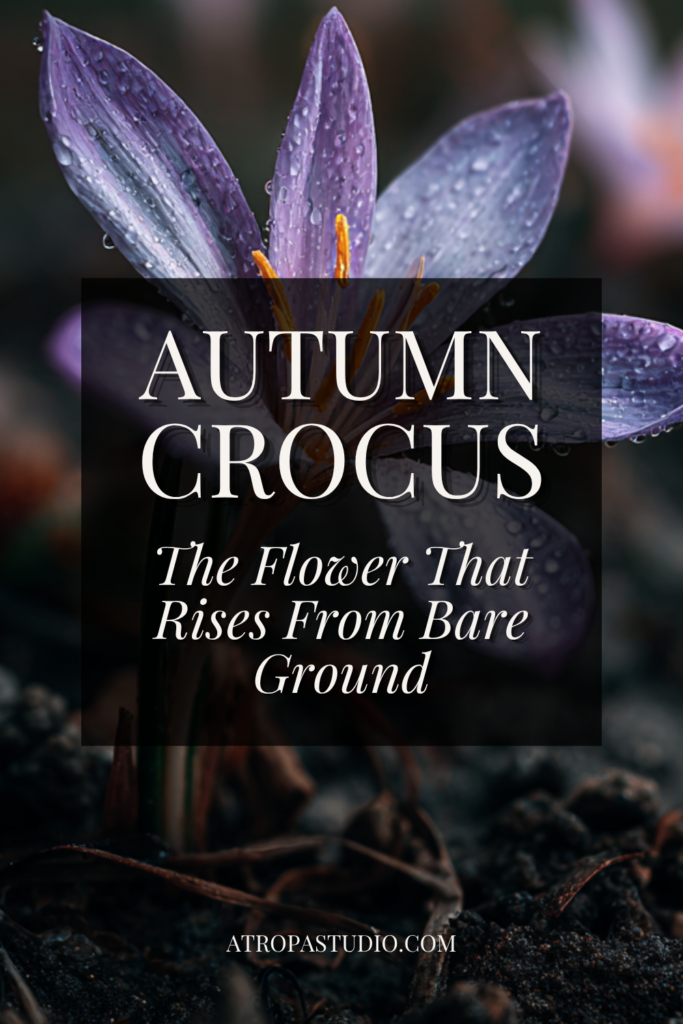
In September, when the garden is winding down and the light is changing, something rises from bare earth without warning.
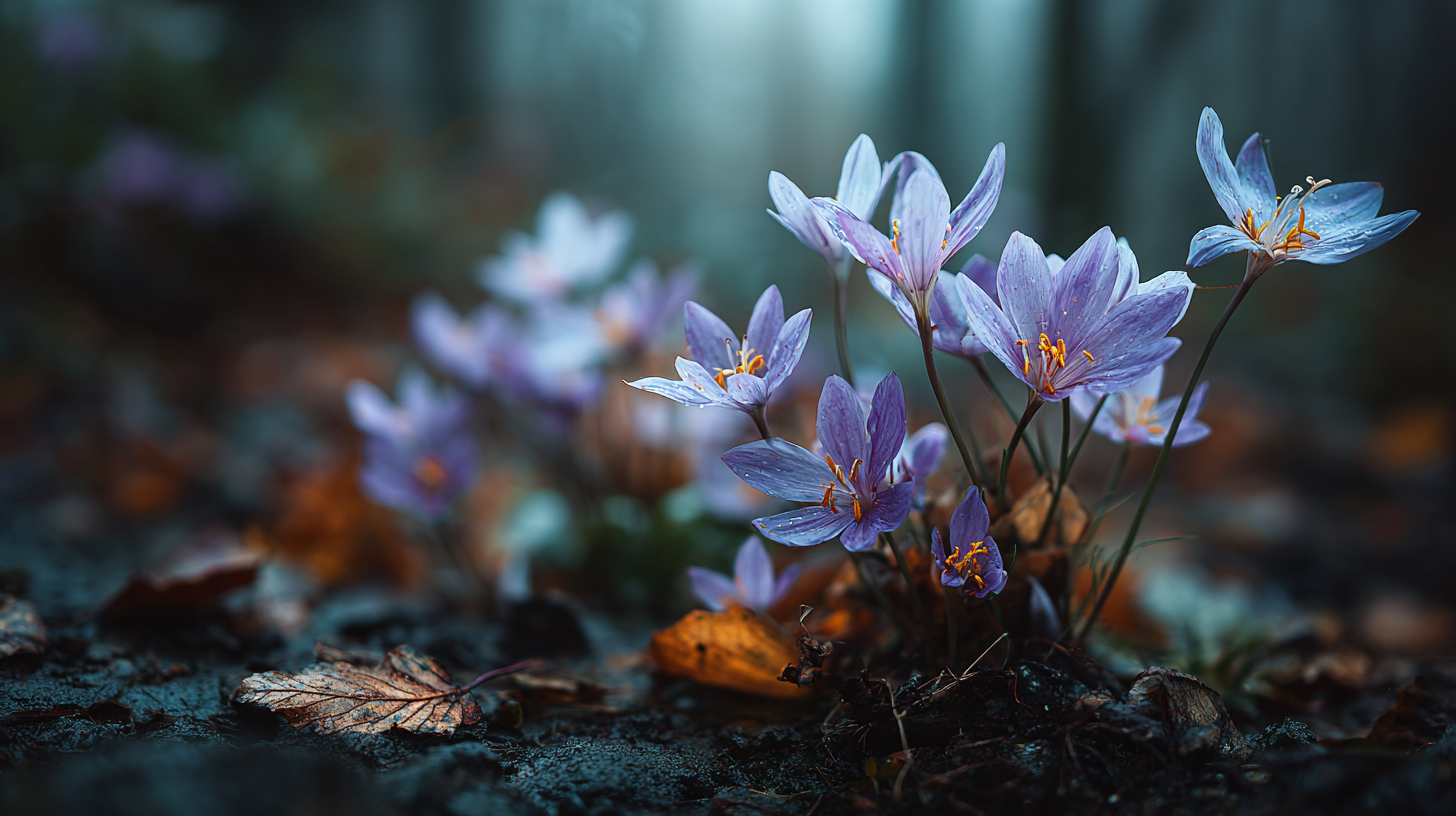
No leaves. No stem to speak of. Just a pale lilac flower pushing up through the soil as though it has come from somewhere below, as though it has been waiting all year for exactly this moment to appear.
Autumn Crocus (Colchicum autumnale) blooms in autumn without its leaves, which come in spring and die back long before the flower appears.
This quality of arriving naked from the ground, leafless and unannounced, has given it a reputation in folklore that tracks closely with its toxicity: a plant that behaves like nothing else, that seems to come from the wrong direction, that appears when other things are ending.
It is beautiful. It is also, in every part, seriously poisonous, and it has been killing people and treating them in roughly equal measure for as long as it has been documented.
RELATED: The Poison Garden Plant List: A Complete Guide to Toxic and Bewitching Botanicals
At a Glance
Scientific name: Colchicum autumnale
Common names: Autumn crocus, meadow saffron, naked lady, naked boys
Family: Colchicaceae
Native range: Europe and North Africa
Toxic parts: All parts — corm most concentrated, but leaves, flowers, and seeds also highly toxic
Primary toxins: Colchicine
Toxicity level: High — colchicine poisoning can cause multi-organ failure
What It Looks Like
Autumn Crocus (Colchicum autumnale) is a perennial that grows from a corm buried in the soil. In spring it produces broad, glossy, strap-shaped leaves in a cluster, along with seed pods from the previous year’s flowers.
By early summer the leaves have yellowed and died back completely, and the plant is invisible above ground for the rest of the summer.
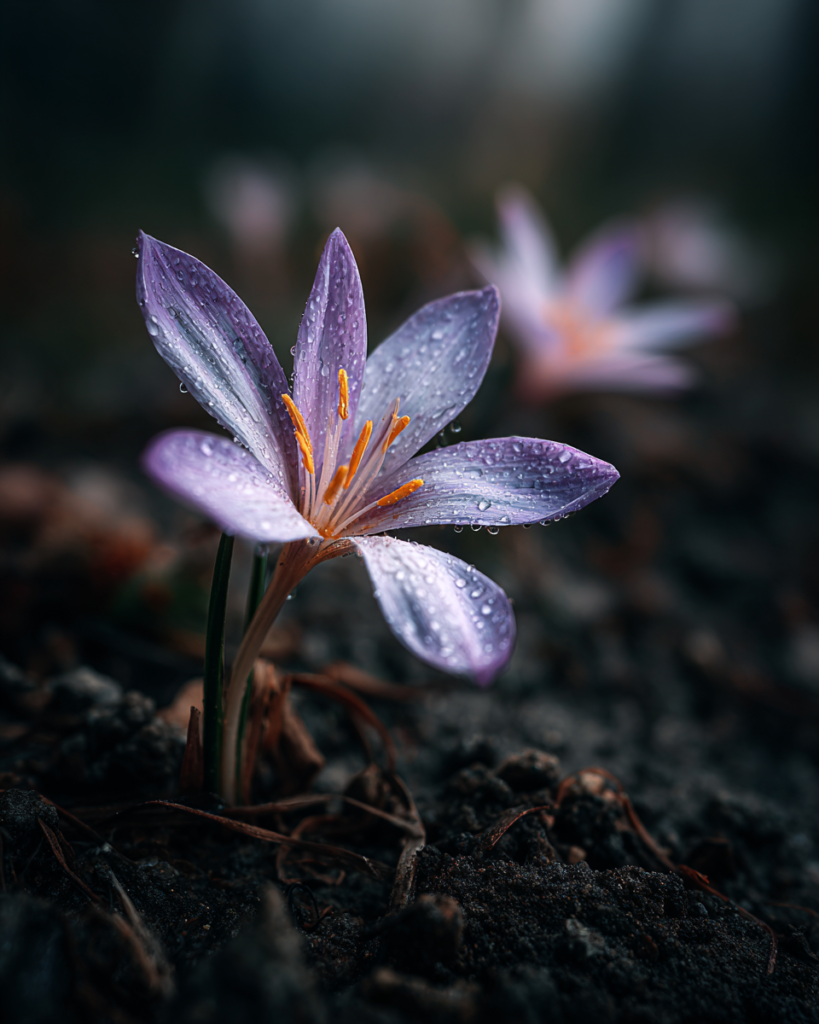
Then, in September or October, the flowers appear without any foliage at all. They emerge directly from the soil on pale, delicate tubes, pale lilac to rosy purple in colour, with six petals arranged in the typical crocus form.
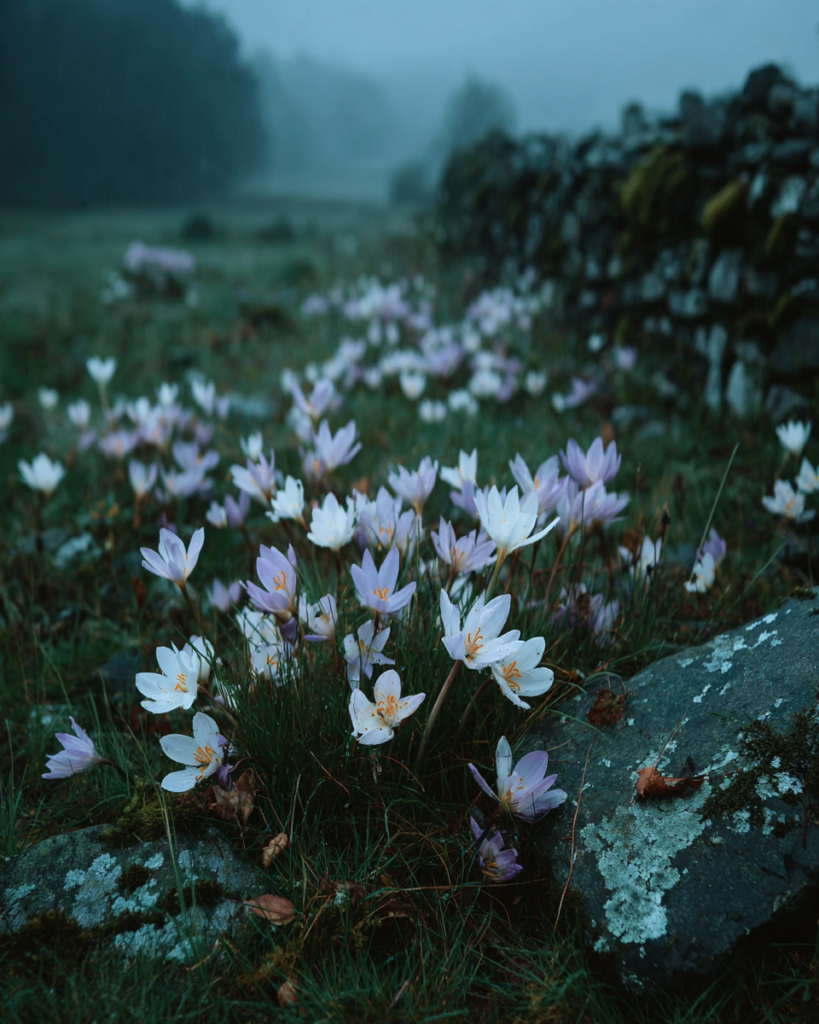
A single corm can produce several flowers simultaneously, creating a cluster of blooms at ground level with nothing around them, which gives the plant a striking and slightly uncanny appearance.
The flowers are often mistaken for true crocuses, which are a completely different genus in a completely different family. The timing helps distinguish them: true crocuses bloom in spring, with a few autumn-flowering exceptions, while Colchicum autumnale blooms reliably in autumn.
The leaves of both plants look similar in spring, and this resemblance has contributed to accidental poisonings when the leaves or corms of Colchicum have been mistaken for wild garlic, ramsons, or other edible plants.
The seeds that develop from the pollinated flowers do so underground over winter and are pushed up with the spring leaves, completing a reproductive cycle that is almost entirely out of phase with the plant’s visible presence.
RELATED:
The Poison: What It Does
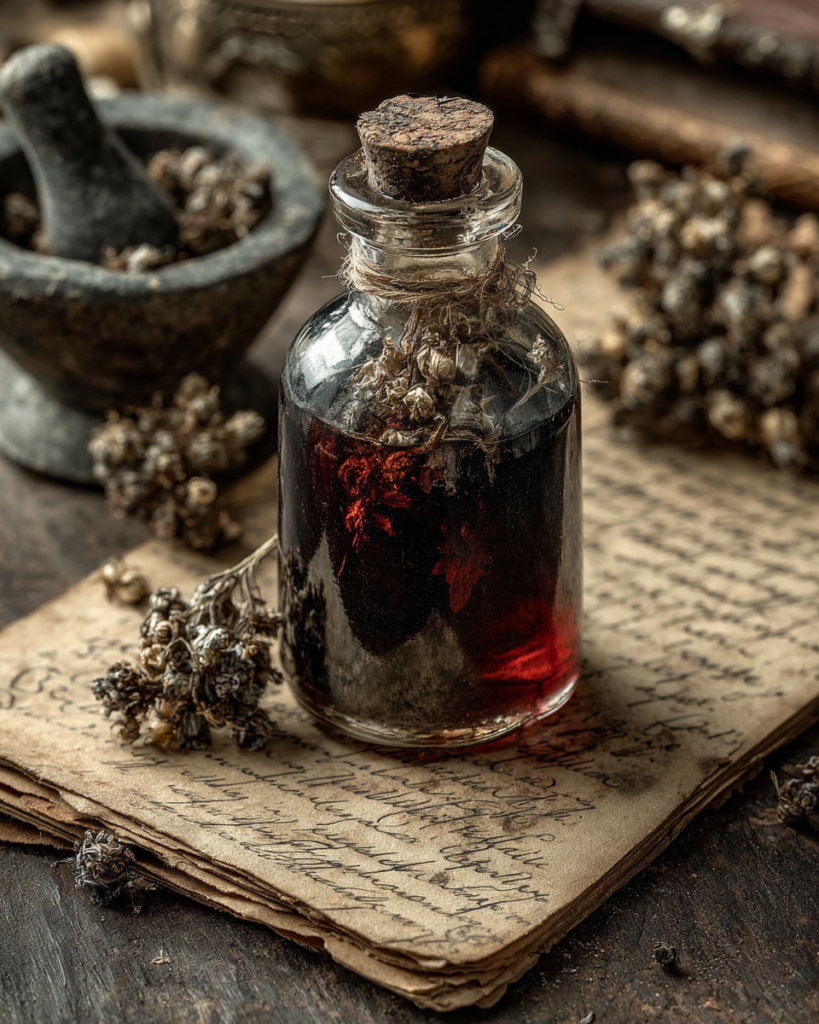
Colchicine, the primary alkaloid in Colchicum autumnale, works by binding to tubulin, a protein essential for cell division.
When colchicine is present, cells cannot complete mitosis: the mechanism by which chromosomes are pulled to opposite ends of the dividing cell is disrupted, and cell division stalls.
The result is systemic toxicity as cells throughout the body fail to renew themselves, affecting rapidly dividing tissues first.
- The onset of colchicine poisoning is typically delayed, which is part of what makes it dangerous:
Initial symptoms appear six to twenty-four hours after ingestion: nausea, vomiting, severe abdominal pain, and diarrhoea - Apparent improvement in the following day or two, during which the toxin is causing internal damage
- Multi-organ failure develops in serious cases: bone marrow suppression, kidney failure, liver failure, cardiac arrhythmia, respiratory failure
- Death can occur days after ingestion, during what appeared to be a recovery phase
The delay between ingestion and serious symptoms means that the severity of poisoning is frequently underestimated in the early stages, and that treatment may be sought too late. There is no specific antidote; treatment is supportive.
Colchicine is also used in medicine. At carefully controlled doses it is an effective treatment for gout, preventing the inflammatory response to uric acid crystals in joints. It is also used in the treatment of familial Mediterranean fever and pericarditis.
The therapeutic window is narrow and the drug requires careful dosing. It is still prescribed regularly, which means that pharmaceutical colchicine is present in many households alongside a plant that produces the same compound in the garden.
History and Folklore
Autumn Crocus (Colchicum autumnale) takes its scientific name from Colchis, the ancient kingdom on the eastern shore of the Black Sea that is the setting of the myth of Medea, the sorceress who helped Jason obtain the Golden Fleece and who was one of the most celebrated poisoners in classical mythology.
Whether the naming reflects actual use of the plant in that region or simply a association between the legendary home of a poisoner and a plant known for its toxicity, the connection is ancient and deliberate.
Medea and classical mythology
Medea is one of the most significant figures in the mythology of poison in the classical world. She was a priestess of Hecate, the goddess of witchcraft and poisonous plants, and her knowledge of poisons and herbs was central to her power and her story.
The association between Colchicum and Colchis links the plant directly to this tradition of dangerous female botanical knowledge, and it appears in classical texts on poisonous plants with the kind of context that suggests familiarity and wariness in equal measure.
Ancient and medieval medicine
Colchicine’s effect on gout has been known since ancient Egypt, where a preparation from the autumn crocus was recommended for joint pain in the Ebers Papyrus. Byzantine physicians described its use in the 6th century CE. The Arab physician ibn Sina, known in Europe as Avicenna, documented it in the Canon of Medicine. The plant has one of the longest continuous records of medicinal use of any in the poison garden, though the history of its use is complicated by the toxicity of poorly controlled doses.
Accidental poisonings
The most consistent historical source of colchicine poisoning has been the confusion of Colchicum leaves and corms with edible plants. In spring, the broad leaves resemble wild garlic and ramsons, both of which are widely foraged. In autumn, the corms can be confused with edible bulbs. This has produced a steady record of accidental poisoning across European foraging history and continues to occur today.
Plant breeding
Colchicine has a significant role in modern plant breeding that is rarely discussed in popular accounts of the plant. When applied to plant cells, colchicine’s disruption of cell division can produce polyploid cells containing multiple sets of chromosomes. Polyploid plants are often larger, more vigorous, and more productive than their diploid parents, and many commercially important crop varieties and ornamental cultivars have been developed using colchicine treatment. The same compound that is toxic in the garden has been used to shape the crops that feed a significant portion of the world’s population.
In the Poison Garden
Autumn crocus occupies a specific position in the poison garden as the plant whose calendar is most obviously wrong. It flowers when it should be seeding. Its leaves appear months before and months after the flower. It rises from bare ground without warning in the season when the garden is closing down, which gives it a particular quality of interruption: a presence that does not follow the rules of the visible world.
In the dark cottagecore context this quality is resonant. The poison garden is interested in the places where the natural world does not behave as expected, where beauty appears in the wrong season, where the familiar becomes strange under close attention. The autumn crocus does this literally. It arrives when the garden is ready to rest and offers flowers that have no business being there.
The pale lilac flowers at ground level, unaccompanied by any foliage, are quietly striking in a way that is different from the dramatic spikes of monkshood or the architectural seed pods of the poppy. They are small and low and they appear in the wrong season and they are poisonous enough to cause multi-organ failure. The contrast between the delicacy of the flower and the severity of the toxicity is the poison garden at its most concentrated.
As a botanical illustration subject, the flower emerging from bare ground without leaves is an unusual and distinctive composition that is unlike any other plant in the collection. The combination of the pale lilac flower with the broad spring leaves and the spherical seed pod, shown together as a composite illustration of the plant’s full year, is a strong concept for a specimen print.
A Note on Safety
All parts of Colchicum autumnale are toxic, including the corm, leaves, flowers, and seeds. The leaves are most dangerous in spring when they may be confused with wild garlic or ramsons during foraging.
A reliable distinguishing feature is smell: wild garlic smells strongly of garlic when any part is crushed, while Colchicum does not. Never forage from plants you cannot identify with complete certainty. If colchicine poisoning is suspected, seek emergency medical attention immediately. Symptoms may be delayed for up to twenty-four hours after ingestion and the severity of poisoning may be underestimated during an apparent early improvement.