There is something the ocean does not tell you.
It pulls at the shoreline with the patience of something very old and very indifferent, and when the fog comes in off the water, it does not ask permission.
Coastal gothic is the aesthetic that lives in that silence. It is the side of the sea that travel brochures do not photograph: the barnacle-black rocks, the shipwreck rumours, the lighthouses that stand alone for a reason.
This is not a beach aesthetic. It is something older and stranger than that.
RELATED:
What Is Coastal Gothic?
Coastal gothic is a dark, atmospheric aesthetic rooted in the intersection of maritime life and folklore, Victorian naturalism, and the eerie beauty of the sea at its most remote and windswept.
It draws from the same emotional well as dark academia and witchcore, but grounds itself in saltwater, tide, and the specific loneliness of the Atlantic coast.
Where cottagecore looks inward to the garden and the hearth, coastal gothic looks outward to the water and what lies beneath it.
It is interested in the sea not as a holiday destination but as a force, a presence, and a keeper of stories.
Think: driftwood altars on fog-heavy beaches. Sailor’s knot talismans. Pressed sea lavender in the pages of a Victorian naturalist’s journal. Taxidermy fish in gilt frames. The kind of lighthouse that appears in ghost stories.
Coastal Gothic Architecture: Clifftop Houses and Widow's Walks
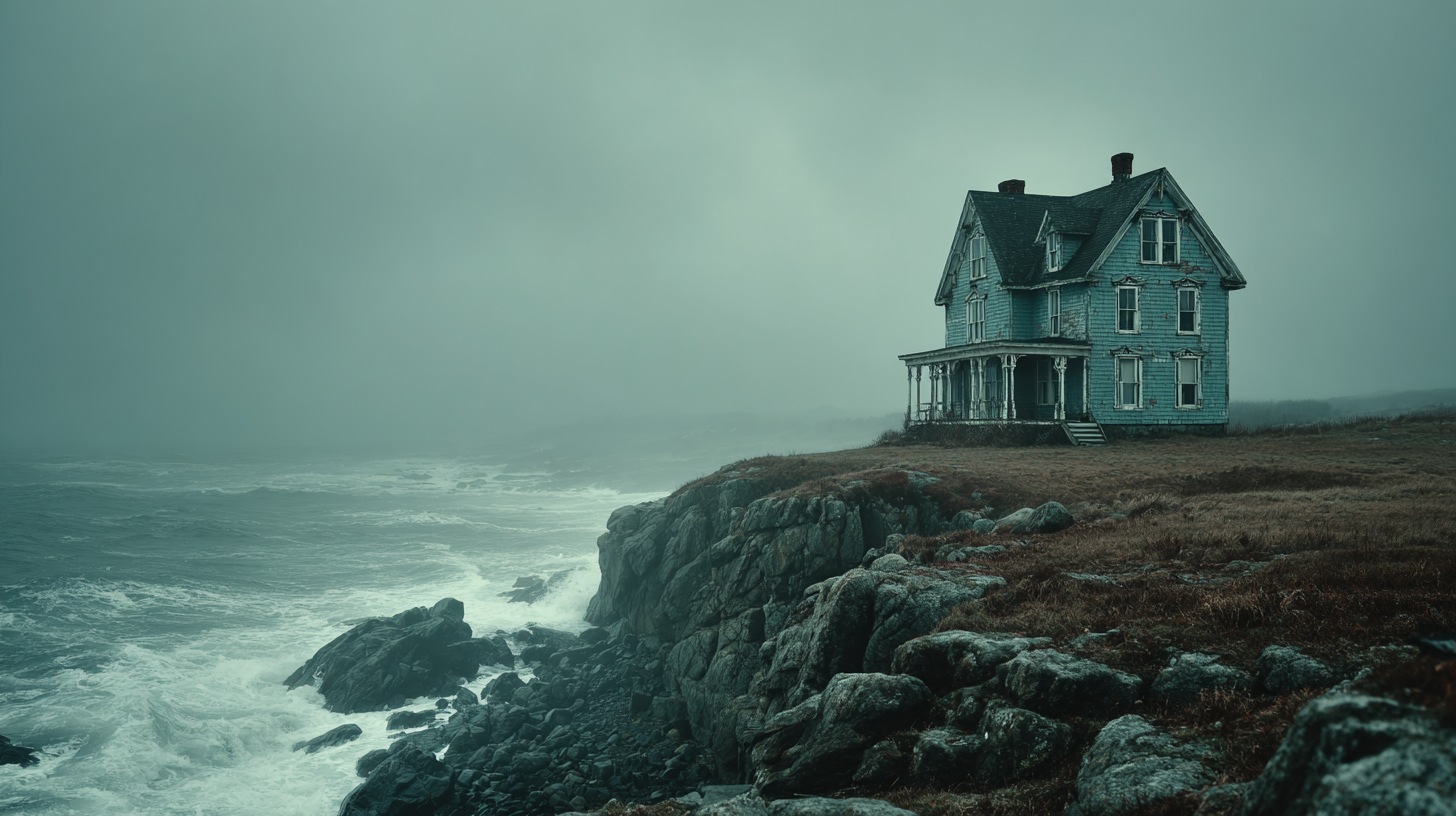
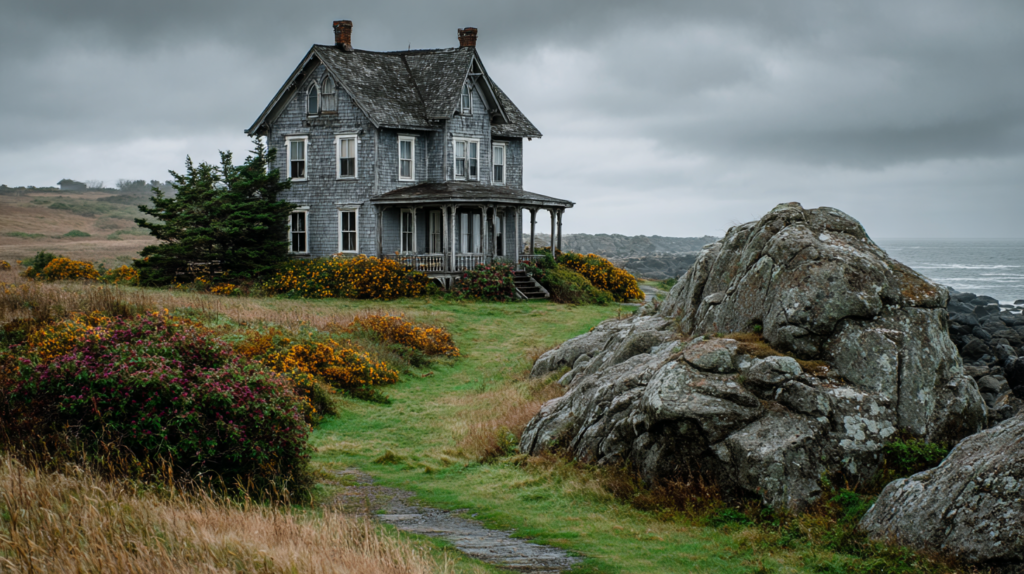
No image captures coastal gothic more completely than a house at the edge of a cliff, looking out over water it has been watching for a very long time.
These are not picturesque cottages. They are practical structures built by people who needed to be close to the sea for reasons that were economic, not romantic.
Stone walls thick enough to absorb the wind. Small windows that face the water because the occupants needed to see what was coming in. Widow’s walks along the roofline, named for the women who stood on them waiting for ships that did not return.
The coastal gothic house is weathered in a specific way. Salt strips the paint before it has time to peel gracefully. The wood darkens and contracts. Gardens here are not ornamental: they are rugosa rose and sea grass and whatever survives the exposure. The fence posts lean slightly inland, shaped by decades of wind from the same direction.
Inside, these houses carry their history differently than inland homes do. The damp gets into the walls. The light is different, filtered through windows that face north or east toward the water.
Rooms that were once used for specific maritime purposes, storing nets or salting fish or keeping a watch log, become sitting rooms with no explanation for their particular dimensions.
There is always a room in a coastal gothic house that makes you slightly uneasy without being able to say why.
The Ultimate Dark Cottagecore Colour Palette Collection
Explore a growing library of dark cottagecore colour palettes pulled from poison gardens, candlelit kitchens, foggy forests, and shadowed interiors. Hex codes, RGB values, and home decor ideas for every shade. New palettes added regularly.
Coastal Gothic Colors, Textures, and Objects
The coastal gothic color palette is drawn from the water itself, from the sky above it, and from everything the tide leaves behind.
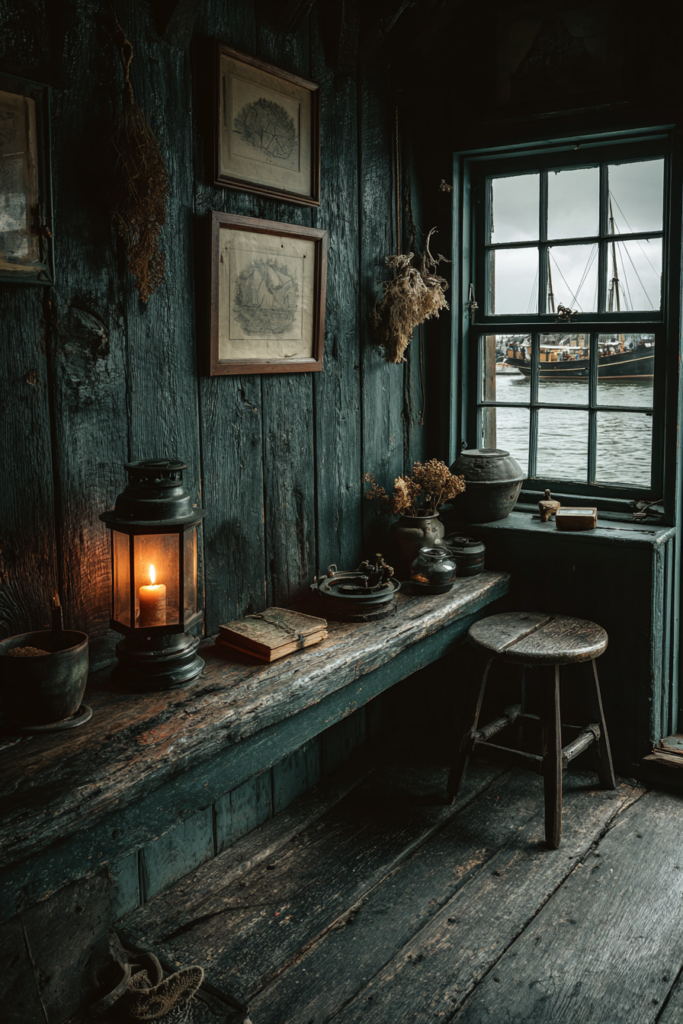
Colours: storm grey, deep teal, washed bone, sea glass green, the near-black of wet sand at dusk, the pale yellow of old nautical maps. Rust and verdigris. The particular blue-grey of fog.
Textures: salt-roughened wood, rope, linen worn soft with age, cracked leather, sea glass smoothed by decades of motion. Aged brass compass points. Bleached coral.
Objects: antique navigation instruments, pressed seaweed and sea plants in specimen frames, bottles sealed with wax, lanterns, maps with handwritten annotations, shells used as vessels, bones found at the tideline.
Settings: stone harbours in early morning, coastal headlands in autumn, foggy piers at dusk, attic rooms in old fishing villages, salt marshes at the edge of visibility.There is always weather in coastal gothic. The sky is rarely clear.

Coastal Gothic Folklore and Maritime Myth
The sea has always generated its own mythology, and coastal gothic is deeply interested in that tradition.
Not the sanitized version of maritime heritage, but the original: the sea as something ungoverned and genuinely dangerous, populated by creatures that do not care about human survival.
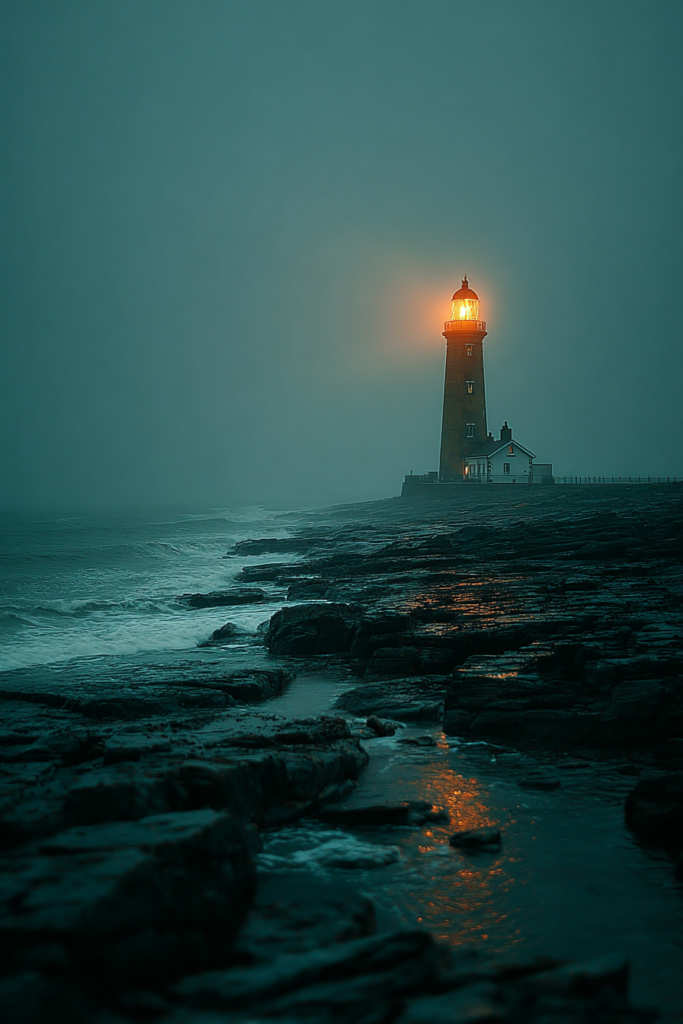
Selkies, who shed their skins and cannot always find them again. The wild hunt translated to open water. The drowned who return changed. Lighthouses built at the exact location where something went wrong. Gifts left at the tideline for reasons nobody quite explains anymore.
Coastal gothic takes this folklore seriously. Not as superstition to be dismissed, but as the accumulated knowledge of people who lived close enough to the water to understand that it kept its own rules.
The Atlantic coast has its own body of this material, distinct from the Norse or Celtic traditions that feed into it. Maritime communities developed their own logic about what the sea required, what it tolerated, and what it did not forgive.
That knowledge lives in the place names on old maps, in the specific warnings grandparents gave about particular stretches of water, in the way certain beaches have never been developed despite their beauty.
Coastal gothic is interested in all of it.
Coastal Gothic on the Atlantic Coast
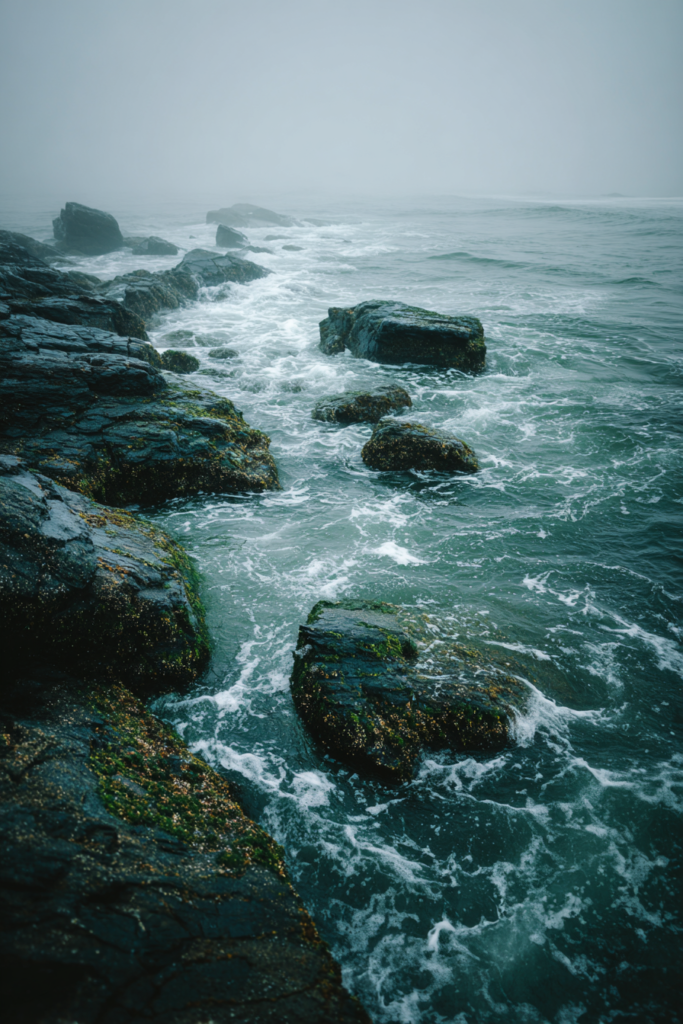
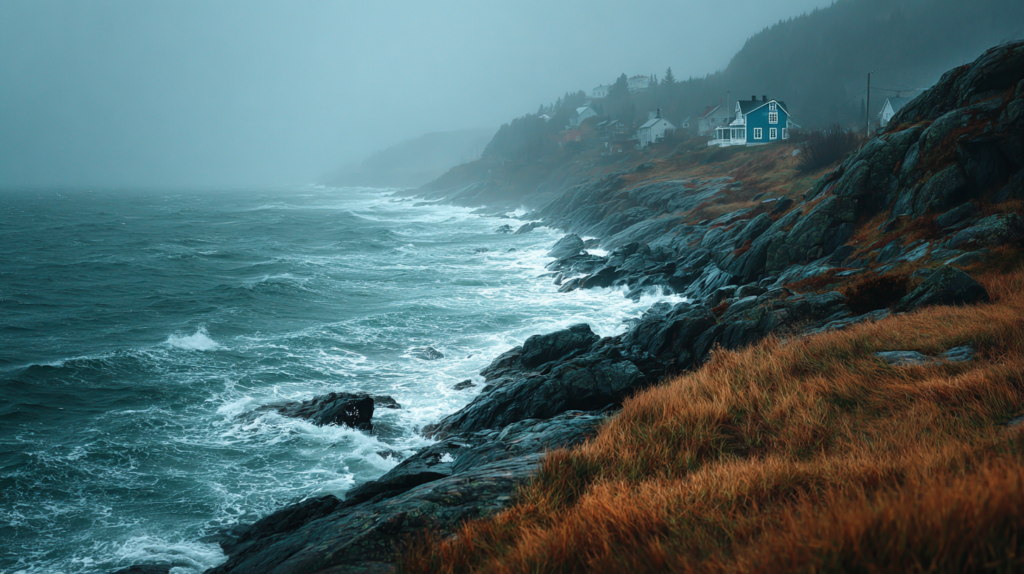
There is a version of coastal gothic that belongs specifically to the Atlantic coast: the Canadian Maritime provinces, the rocky shores of Maine, the fishing villages of Newfoundland and the Hebrides.
This is not the warm Mediterranean sea.
This is cold water, grey skies, and the particular kind of quiet that settles over a place when the season turns and the tourists leave.
The Atlantic has its own personality, and coastal gothic captures it honestly. The beauty here is earned. It does not flatter you.
Salt marsh in November. The iron smell of low tide on a cold morning. A harbour town where the boats still go out before dawn and the houses face the water out of habit rather than choice. The specific quality of light in late October when the sun is already low over the sea and the temperature drops faster than you expected.
If you have ever stood on a headland in November while the wind came in off the water, you already understand what this aesthetic is reaching for.
Coastal Gothic vs Sea Witch: What Is the Difference?
These two aesthetics are close neighbours, but they are not the same.
Sea witch is active and practitioner-focused: the figure at the centre of the ritual, the one calling the tide. It is an identity as much as an aesthetic.
Coastal gothic is more atmospheric and observational. It is interested in the world that exists at the water’s edge rather than the person standing in it.
Both share a reverence for maritime folklore and dark natural beauty, but coastal gothic pulls more from Victorian naturalism, maritime history, and the eerie quality of coastal geography.
You can live inside coastal gothic without claiming any particular practice.
They overlap beautifully, and neither is diminished by the other.
Coastal Gothic Home Decor Ideas
This is where the aesthetic becomes liveable. Coastal gothic interiors are not nautical in the cheerful seaside sense. There are no anchors printed on throw pillows. The reference to the sea is more oblique, more historical, more interested in what the maritime world actually looked like than in its decorative shorthand.
Start with colour. Storm grey walls, deep teal textiles, aged bone and driftwood tones. Avoid bright white and the coastal blues that belong to a different kind of beach house entirely.
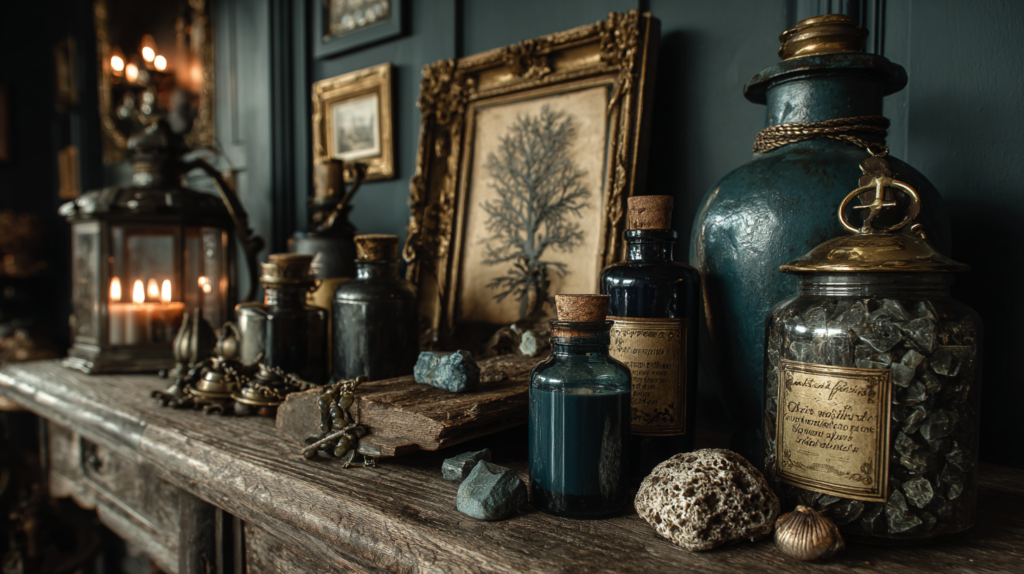
Bring in objects with weight and history. Antique navigation instruments. Framed pressed seaweed or sea botanical specimens in the style of Victorian naturalists. Ship’s lanterns converted to candleholders. Maps, particularly old ones with handwritten annotations. Anything in aged brass or verdigris.
Textures matter as much as objects. Rope, raw linen, weathered wood, sea glass. Nothing should look new or manufactured specifically for decoration. The most coastal gothic objects are the ones that look like they were found somewhere and kept because they were interesting.
If you have access to the actual coastline, the tideline is an archive. Driftwood shaped by years of water, sea glass made opaque by decades of motion, shells, interesting stones, occasionally bones.
Coastal gothic interiors often include things brought in directly from the shore, displayed without apology.
What the Coastal Gothic Aesthetic Feels Like
The best way to understand an aesthetic is through sensation rather than definition.
Coastal gothic feels like finding a sealed bottle on the beach and not opening it immediately.
It feels like a house that has been in the same family for two hundred years, where the salt has worked its way into the walls.
Like reading the log of a ship that came home with fewer people than it left with.
Like the specific quality of light at four in the afternoon in October, when the sun is already low over the water and the temperature drops faster than you expected.
It is not frightening, exactly. But it is never entirely comfortable, either.
That is the coastal gothic sweet spot: beauty that keeps its distance. The sea, doing what it has always done, completely without interest in your opinion of it.
The house on the cliff is still there. The window still faces the water. Something inside it has been watching for a very long time.