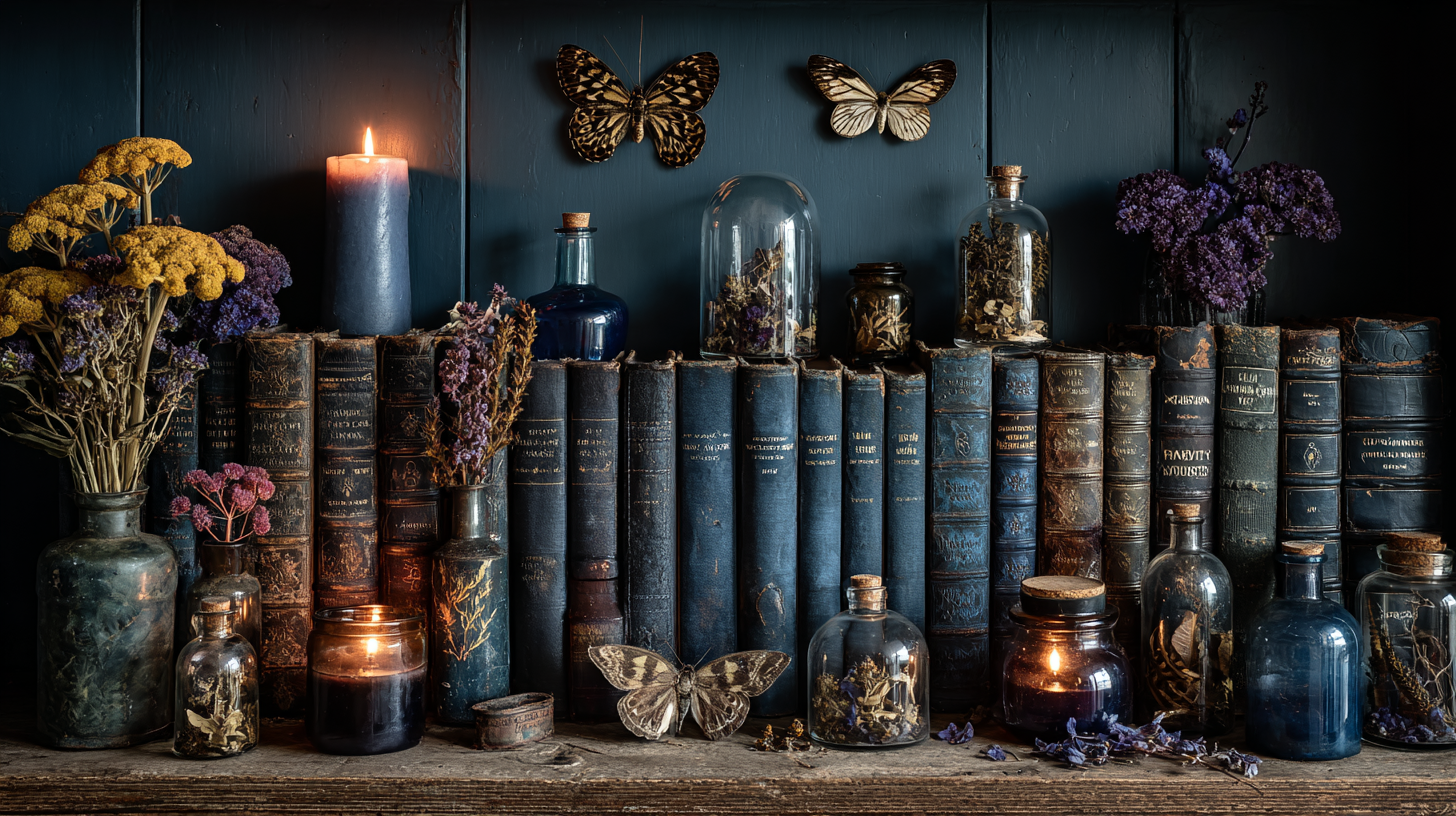
A bookshelf is never just storage. In a dark cottagecore home, it is a cabinet of curiosities, a nature altar, a record of obsessions. The books matter. The objects tucked between them matter more. The shadows that collect in the corners matter most of all.
Styling a dark cottagecore bookshelf is less about following rules and more about understanding what the aesthetic is actually doing. It is not maximalism for its own sake. It is not a Halloween display. It is the careful accumulation of things that feel old, natural, slightly dangerous, and entirely yours.
The Ultimate Dark Cottagecore Colour Palette Collection
Explore a growing library of dark cottagecore colour palettes pulled from poison gardens, candlelit kitchens, foggy forests, and shadowed interiors. Hex codes, RGB values, and home decor ideas for every shade. New palettes added regularly.
RELATED:
This post covers exactly what to put on a dark cottagecore bookshelf and how to arrange it so the whole thing reads as intentional rather than cluttered.
What Books Belong on a Dark Cottagecore Bookshelf
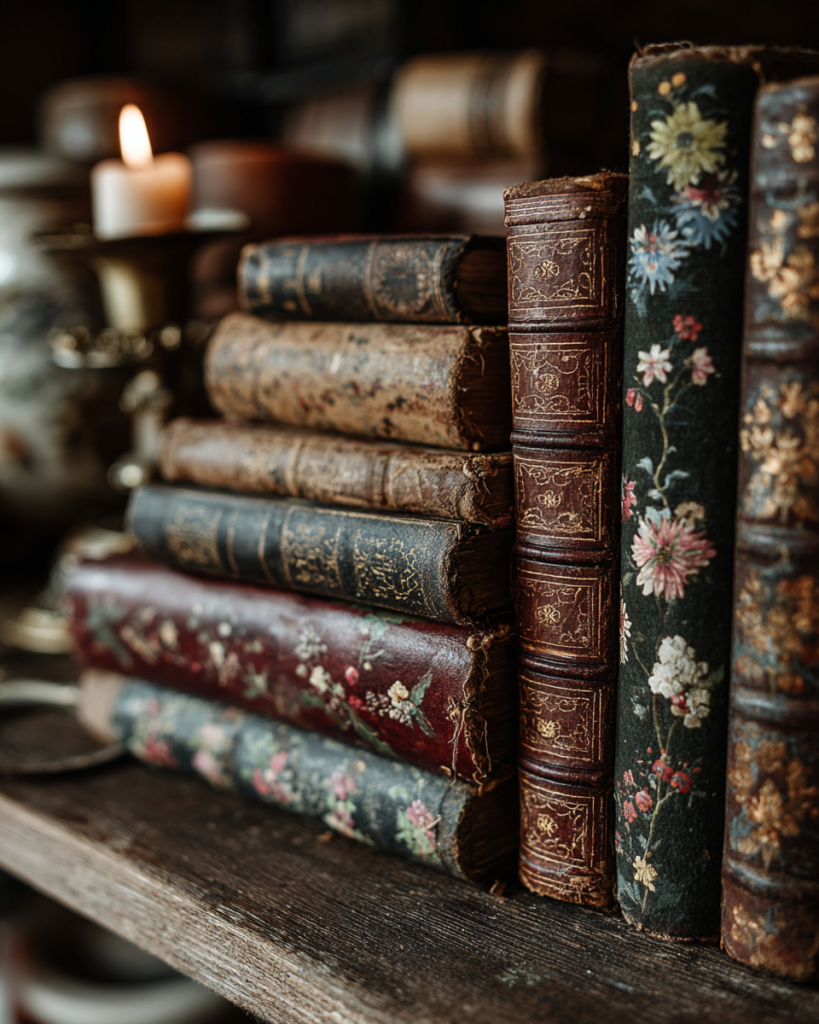
The spines are part of the visual. Prioritize aged leather, cloth-bound covers, and anything with a dark or botanical illustration on the front. Modern mass-market paperbacks with bright covers will fight everything else you are trying to do.
Subject matter carries its own weight here. Reach for books on plant folklore, Victorian naturalism, herbalism, mycology, and the history of poison. Field guides with worn edges. Illustrated botanical references. Anything that looks like it was pulled from a practitioner’s personal library rather than a chain bookshop.
Facing a few covers outward works well when the cover earns it. A Victorian botanical illustration or a dark art cover becomes a small framed piece within the shelf rather than just another spine.
A short list of subjects worth hunting for:
- Herbalism and folk medicine.
- Poison plant history.
- Victorian natural history.
- Mushroom field guides.
- Folklore and fairy tale scholarship.
- Gothic literature.
- Illustrated grimoires or books of hours.
- Old household encyclopedias with cloth spines.
Secondhand shops, estate sales, and library discard bins are the right places to find them.
RELATED:
Objects That Belong Between the Books
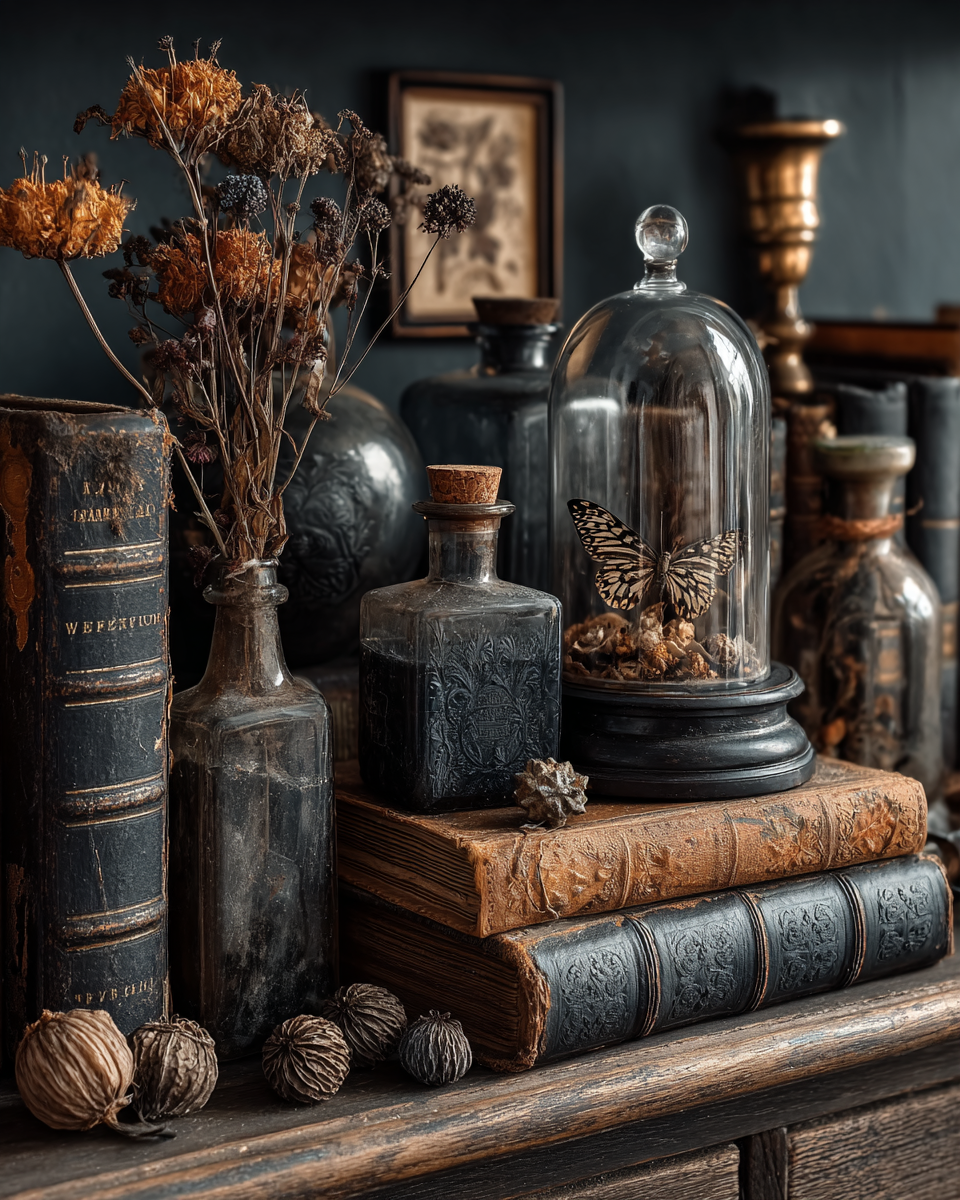
This is where the shelf becomes distinctly yours. The objects are what separate a styled dark cottagecore bookshelf from a shelf that merely has dark books on it.
Work in layers: tall things toward the back, small things at the front, and negative space left deliberately so nothing feels suffocated.
Objects that belong here:
- Apothecary bottles in dark or amber glass, stoppered or sealed with wax drips.
- Dried botanical specimens under glass domes or pressed behind small frames.
- A bell jar containing a single dried flower or a pinned moth.
- Small framed Victorian botanical prints leaned against spines rather than hung.
- Tarnished brass or aged pewter candlesticks at varying heights.
- A mortar and pestle in dark stone.
- Pinned insect specimens in shallow shadow boxes.
- Seed pods, dried mushrooms, small foraged things that still smell like the forest they came from.
Avoid anything plastic, anything chrome, and anything that reads as cheerful or modern. The shelf should look like it has been accumulating slowly over years, not styled in an afternoon.
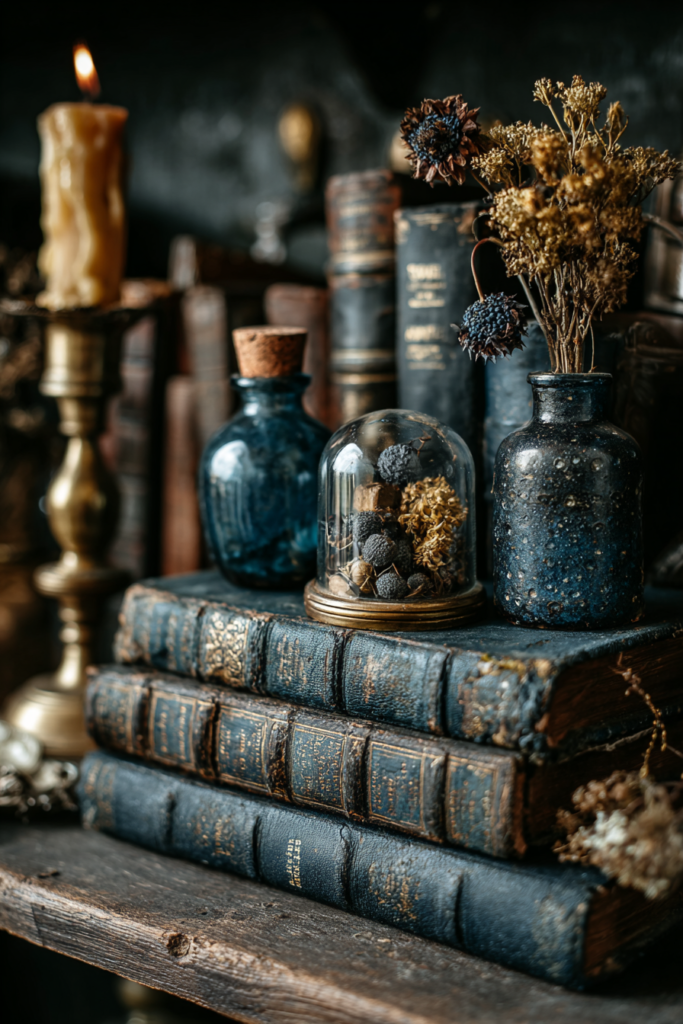
How to Arrange It
Proportion is everything. A shelf that is packed edge to edge reads as chaos. A shelf that is mostly empty reads as unfinished. The goal is somewhere in between: full enough to feel lived in, spare enough to feel chosen.
Start with the books as your foundation. Group them in loose clusters rather than running them wall to wall. Leave a gap here and there for a single object or a small stack laid horizontally with something resting on top.
Vary the heights constantly. A tall bottle next to a short stack of books next to a mid-height candlestick creates the kind of rhythm the eye enjoys following. Flat, even arrangements disappear.
Use the front edge of the shelf. A small object placed slightly forward of everything else draws the eye and creates depth. It makes the shelf feel like it has a foreground and a background rather than one flat plane.
Let some things spill slightly. A dried sprig that extends over a book edge. A piece of ribbon from a bookmark hanging down. These small imperfections are what make a styled shelf look inhabited rather than staged.
The Poisonous Plant Rule
In a dark cottagecore space, the plants and botanical elements you choose signal your fluency in the aesthetic. Generic dried lavender is a starting point, but it is not what this shelf is reaching for.
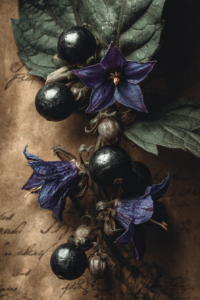
Prioritize botanical specimens that have genuine darkness to them: dried belladonna berries or leaves pressed and framed. Foxglove seed pods. Hemlock umbellifers dried at their most architectural. Aconite if you can source it. These do not need to be labeled or explained. Their presence carries its own atmosphere.
Victorian botanical specimen prints of poisonous plants, framed or leaned, serve the same function if live specimens are difficult to source. The combination of the illustration and the real thing is better than either alone.
The Shelf as a Living Thing
The best dark cottagecore bookshelves change slowly over time. A foraged mushroom added after a walk. A new field guide tucked in. A candle burned down and replaced with a slightly different one. A pressed leaf from the garden laid flat on top of a stack.
This is not a shelf you style once and photograph and leave. It is something you tend, the same way you tend a garden or a practice. That slow accumulation of meaningful things is exactly what the dark cottagecore aesthetic is about at its core: nature, time, and the beauty of things that have been kept.
Start with what you already have. Add slowly. Let it get a little dusty.