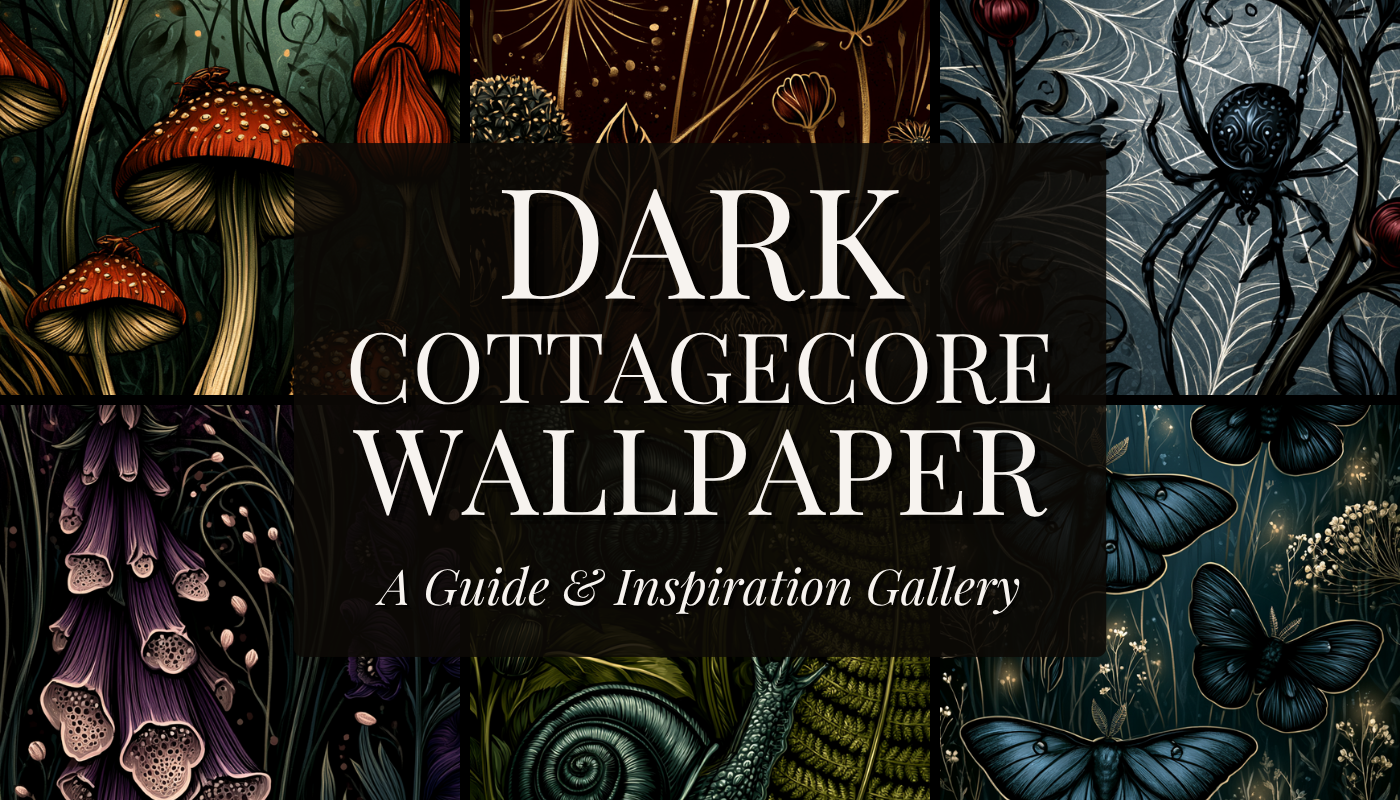
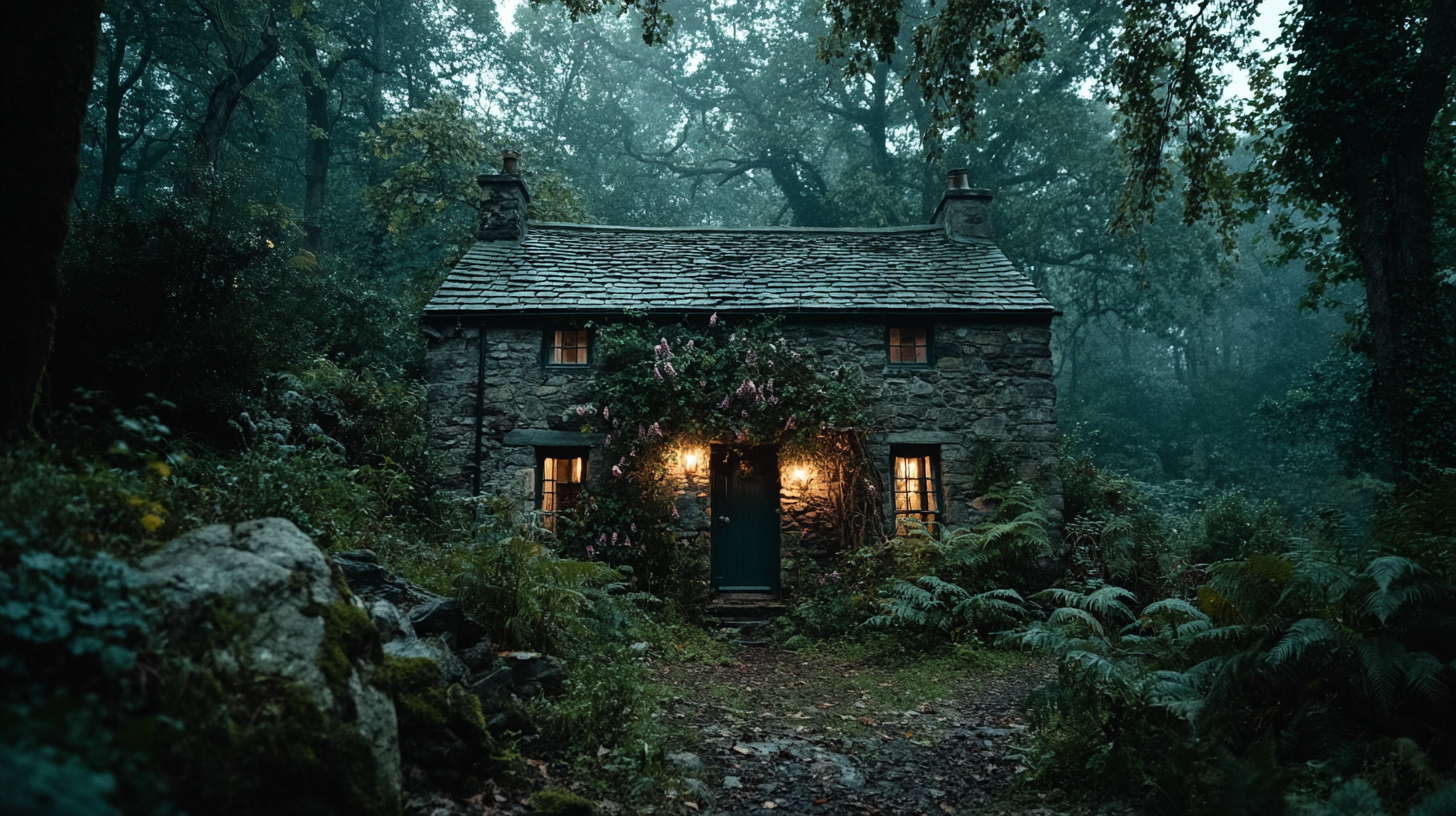
If you have ever felt more at home in October than July, you already understand dark cottagecore on a cellular level.
If you find yourself drawn to fog-filled gardens, candlelit shelves crowded with dark glass bottles, and botanical prints of plants that polite society would rather not discuss, this aesthetic was built for you.
Dark cottagecore is one of the fastest-growing visual and lifestyle movements online right now. Pinterest named it in their 2026 trend forecast. Search volume has surged year over year.
And yet it is still, somehow, underexplained. So let us fix that.
RELATED:
The Ultimate Dark Cottagecore Colour Palette Collection
Explore a growing library of dark cottagecore colour palettes pulled from poison gardens, candlelit kitchens, foggy forests, and shadowed interiors. Hex codes, RGB values, and home decor ideas for every shade. New palettes added regularly.
What Is Dark Cottagecore?
Dark cottagecore is a nature-rooted aesthetic that embraces the shadowed, strange, and quietly dangerous side of the natural world.
It shares DNA with traditional cottagecore: slow living, handmade things, deep connection to plants and seasons, a rejection of the fast and the synthetic.
But where cottagecore reaches for sunlit meadows and wildflower bouquets, dark cottagecore turns toward the foggy forest floor, the overgrown churchyard, the poison garden behind the iron gate.
The mood is moody, atmospheric, and intentional. The colours are deep navy, forest moss, charcoal, aged parchment, and the warm amber of a single candle.
Nothing is mass-produced. Nothing is bright for brightness’s sake.
It is not a Halloween aesthetic. It is not a phase. It is a full philosophy of how to live with nature, specifically the parts of nature that folklore has always known to treat with respect.
Dark Cottagecore VS Cottagecore
Traditional cottagecore peaked around 2020 and 2021. Linen dresses. Sourdough. Daisies in mason jars. A kind of pastoral optimism that felt like the world collectively sighing and retreating to an imaginary countryside.
Dark cottagecore grew quietly at cottagecore’s edges during that same period. It attracted the people who loved the slow-living ethos but felt something missing in all that golden light.
The difference comes down to which part of nature you are drawn to.
Cottagecore: the garden in July, full of colour and warmth and honey bees.
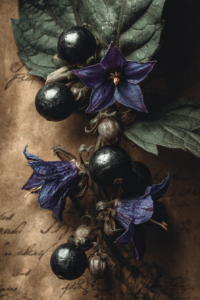
Dark cottagecore: the garden in October, when the fog comes in and the belladonna berries shine like small black suns.
Both are real. Both are valid.
Dark cottagecore simply refuses to look away from the parts of nature that are dangerous, cryptic, and achingly beautiful because of it.
RELATED:
The Overlapping Aesthetics
Dark cottagecore does not exist in isolation. It sits at the intersection of several adjacent communities, which is part of why it has spread so quickly.
Witchcore brings the folklore, the ritual objects, the reverence for plants as medicine and mystery. Dark cottagecore shares the botanical obsession and the quiet spirituality, but grounds it in nature rather than practice.
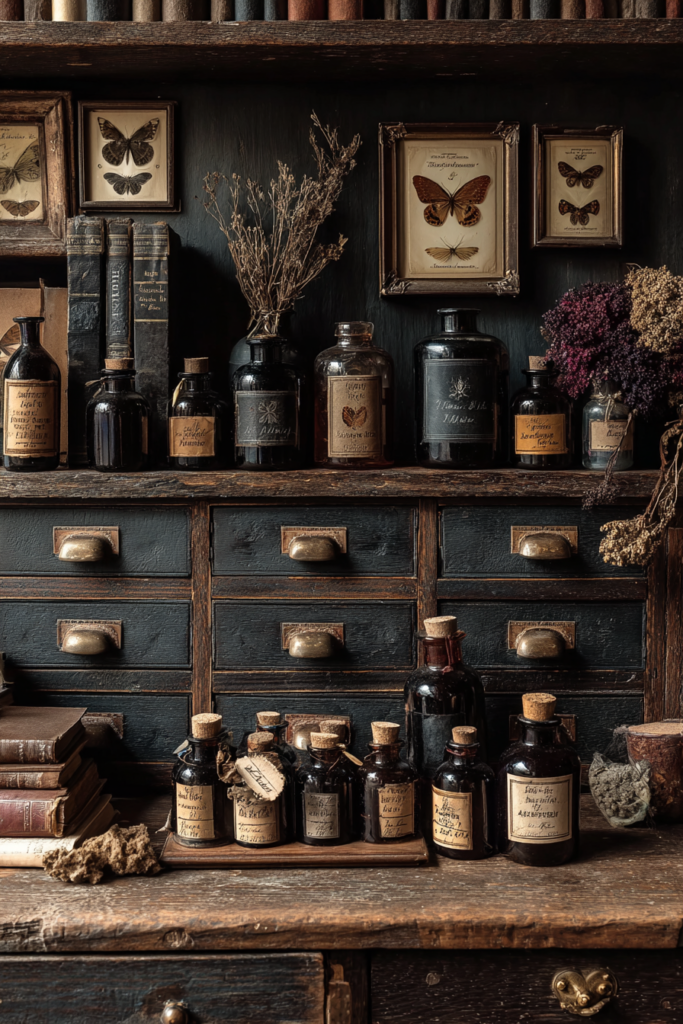
Dark academia contributes the leather books, the handwritten Latin, the Victorian scientific seriousness. The overlap shows up clearly in botanical illustration: a carefully labeled specimen print is simultaneously dark academic and dark cottagecore.
Goblincore adds the love of overlooked natural things: mushrooms, moss, beetles, wet stones, things found on the forest floor. Dark cottagecore keeps the reverence for nature’s stranger offerings but refines the visual palette toward something more editorial.
Whimsigoth brings a playful edge to dark aesthetics. Dark cottagecore tends to be quieter and more earnest, but the two communities share a love of dark interiors, candles, and botanical darkness.
Dark cottagecore borrows from all of these, but its anchor is always the same: nature, specifically the wild, ungoverned, slightly threatening side of it.
The Poison Garden Is the Heart of It
If there is one thing that defines dark cottagecore more than anything else, it is the poison garden.
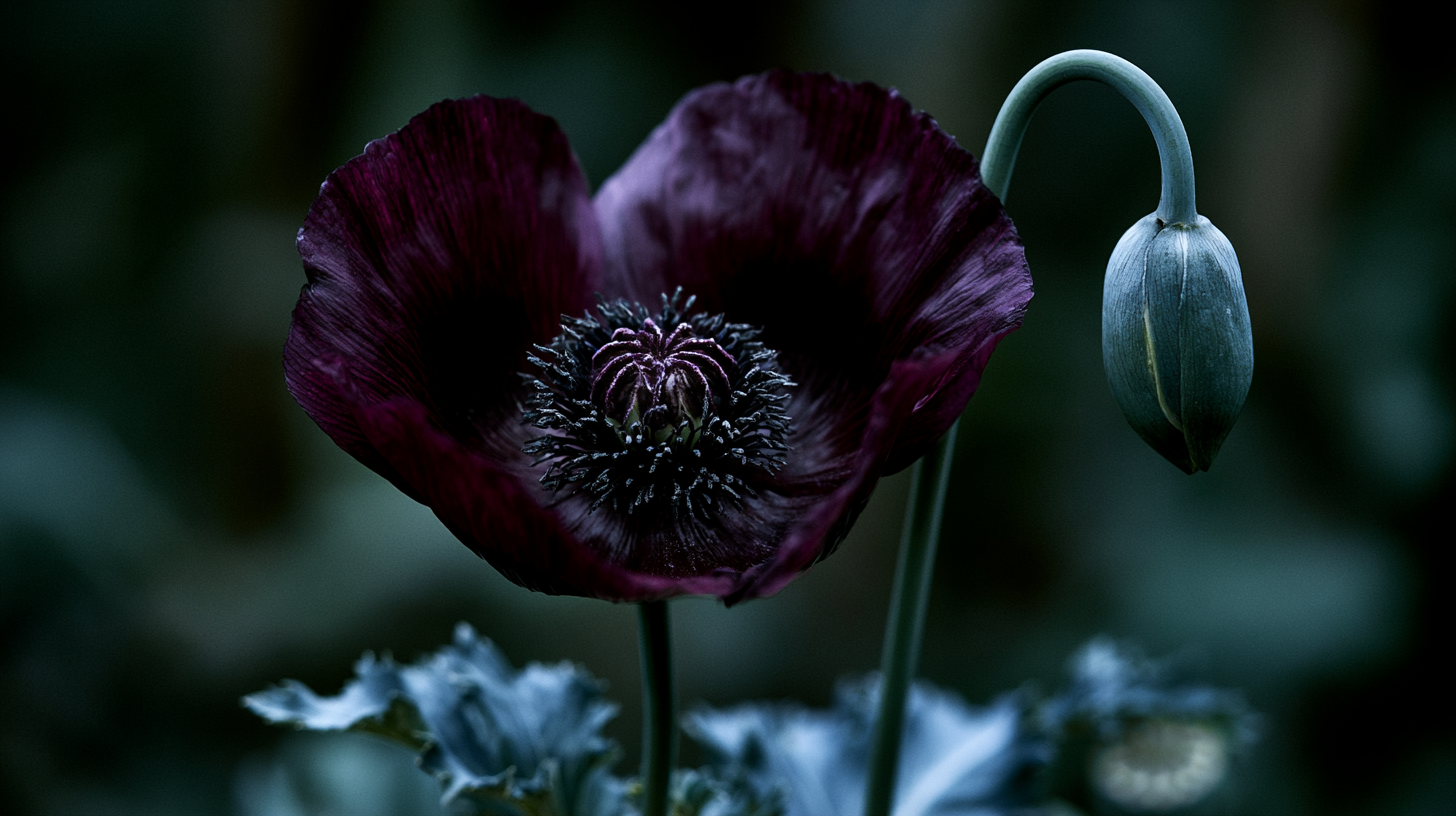
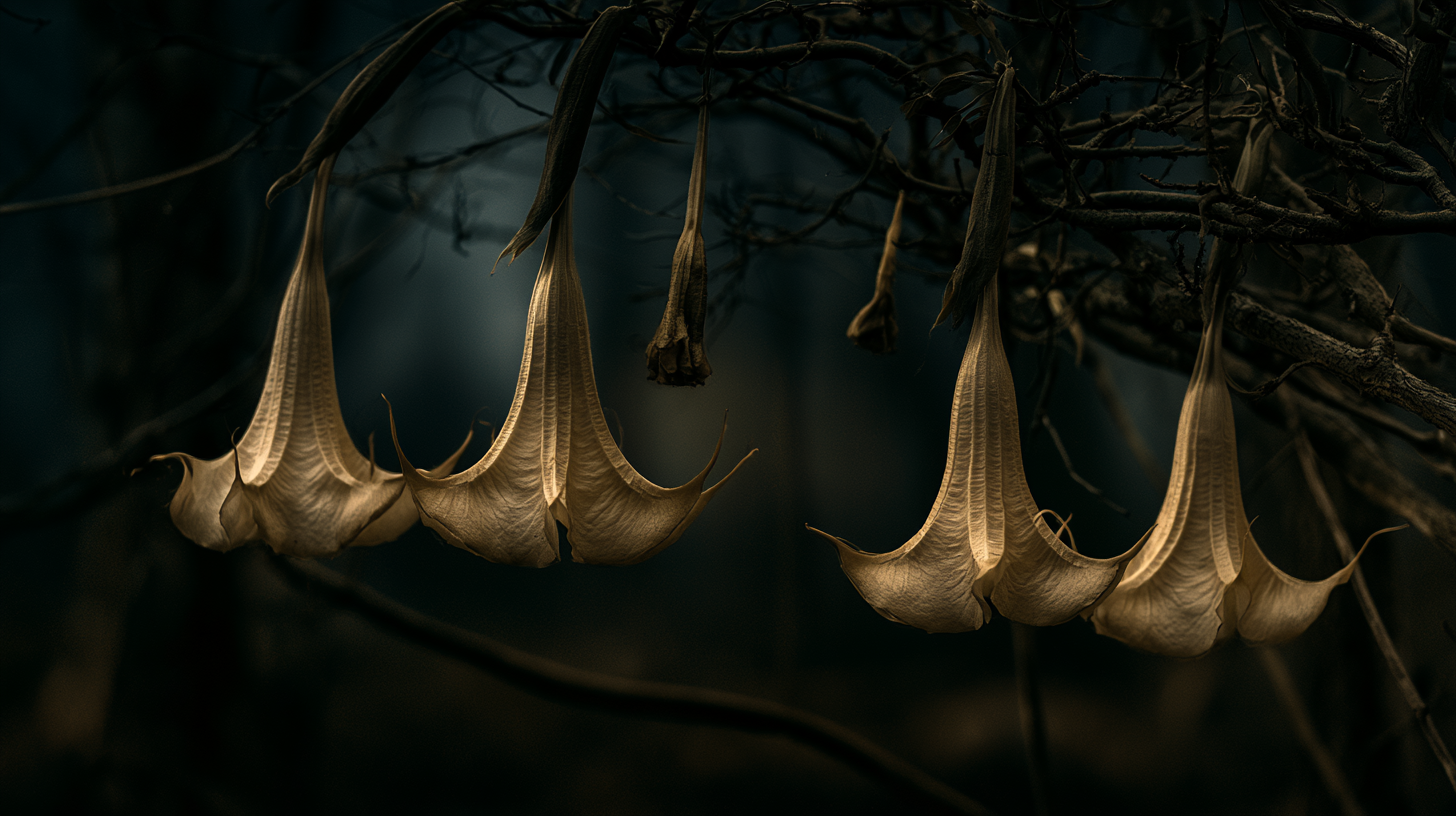
Belladonna. Foxglove. Hemlock. Wolfsbane. Mandrake. These are not decoration in this aesthetic. They are the whole point.
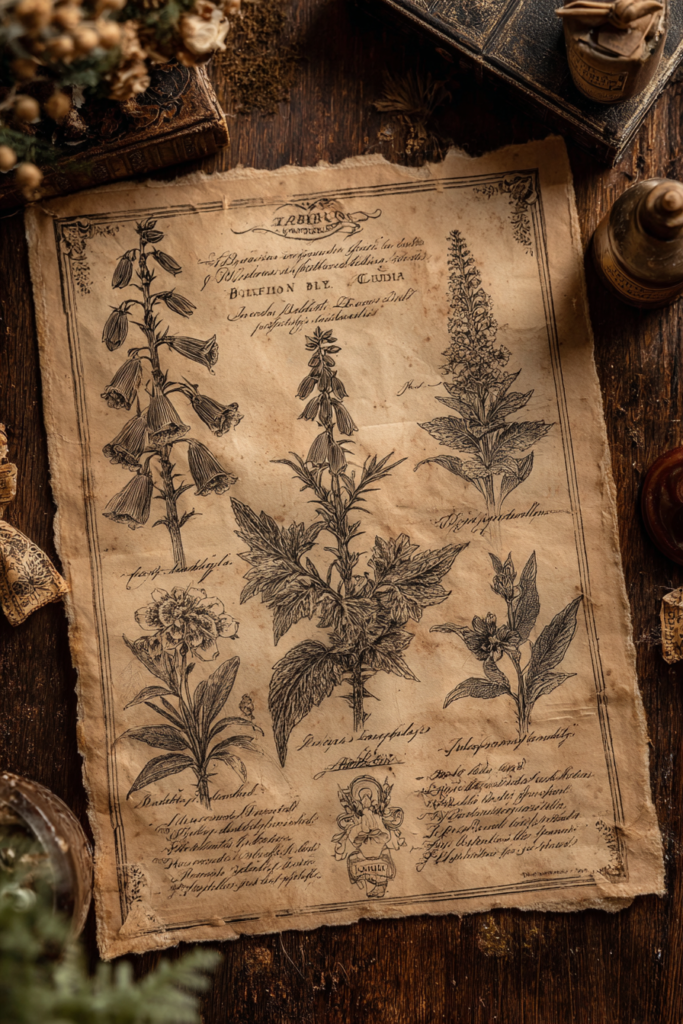
These plants have centuries of history in European folklore, folk medicine, witchcraft, and Victorian botany. They were feared and revered in equal measure. Herbalists knew them. Cunning folk used them. Victorian naturalists illustrated them with extraordinary care and precision, labeling them in Latin as if the scientific name might contain the danger.
There is something genuinely compelling about plants that are this beautiful and this lethal simultaneously. The dark berries of belladonna. The architectural spires of foxglove. The deeply strange root of the mandrake. They do not apologize for what they are.
That unambiguity is part of the appeal. In a world full of things pretending to be something they are not, the poison garden is honest.
You do not need to grow these plants to incorporate them into a dark cottagecore space. Botanical illustration prints, dried specimen displays, and pressed flower art all carry the same energy with none of the risk.
What a Dark Cottagecore Space Actually Looks Like
The dark cottagecore interior has a specific logic to it. Every element earns its place.
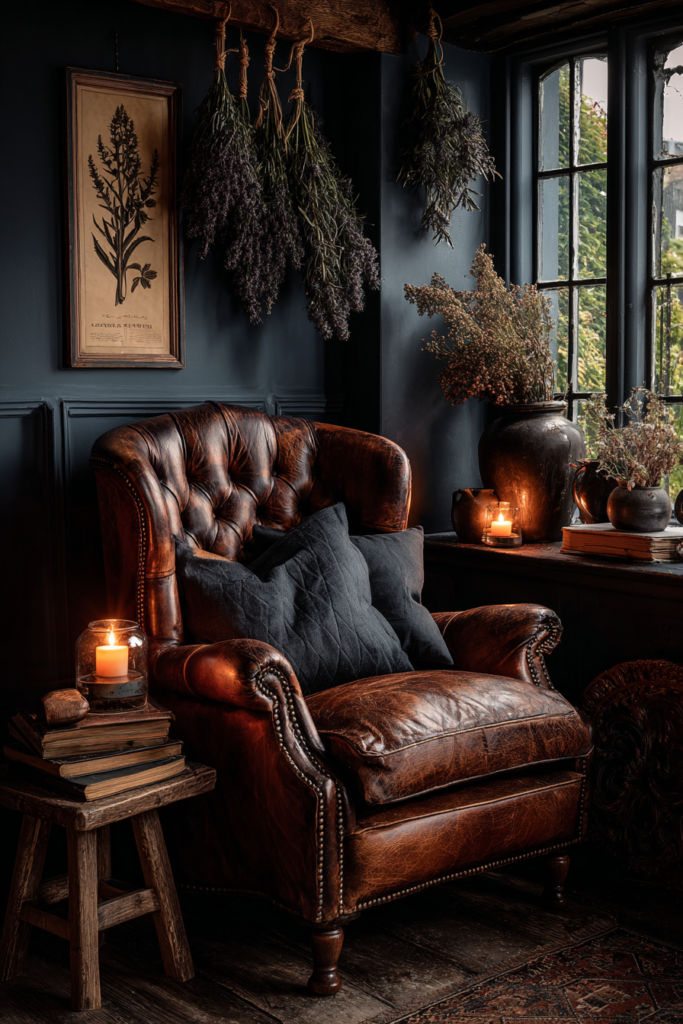
Colour palette: Deep navy, forest moss, charcoal, aged parchment, warm amber. No pastels. No whites. Darkness anchors the room and the warmer tones keep it livable rather than oppressive. (See Ultimate Collection Dark Cottagecore Colour Palettes)
Lighting: Candles wherever possible. Warm-toned bulbs where candles are not practical. Overhead lights are not the vibe. You want pools of warmth in a dark room, not a room that feels lit for a job interview.
Botanicals: Dried herbs hanging in bundles. A shelf of dark glass bottles, some with things inside them, some simply beautiful on their own. A pressed specimen framed on the wall. A single strange plant in a dark ceramic pot on the windowsill.
Prints and art: Victorian botanical illustration is the aesthetic backbone here. Fine-line drawings on aged parchment, scientific and beautiful at once. Specimen prints of the poisonous plants. Moth prints. The kind of art that looks like it belongs in a naturalist’s private collection.
Textures: Aged wood, tarnished brass, dark glass, moss, stone, linen, worn leather. Nothing shiny. Nothing synthetic. The patina of age is a feature, not a flaw.
Objects with history: A mortar and pestle. A collection of small bottles. A handwritten label on something. Old keys. Found objects from the natural world. The goal is a room that feels like it has been slowly assembled by someone who pays attention.
RELATED:
How to Start Living the Dark Cottagecore Aesthetic
The temptation is to overhaul everything at once. Resist it.
Dark cottagecore is built slowly and that is genuinely part of the appeal. It is an intentional aesthetic, which means it should arrive with intention.
Start with one shelf. Clear it and restyle it with a candle, a dark glass bottle or two, a dried bundle of something, and one framed botanical print. That is it. That is a dark cottagecore shelf. Now you have a foundation.
From there: replace your overhead lighting with lamps and candles where possible. Add a poison plant print to the wall. Find one strange, beautiful object at a market or on a walk and put it somewhere visible.
The aesthetic rewards patience. A room that has been slowly curated over months feels completely different from one that was assembled in an afternoon.
Let it accumulate. Let it get a little strange. Let it be yours.