
There is a version of coastal decorating that involves rope-wrapped mirrors, ceramic lighthouses, and throw pillows printed with anchors.
This is not that.
Coastal gothic is what happens when the sea stops being cheerful. When the fog rolls in and does not lift. When you live close enough to the ocean to understand that it is not a backdrop for a summer holiday. It is ancient, indifferent, and quietly foreboding in the way that only enormous, living things can be.
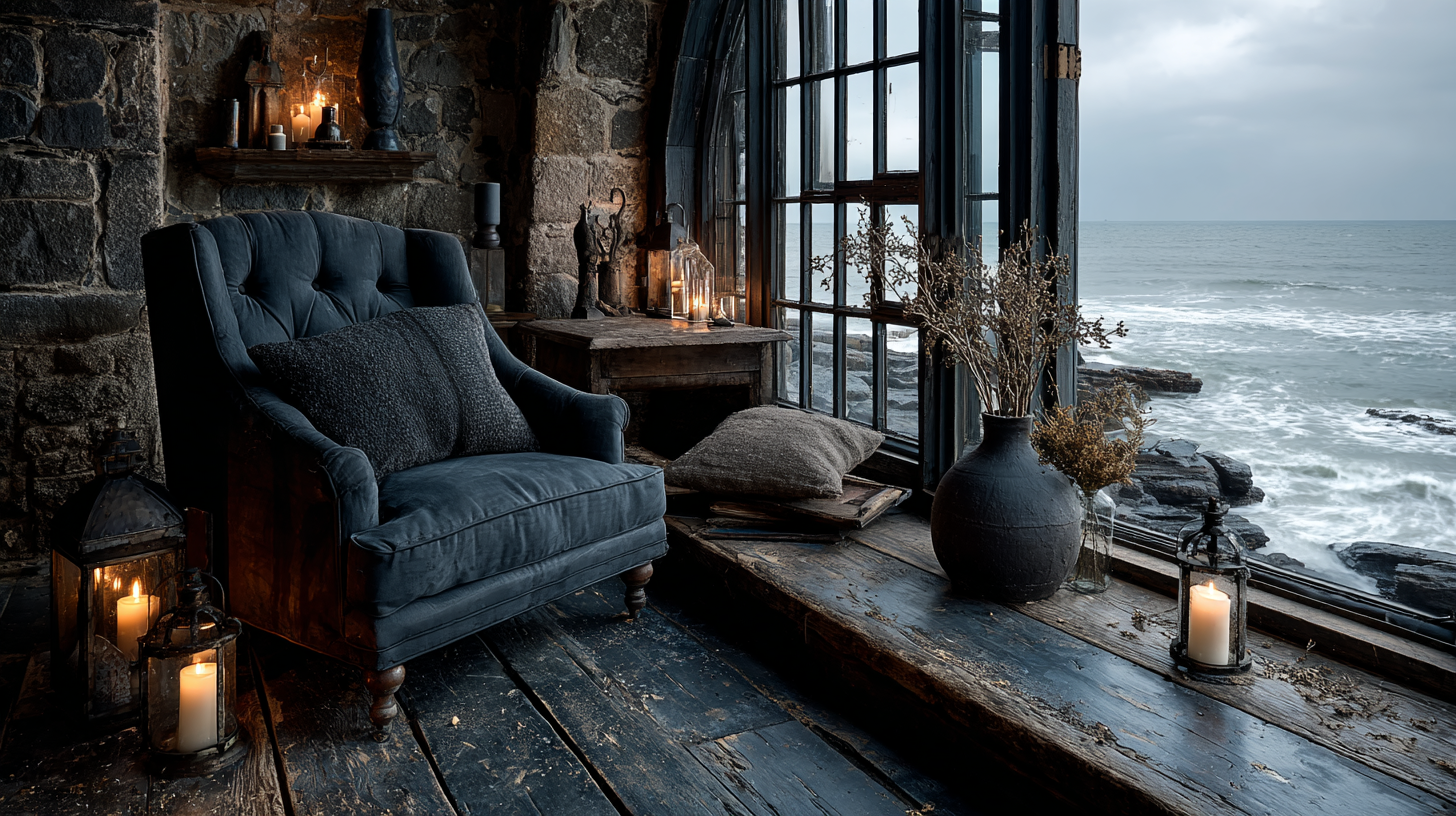
A coastal gothic interior takes that understanding and brings it inside. It is the atmosphere of a grey November shoreline made into a room: salt-worn wood, lantern light burning warm against a cold sky, dried botanicals in dark vessels, and beyond the wavy glass of an old window, the sea sitting heavy and still and patient.
If you have been drawn to dark moody interiors but feel that traditional cottagecore is too warm, or that standard coastal decor is far too cheerful, coastal gothic may be exactly what you have been looking for.
This post covers everything you need to style a coastal gothic interior from the ground up: palette, materials, furniture, walls, lighting, and the small specific details that make the difference between a dark room near a coast and a room that genuinely feels like it has always been there.
The Ultimate Dark Cottagecore Colour Palette Collection
Explore a growing library of dark cottagecore colour palettes pulled from poison gardens, candlelit kitchens, foggy forests, and shadowed interiors. Hex codes, RGB values, and home decor ideas for every shade. New palettes added regularly.
RELATED:
What Is Coastal Gothic?
Before getting into the styling details, it helps to understand what coastal gothic actually is and how it differs from other dark interior aesthetics.
Coastal gothic is a moody, atmospheric interior style that draws from the darker qualities of the coast: salt, weathered wood, grey water, lantern light, and the long weight of maritime history. It sits at the intersection of gothic interior design and coastal living, but it takes neither in a conventional direction.
It is not gothic in a theatrical or heavily ornamented sense. And it is not coastal in the cheerful sun-bleached way that dominates most seaside decorating.
Coastal gothic is closer to the feeling of a room that has been near the water long enough to absorb it. The walls are dark and slightly damp. The light is warm and low. The sea is right there beyond the glass, grey and still and not particularly interested in being picturesque.
The objects in the room feel gathered rather than decorated. Dried sea herbs hanging from a beam. Dark glass bottles on a rough shelf. A worn chair that has held many hours of watching the weather come in off the water. Nothing is there for show. Everything is there because it belongs.
For those already drawn to dark cottagecore, witchy interiors, or dark academia aesthetics, coastal gothic is a natural adjacent style. It shares the same love of aged materials, warm low light, and objects with a quiet history, but replaces the forest floor with the shoreline.

The Coastal Gothic Colour Palette
The foundation of any coastal gothic interior is colour, and this is where the aesthetic diverges most immediately from conventional coastal decorating.
Forget white, sand, and sky blue.
The coastal gothic palette is built from the colours of the sea on a grey day. Your primary tones are deep navy, weathered charcoal, and the particular dark grey-brown of aged wood that has spent years near salt water. These are not paint colours chosen for drama. They are the colours things become when the coast works on them over time.
Accent tones come from the objects the shore leaves behind: the warm amber of lantern light, the dull gold of dried botanicals, the deep green-brown of dark glass, the near-black of wet stone, the bleached grey-white of driftwood that has been in the water too long to remember what tree it came from.
What you are avoiding entirely is the washed-out, sun-bleached palette of conventional coastal decorating.
No white walls. No sky blue. No coral. No aquamarine.
This is a coastline that does not see much direct sun, and the interior should feel exactly like that.
Materials: What Coastal Gothic Is Actually Made Of
Coastal gothic interiors are built on materials long before anything goes on the walls.
The mood comes from surfaces: what things are made of, how old they look, and how clearly you can see what time and salt have done to them.
The core principle is weathered, worn, and salt-touched. Nothing should look new. Nothing should look like it arrived recently.
Weathered Dark Wood
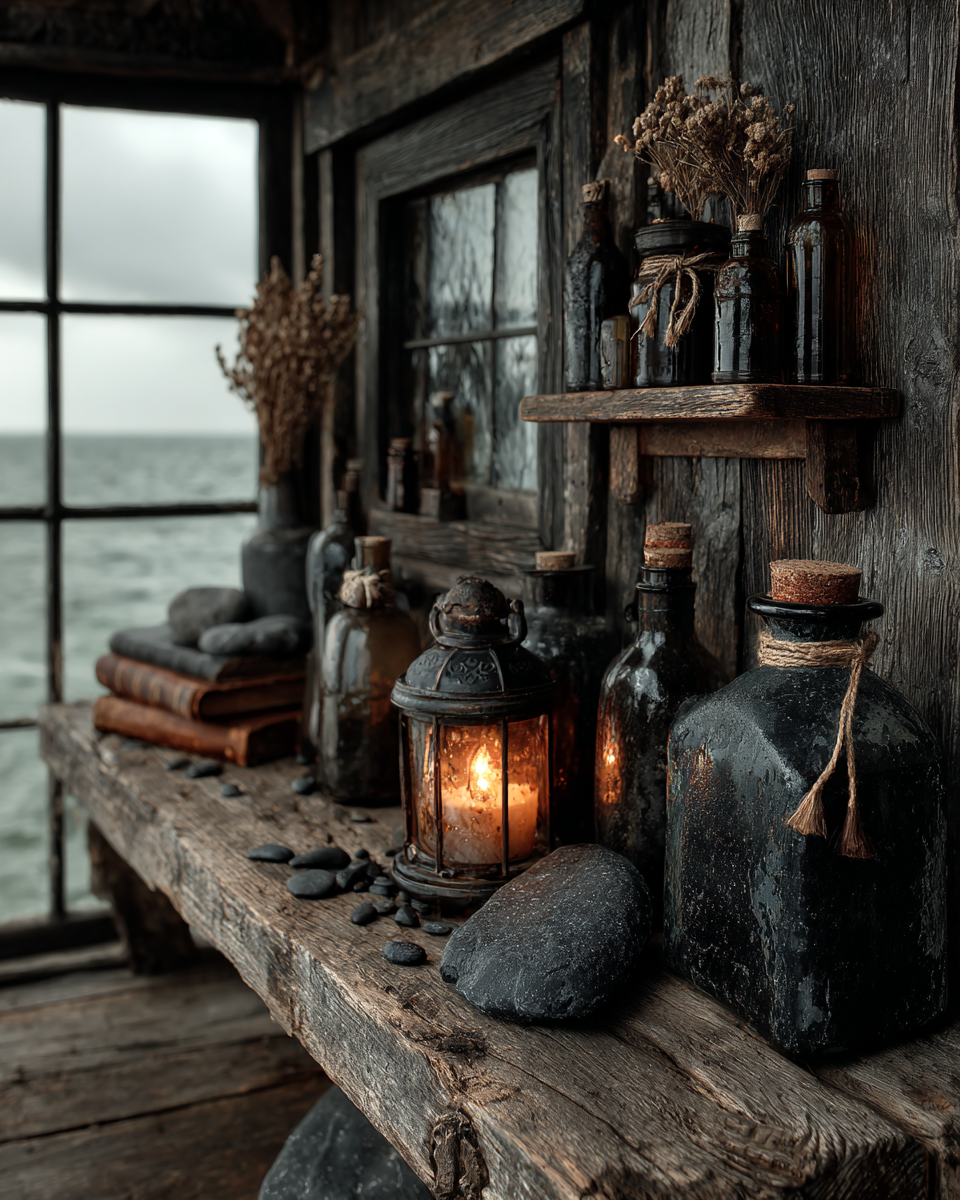
This is the primary material of a coastal gothic interior. Dark wood plank walls, rough hewn shelving, heavy floorboards with visible grain and age. Not painted, not whitewashed, not treated to look pristine. Wood that has absorbed decades of salt air and looks like it. The darkness should feel earned rather than applied.
Dark Glass
Bottles and vessels in deep green, brown, and near-black glass. Old glass with slight imperfections and bubbles. Glass that catches lantern light and gives it back in a muted, murky way. Dark glass vessels are one of the most affordable and effective ways to build coastal gothic atmosphere on any surface.
Rope and Cord
Used sparingly and with intention. A single coil of thick, aged rope on a shelf is genuinely atmospheric. Rope used as a decorative motif across multiple surfaces reads as nautical kitsch, which is exactly what coastal gothic is not.
Dried Coastal Botanicals
Sea herbs, coastal wildflowers, dried grasses, and twisted driftwood branches arranged with quiet intention. Not in a decorative or styled way. In the way that suggests someone gathered them and brought them inside because they belonged there. A dark ceramic vessel on the floor holding a cluster of dried stems reads as coastal gothic immediately.
Aged and Tarnished Metal
Lanterns with the patina of long use. Tarnished brass fittings. Iron hooks on dark wood. Nothing polished. Nothing bright. The metal in a coastal gothic interior should look as though it has been near the water long enough to develop a history.
Smooth Sea Worn Stones and Shells
Collected from the shore and placed with intention on shelves and windowsills. Their presence is simple and grounding. They do not need to be arranged. They need to look as though someone picked them up and set them down in a place that felt right.
RELATED:
Coastal Gothic Furniture: Worn, Heavy, and Grounded
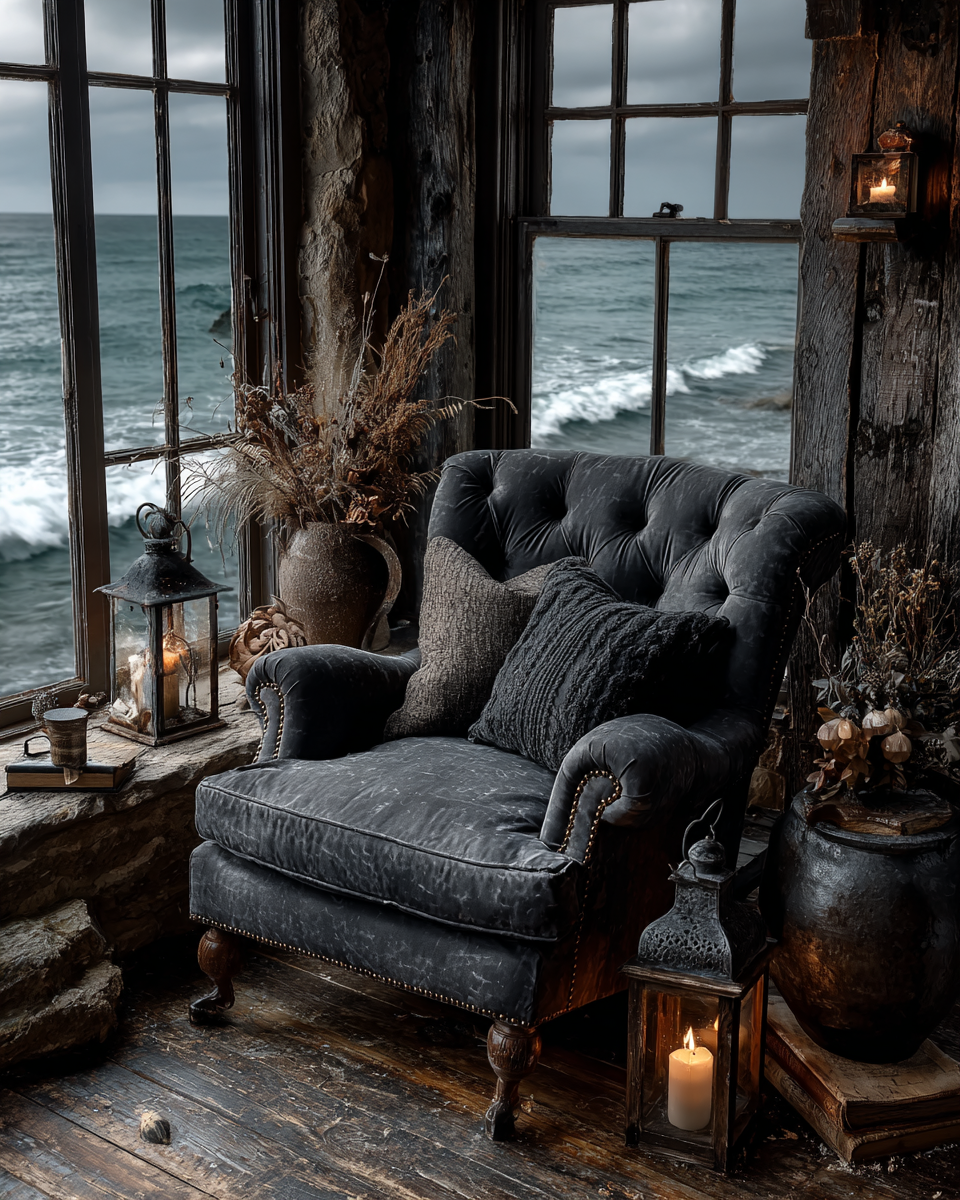
The furniture in a coastal gothic interior should feel as though it has been in the room for a very long time and has no intention of leaving.
Heavy and low. Dark and worn. Upholstered in fabric that has faded slightly and softened with use. Pieces that look as though they came from somewhere with a history rather than from a showroom.
The chair in a coastal gothic room should look like it has held many hours of sitting quietly near the water watching the weather move in.
What you are not looking for is anything carved, ornate, or formally structured. Coastal gothic furniture is not Victorian in the decorative sense. It is closer to the furniture of a working maritime life: built to last, built to be used, and made beautiful by time rather than by design.
What to look for:
A deep worn armchair or settee in dark fabric, ideally something that has faded toward charcoal or deep teal or the particular grey-green of the sea at dusk.
Heavy dark wood frames with visible grain. Low tables of rough hewn wood. Shelving that looks built rather than bought.
A wooden chair that looks like it has been near salt water.
What to avoid:
Anything wicker or rattan. Anything light in colour or weight. Anything that reads as coastal chic or beach house. Anything with nautical hardware.
The furniture here is not decorative. It is functional and aged and completely itself.
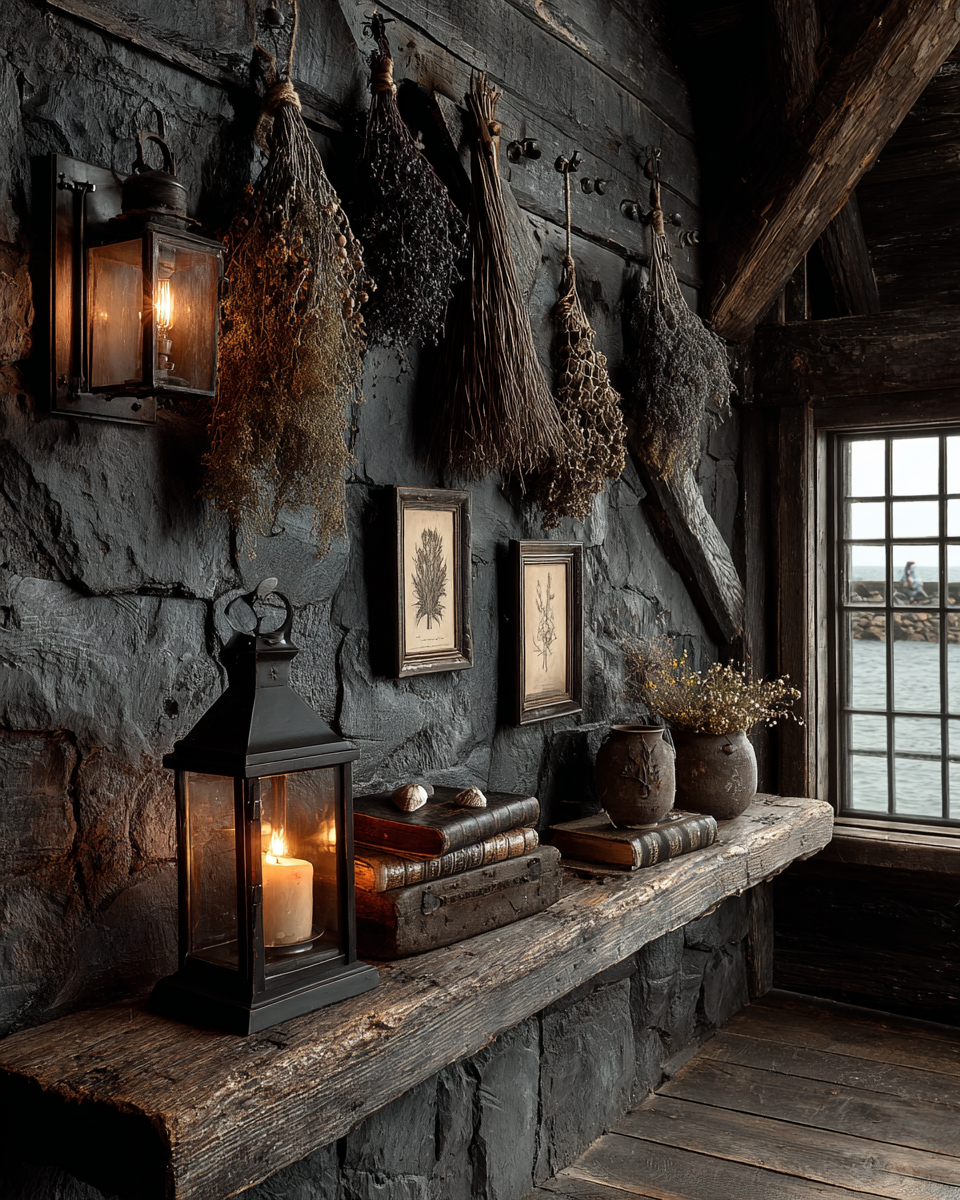
Coastal Gothic Wall Decor
The walls in a coastal gothic interior are not a gallery. They are a surface that has accumulated things over time, and the distinction matters.
You are not curating a collection for display. You are building a wall that looks as though it has slowly gathered the things that belonged there: dried herbs hung to preserve them, specimens pinned because someone found them significant, a small framed drawing placed because it felt right in that spot.
Dried Botanicals and Sea Herbs
Hung in loose bundles from iron hooks or rough beams. Sea lavender, dried coastal grasses, twisted driftwood branches. The bundles do not need to be arranged symmetrically. They need to look as though they were hung with purpose and left there.
Pinned and Pressed Specimens
Sea grasses, shells, dark feathers, and fragments of things found on the shore, pinned directly or displayed in shallow frames. Simple and slightly rough. The framing should be minimal and dark, nothing ornate.
A Small Number of Framed Illustrations
Simple drawings or prints of coastal botanicals or sea creatures, framed plainly and hung without a great deal of ceremony. One or two at most. The wall should not read as a gallery. The botanical specimens and dried herbs should do most of the work.
Dark Framed Mirrors
A single dark framed mirror in aged wood or tarnished metal, hung where it catches lantern light. Not decorative. Functional and worn.
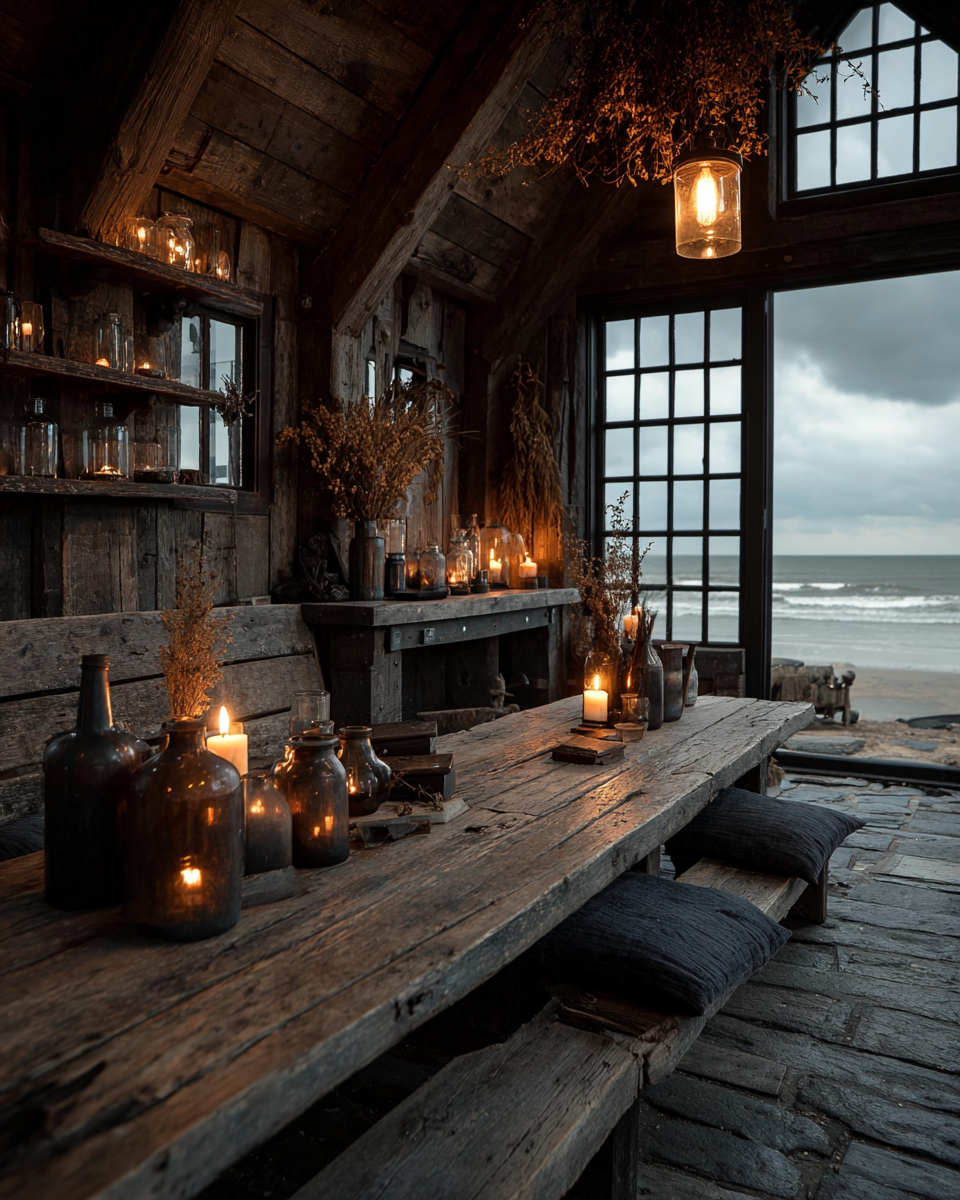
Coastal Gothic Lighting: Lantern Light and the Warmth of Something Burning
Lighting is not a finishing touch in a coastal gothic interior. It is the atmosphere itself, and it shapes everything else in the room.
The goal is warmth held against cold. The feeling of light that is doing real work, keeping something back. Not decorative light. Functional, burning, amber light in a room where the grey outside makes it necessary.
Lanterns
The primary light source in a coastal gothic interior. Not decorative lanterns chosen for style. Lanterns that look as though they have been used for a long time and would continue to be used whether or not anyone was watching. Set on rough shelves, on floors, on windowsills where their light reflects faintly in the old glass.
Edison Bulbs
A single warm Edison bulb in a simple fitting adds the right quality of light without reading as deliberately styled. The warmth of the filament against the dark of the room and the grey beyond the window is exactly the contrast that defines the coastal gothic mood.
Firelight
Where you have it, a low fire in a rough stone or dark brick hearth is the most effective light source possible. Even in warmer months a hearth filled with candles of varying heights maintains the visual and atmospheric weight of firelight.
What to avoid
Overhead lighting of any kind. Bright white bulbs. Anything that creates flat even light across the room. The shadows in a coastal gothic interior are not a problem to be solved. They are fundamental to what the room is.
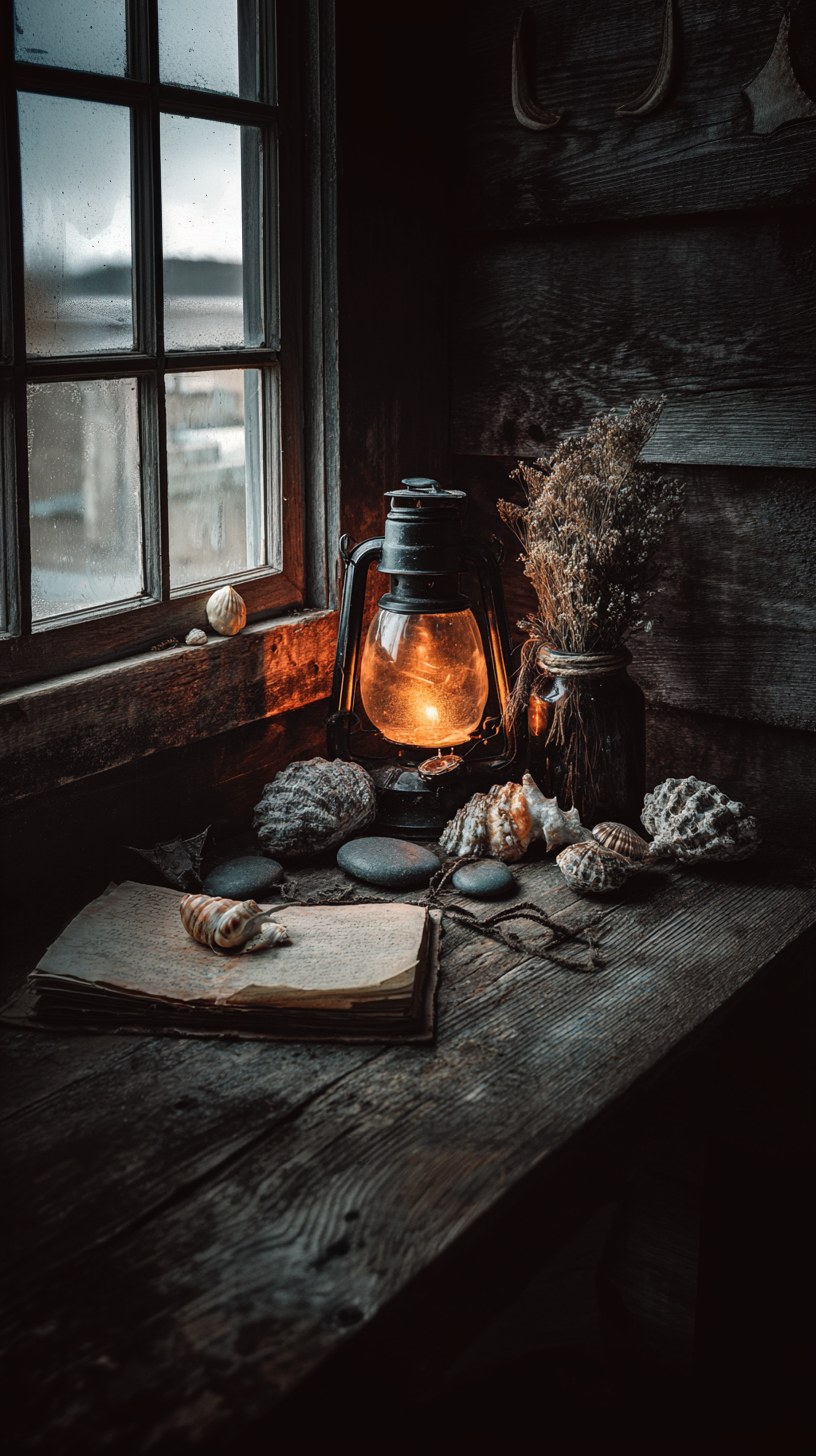
The Details That Make a Coastal Gothic Interior
The difference between a dark room near the water and a room that genuinely reads as coastal gothic lives almost entirely in the details. These are small, specific, and intentional.
Nothing accidental. Nothing filler.
A rough shelf with five objects placed with intention. A dark glass bottle. A glowing lantern. A smooth dark stone from the shore. A bundle of dried sea herbs. One small framed drawing. Five things. Each one chosen. Nothing else.
Dried botanicals on the floor. A dark ceramic vessel sitting directly on rough floorboards, holding a loose cluster of dried coastal stems. Not arranged. Set down. The distinction is visible and it matters.
Books with visible spines. Maritime history, coastal folklore, field guides to shore plants, ghost stories set near water. Their presence in the room is not decorative. They are part of what the room is.
Smooth stones on the windowsill. A handful of dark sea worn stones arranged along the sill of the window that looks out onto the grey water. Simple and grounding and completely right.
Scent. Salt, lantern wax, dried sea herbs, and the faint cold smell of damp wood. Not a candle chosen for fragrance. The smell of a room that has been near the water long enough to carry it.
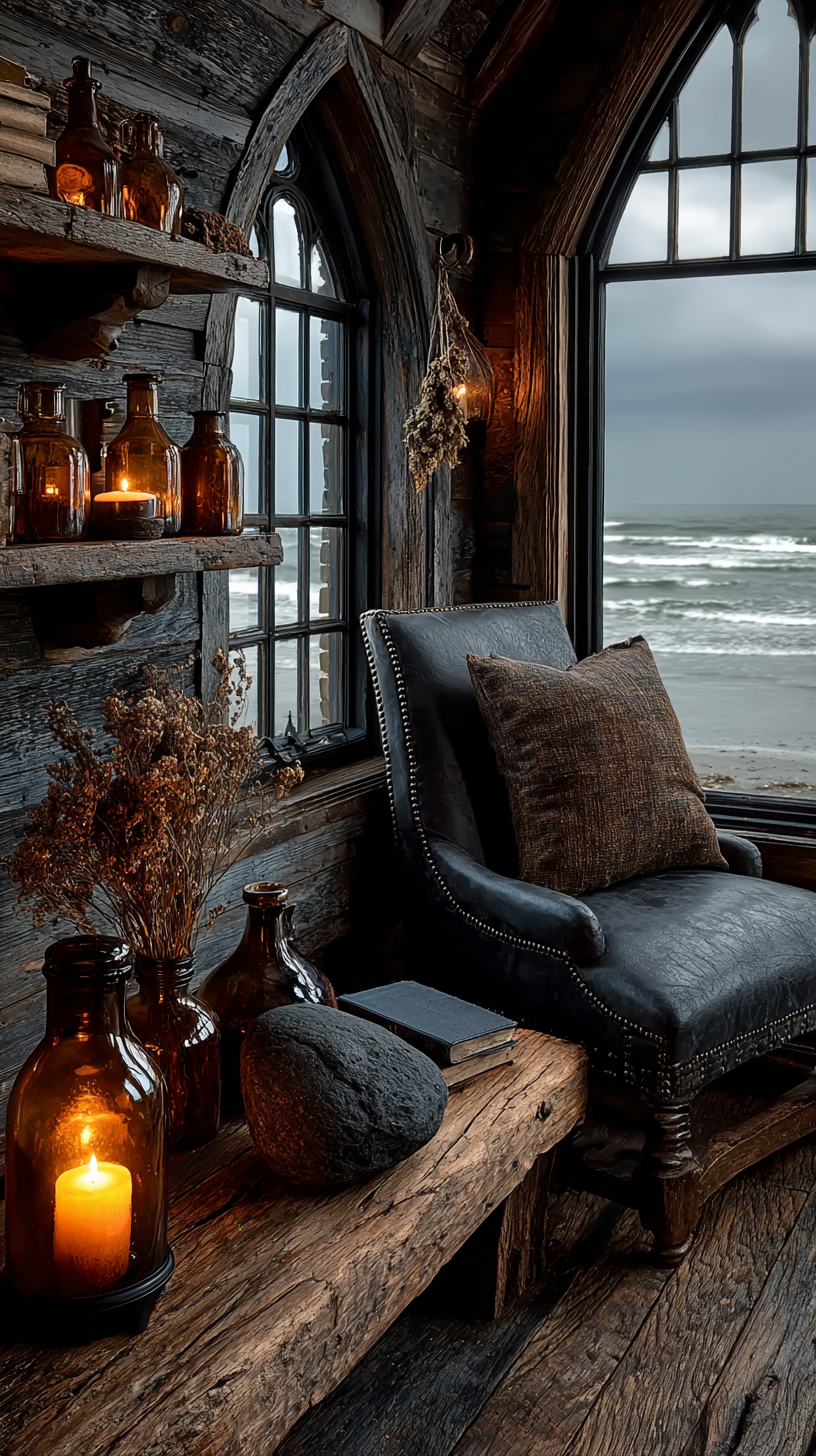
What to Avoid
The coastal gothic aesthetic has a clear opposite, and it is the conventional coastal decorating industry in its entirety.
Avoid: anything white or whitewashed, anchor motifs in any form, blue and white striped textiles, rope used decoratively as a design motif, ceramic sea creatures of any kind, printed text signs, anything described in a catalogue as nautical or coastal chic or beachside living, wicker and rattan, anything that reads as a holiday cottage.
The test is simple: does this object look like it belongs in a room that has been near the water for decades and absorbed it, or does it look like it belongs in a cheerful seaside rental? If it belongs in the rental, it does not belong here.
Coastal gothic is not the coast as a destination. It is the coast as a place you actually live, close enough to the water to know exactly what it does to things over time.
Frequently Asked Questions
What is the difference between coastal gothic and dark cottagecore?
Both aesthetics share a love of aged materials, warm low light, dried botanicals, and objects with a quiet history. The primary difference is setting. Dark cottagecore draws from the forest, the poison garden, and the rural interior. Coastal gothic draws from the shoreline, the grey sea, weathered maritime buildings, and the particular quality of a room that has been near salt water long enough to absorb it. The two aesthetics sit naturally close together and complement each other without being the same thing.
Is coastal gothic the same as nautical decor?
No. Nautical decor is theme-driven and cheerful, built around maritime motifs used decoratively. Coastal gothic draws from the darker and more atmospheric qualities of coastal life: salt-worn materials, grey water, low light, and the weight of maritime history. The sea in coastal gothic is not a holiday backdrop. It is ancient and indifferent and quietly present through a wavy glass window.
What colours work in a coastal gothic interior?
Deep navy, weathered charcoal, dark grey-brown aged wood tones, and the near-black of dark glass and wet stone are the primary palette. Warm amber from lantern and Edison light is the key accent. Dried botanical gold, driftwood grey-white, and deep sea green are secondary accent tones.
Can coastal gothic work in a small space?
Yes. The aesthetic is built on depth and atmosphere rather than scale. A single well-considered corner with the right wall treatment, one good light source, and a handful of intentional objects reads as coastal gothic immediately regardless of room size. In smaller spaces the atmosphere can be even more concentrated and effective.