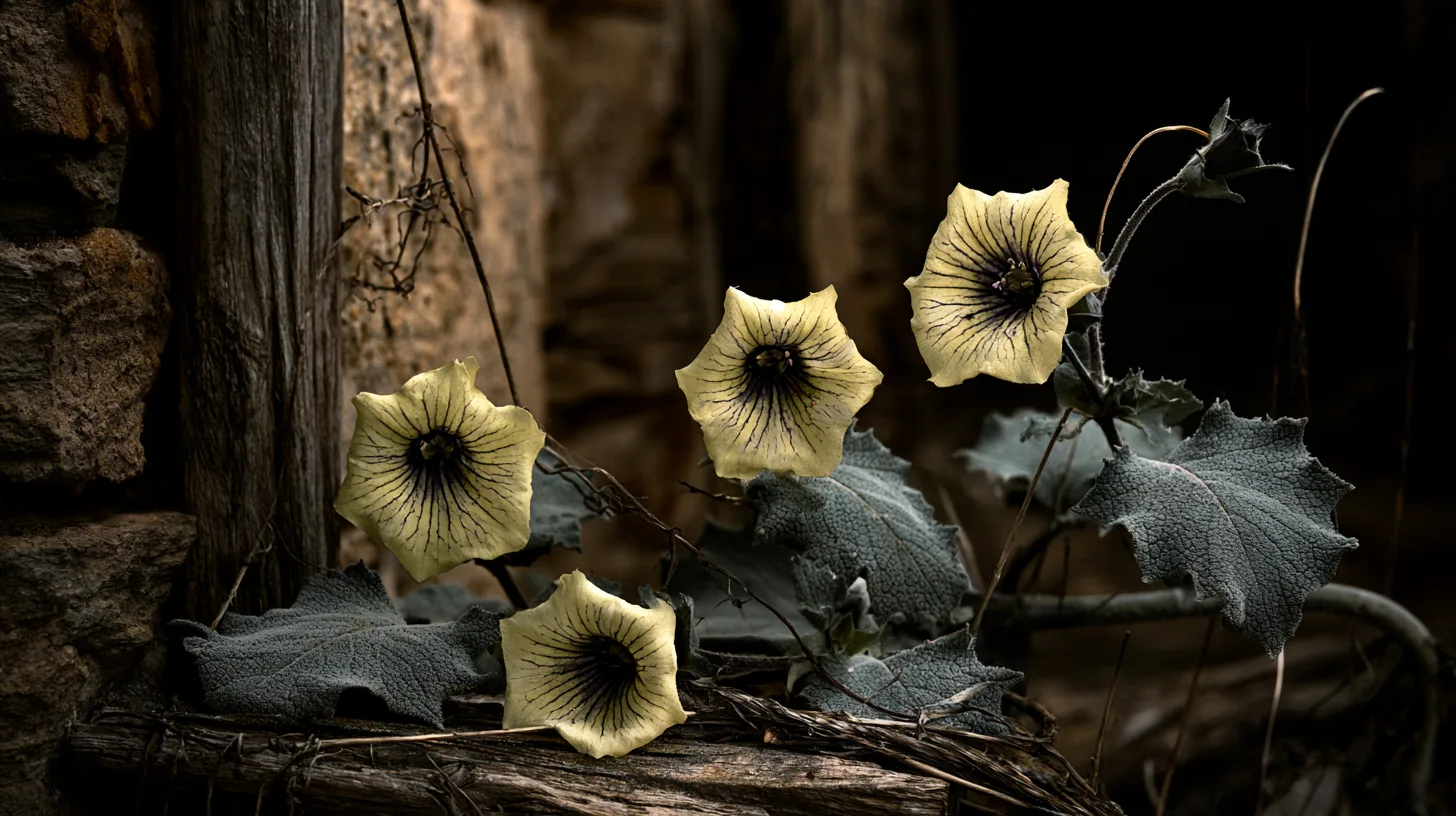
There is a plant that turns up at the edges of places: on waste ground, along old field margins, near the ruins of buildings that used to be lived in. It is sticky to the touch. It smells unpleasant. Its flowers are pale and veined with purple in a way that looks less like decoration and more like a warning written in a language you almost understand.
Hyoscyamus niger, black henbane, has been linked to witchcraft for centuries. The henbane plant runs through the history of medicine, folklore and poisoning, from medieval sleeping draughts to Shakespeare to a famous murder trial in 1910. It is not a dramatic plant. It is a quiet one. But few plants in the poison garden have been present at so many dark moments.
RELATED POSTS:
At a Glance
- Scientific name: Hyoscyamus niger
- Common names: henbane, black henbane, stinking nightshade, hog’s bean
- Family: Solanaceae (the nightshade family)
- Native range: Europe, Asia and northern Africa; spread as an ornamental and now found across much of the United States
- Toxic parts: all parts
- Main toxins: tropane alkaloids, including hyoscyamine and scopolamine (hyoscine)
- Toxicity: high, for people and livestock
What It Looks Like
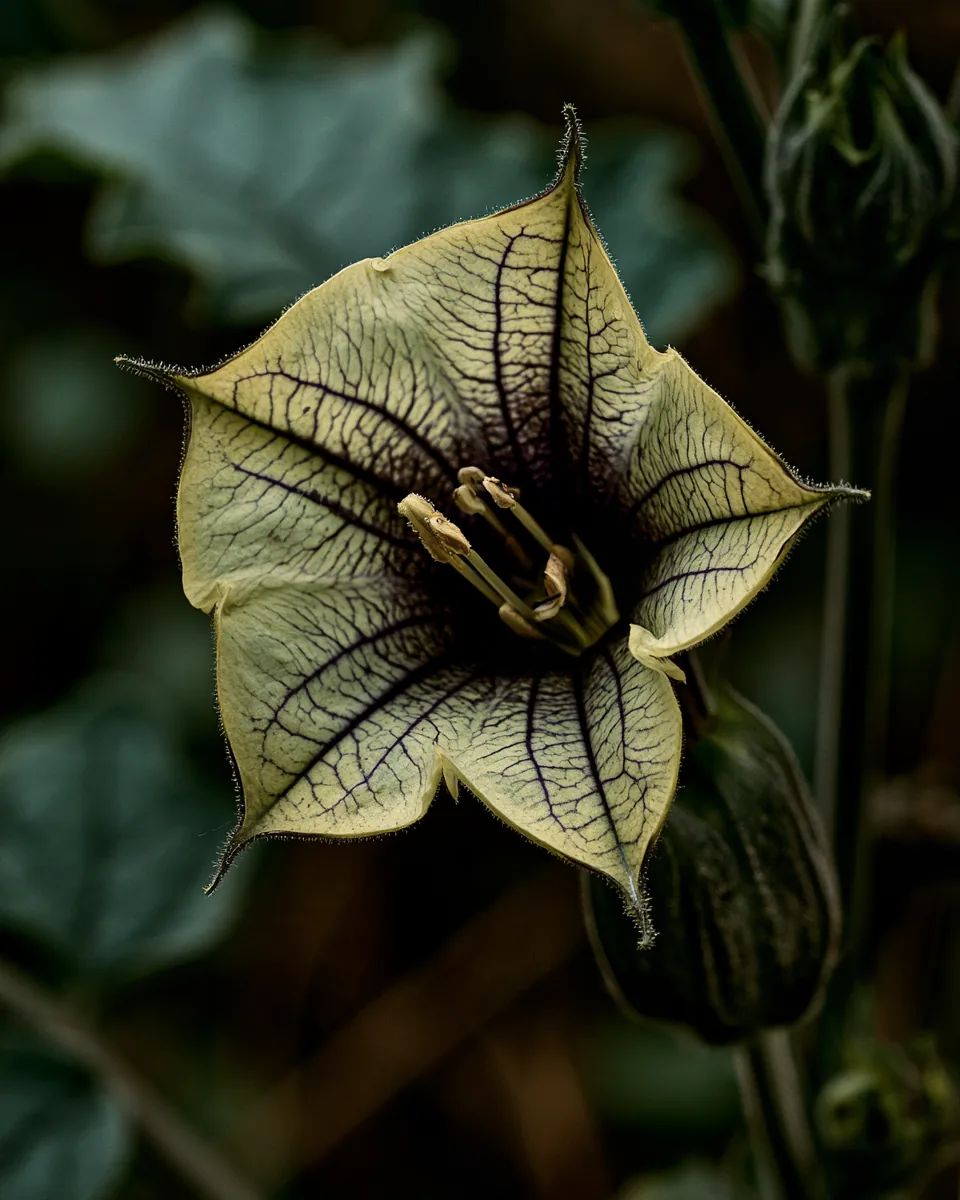
Henbane is an annual or biennial that grows up to about 3 feet tall. The whole plant is covered in glandular hairs that make it sticky, and its coarsely toothed, shallowly lobed leaves give off a foul smell. In its first year, the leaves may grow as a low rosette.
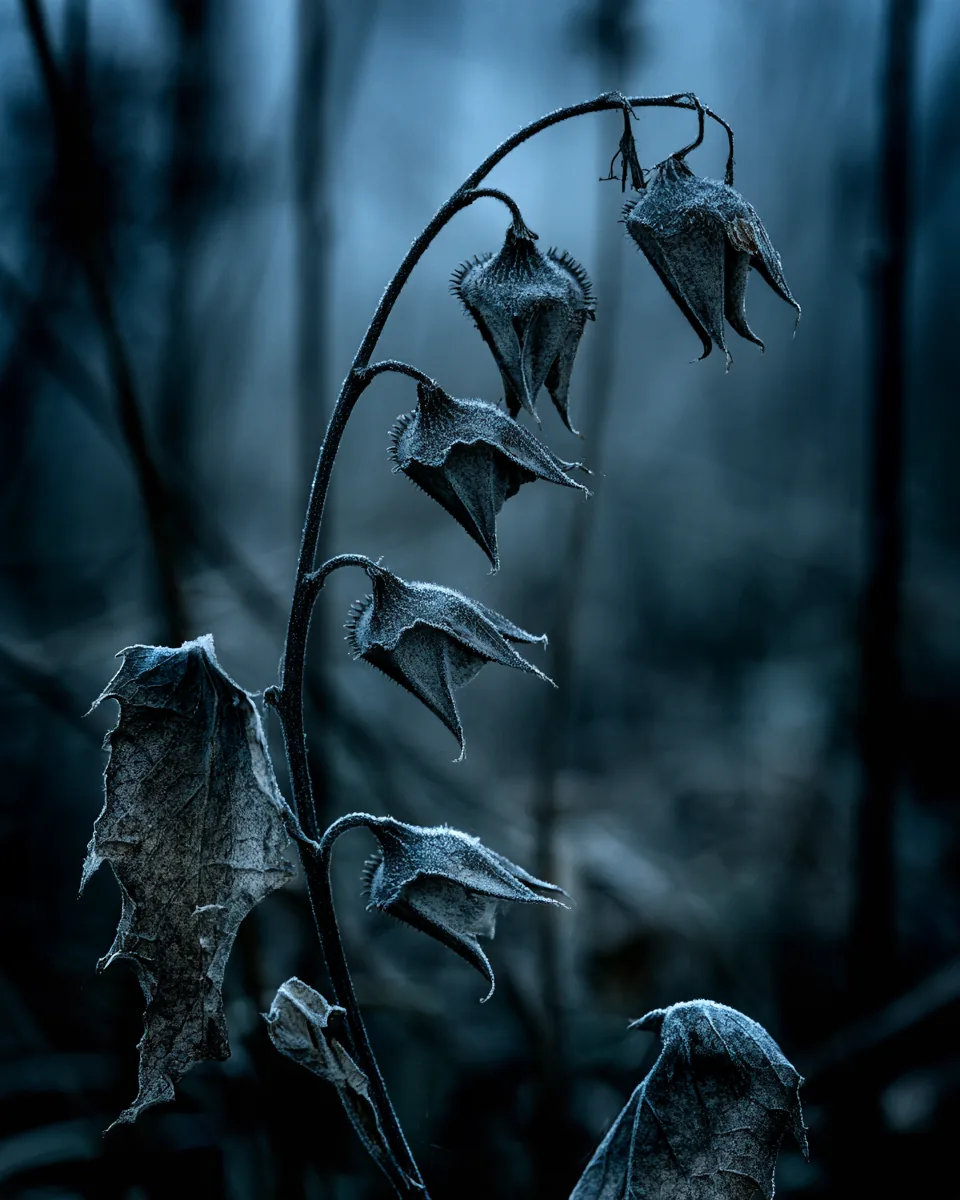
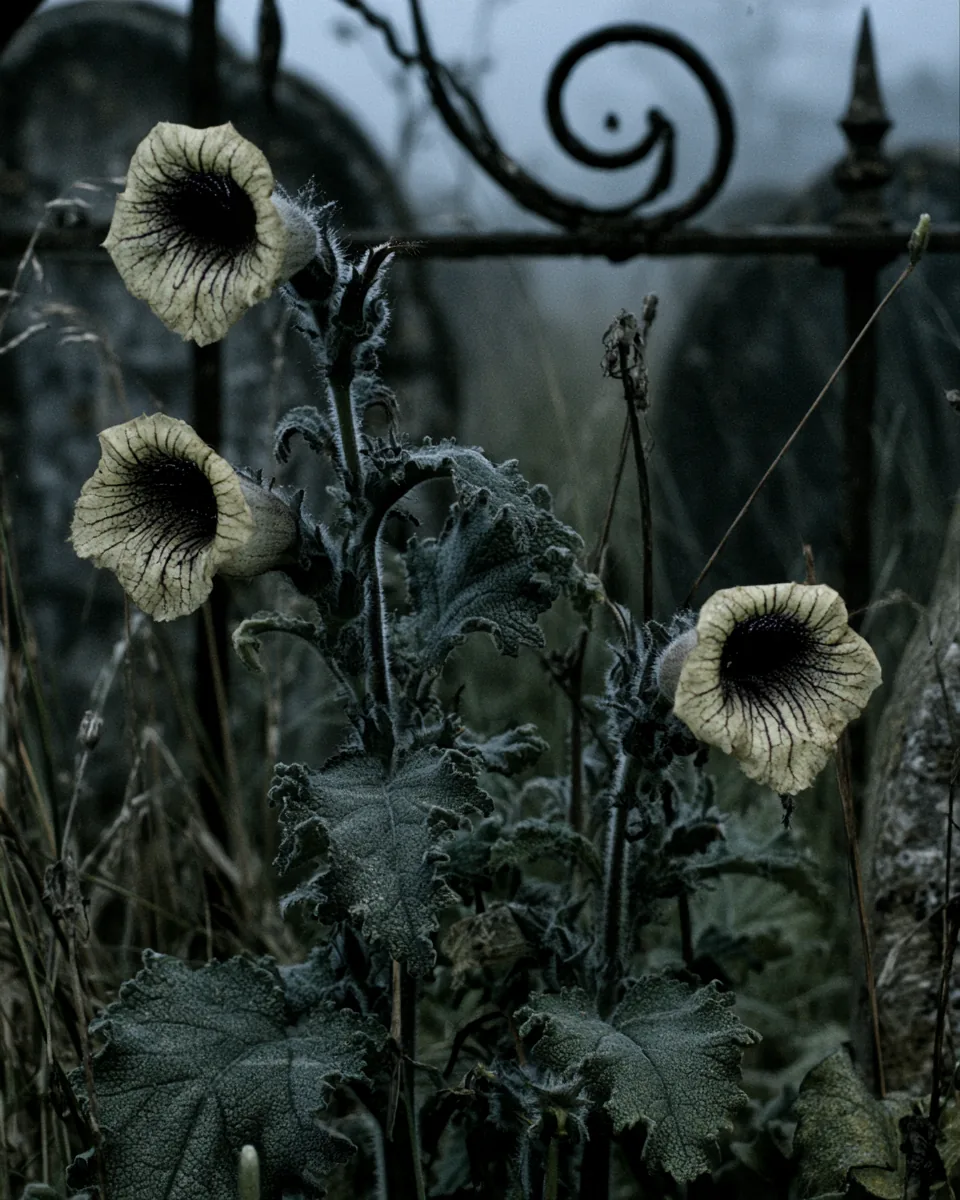
The flowers are what make henbane unforgettable. From late spring through summer they open in one-sided clusters: funnel-shaped, greenish to brownish yellow, with a dark purple center and a network of purple veins. The effect is more unsettling than pretty, as if the flower had been drawn rather than grown. After flowering, the seed capsules sit inside stiff, toothed husks that give the plant a strange, architectural look into autumn.
It is not a plant that invites approach, and that is part of its character.
The Poison: What It Does
Henbane shares its chemistry with belladonna, datura and the mandrake. Its tropane alkaloids, chiefly hyoscyamine and scopolamine, block the nervous system’s messenger acetylcholine and cause an anticholinergic poisoning.
Typical signs of poisoning by plants of this group include:
- A very dry mouth and skin
- Dilated pupils and blurred vision
- A rapid heart rate
- Flushed, hot skin
- Confusion, agitation and hallucinations
- Problems with memory for the episode
Scopolamine takes its other name, hyoscine, from henbane’s Latin name, Hyoscyamus. In carefully measured pharmaceutical doses, it is still used today, for example as a patch behind the ear to prevent seasickness. The plant itself is another matter: its strength varies, and henbane poisoning is a medical emergency.
RELATED POSTS:
History and Folklore
A Medieval Sleeping Draught
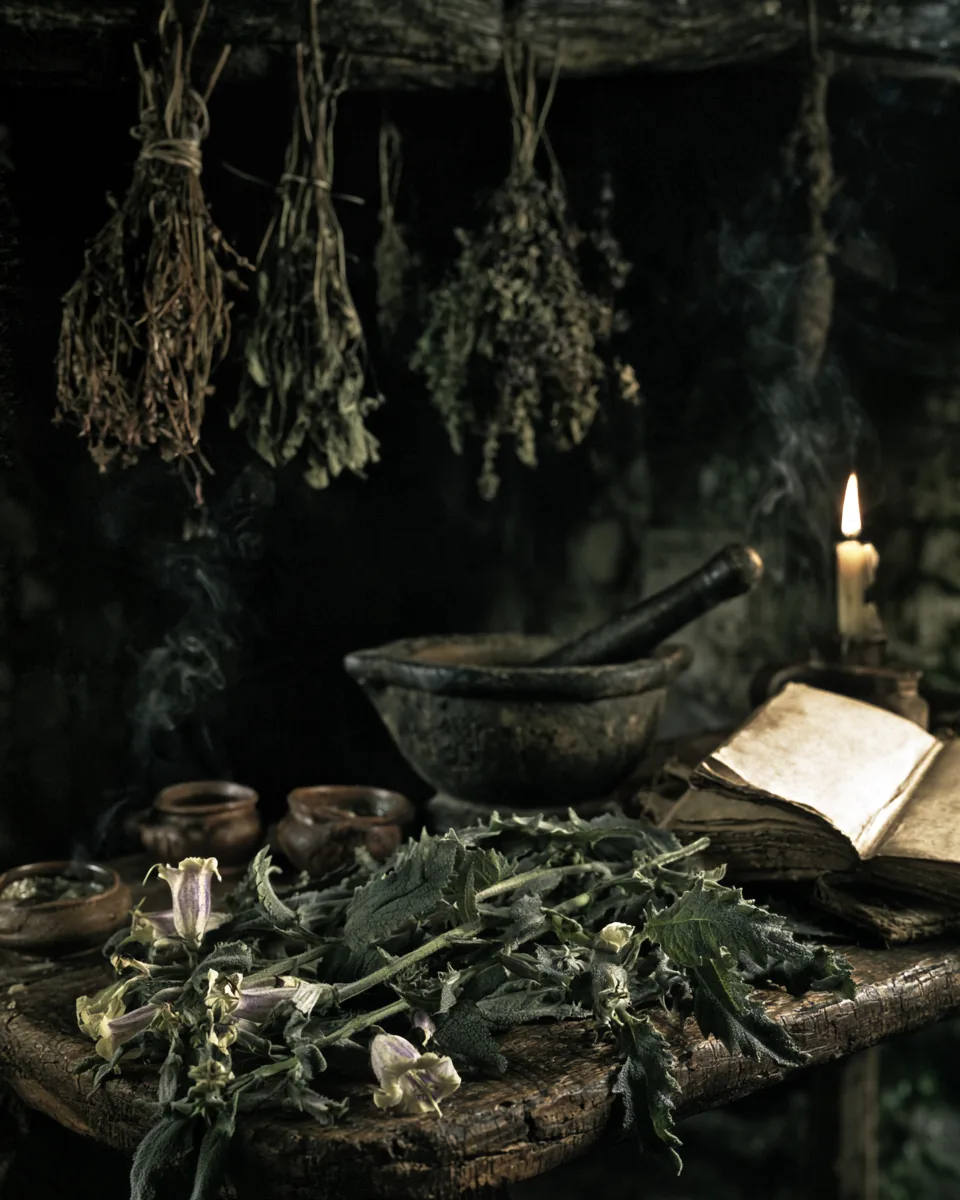
Long before modern anesthesia, people tried to dull the pain of surgery with plant mixtures. Recipes for one of them, known in medieval England as dwale, survive in many manuscripts from the 12th to 15th centuries. Alongside harmless ingredients like lettuce, vinegar and bile, they called for three dangerous ones: hemlock, opium and henbane. A much earlier recipe from the monastery of Monte Cassino, dated to around 800 AD, used a similar mix of opium, henbane, hemlock and mandrake. It was a desperate kind of medicine, with a very narrow line between sleep and death.
The Witch's Plant
Henbane sits at the center of the lore linking nightshades to European witchcraft. According to the stories, people who practiced witchcraft learned to mix these plants with oils or fats and rub them into the skin, avoiding the deadly effects of swallowing them, to bring on visions and the sensation of flight. These so-called flying ointments belong more to legend, rumor and accusation than to well-documented practice, and historians still debate them. But the plant’s reputation as the witch’s herb has never faded.
Henbane in Shakespeare
In Macbeth, after the witches vanish, Banquo asks: “have we eaten on the insane root / That takes the reason prisoner?” The play never names the plant, and henbane is one of several suggested candidates.
In Hamlet, the ghost of Hamlet’s father describes being murdered with “juice of cursèd hebona” poured into his ear while he slept. What hebona was is still argued over: henbane is one leading suggestion, the yew is another, and some readers point to ebony. Whatever Shakespeare meant, he clearly expected his audience to know that some plants could kill.
The Crippen Case
In 1910, the London doctor Hawley Harvey Crippen fled to Canada aboard the SS Montrose after human remains were found in the cellar of the home he had shared with his wife, Cora, who had disappeared that February. The ship’s captain recognized him and radioed England, and Crippen became the first criminal suspect caught with the help of wireless telegraphy. At his trial, the pathologist reported finding scopolamine (hyoscine) in the remains, a drug Crippen was known to have bought that January. He was convicted and hanged. In 2010, DNA tests on tissue reportedly from the case suggested the remains may not have been Cora’s, and the case is still debated.
In the Poison Garden
Henbane holds a particular place in the poison garden as the plant most closely tied to the history of herbal knowledge and its dangers: the sleeping draughts, the remedies, and the suspicion that fell on those who knew how to use them.
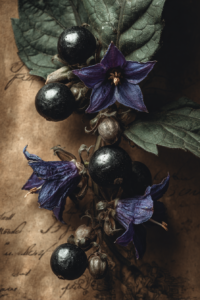
Its quiet, sticky, unpleasant character is part of what makes it compelling in a dark cottagecore garden. Henbane does not perform. It has none of the glossy drama of belladonna’s black berries or the tall violet spires of monkshood. It grows at the edges of things and smells wrong and marks the places where people used to be. That sense of presence at the margins, where the ordinary world turns strange, is exactly what a dark garden pays attention to.
Its flowers reward a close look: pale, translucent and traced with fine purple veins, they are among the most intricate in the poison garden.
RELATED POSTS:
A Note on Safety
All parts of Hyoscyamus niger are poisonous to people and livestock. Wear gloves when handling the sticky leaves, keep the plant away from children and pets, and never use it in food, drink, teas or anything applied to the skin. Black henbane is listed as a noxious weed in some regions, so check local rules before growing it. If henbane poisoning is suspected, seek emergency medical care or contact a poison control center immediately.
Frequently Asked Questions
What does henbane look like?
Henbane is a sticky, hairy plant up to about 3 feet tall, with coarsely toothed leaves and a foul smell. Its funnel-shaped flowers are greenish to brownish yellow with a dark purple center and purple veins, and they bloom from late spring through summer.
Is henbane poisonous?
Yes. All parts contain tropane alkaloids, including hyoscyamine and scopolamine, which can cause dangerous poisoning in people and livestock.
What is henbane used for today?
The plant itself has no safe home use. Its alkaloid scopolamine, also called hyoscine after henbane, is used in measured pharmaceutical doses, for example in patches that prevent seasickness.
Part of the Poison Garden Plant List
Hyoscyamus niger is one of the plants profiled in the Atropa Studio Poison Garden Plant List. Explore the full collection of toxic and bewitching botanicals, and save this post for the next time you find a pale, purple-veined flower at the edge of an old field.