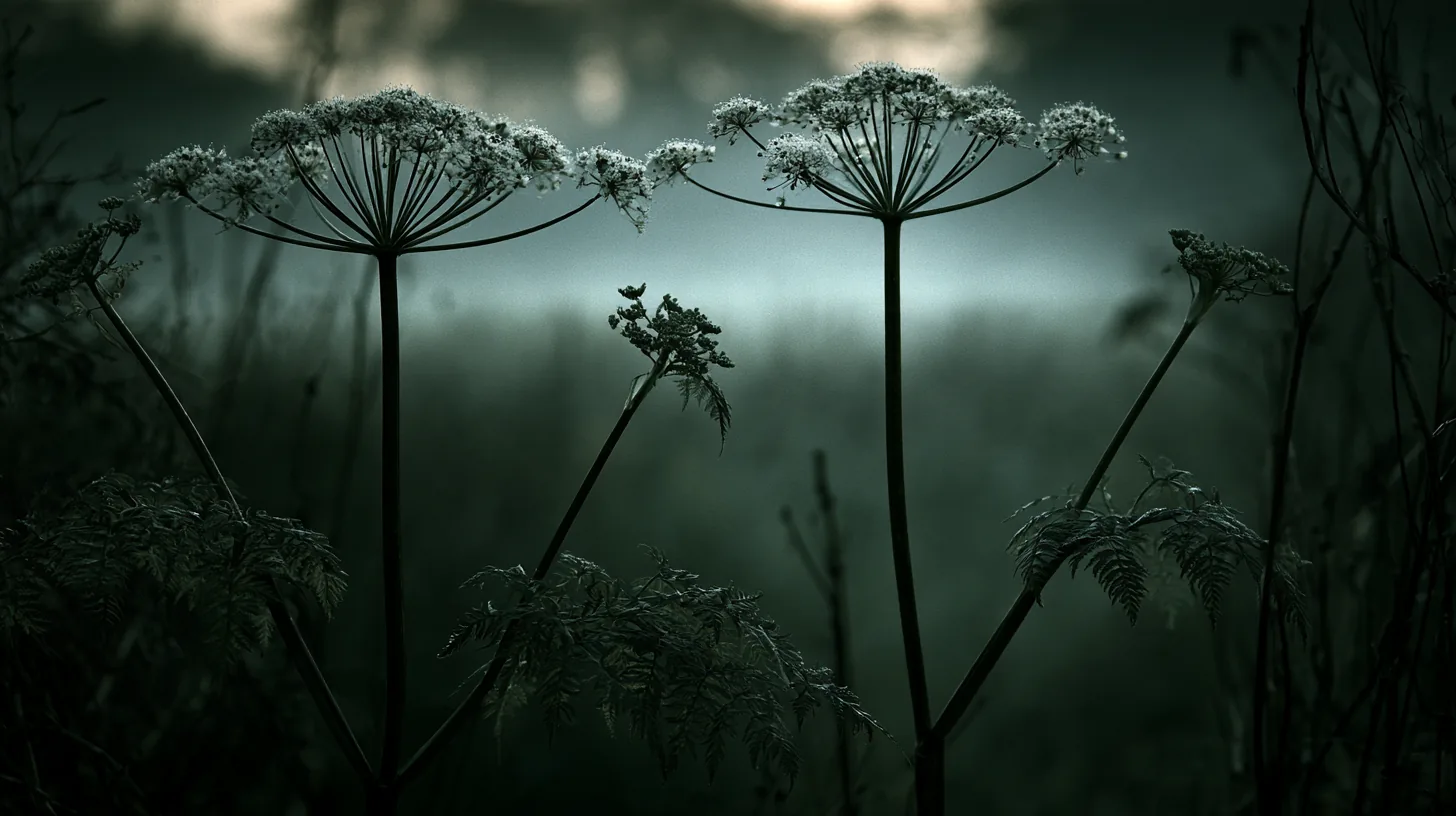
In 399 BCE, a seventy-year-old philosopher took a cup of poison and drank it in front of his friends. He walked about the room until his legs grew heavy, then lay down and waited, while the man who had prepared the poison pressed his feet and asked if he could feel them. He could not. The numbness rose, slowly, upward.
Conium maculatum, poison hemlock, is the plant traditionally held to have ended Socrates. It is also a plant that grows on roadsides, along creeks and ditches and in waste ground across much of the temperate world. In its first year it looks like a carrot plant. It has no showy flowers that announce danger. It carries its poison quietly, in every part.
Hemlock is not dramatic. That is what makes it dangerous.
RELATED POSTS:
At a Glance
- Scientific name: Conium maculatum
- Common names: poison hemlock, spotted hemlock, poison parsley, devil’s porridge
- Family: Apiaceae (the carrot family)
- Native range: Europe; brought to North America in the 1800s and now widespread
- Toxic parts: all parts, especially the roots and seeds
- Main toxin: coniine and related alkaloids
- Toxicity: extremely high
What It Looks Like
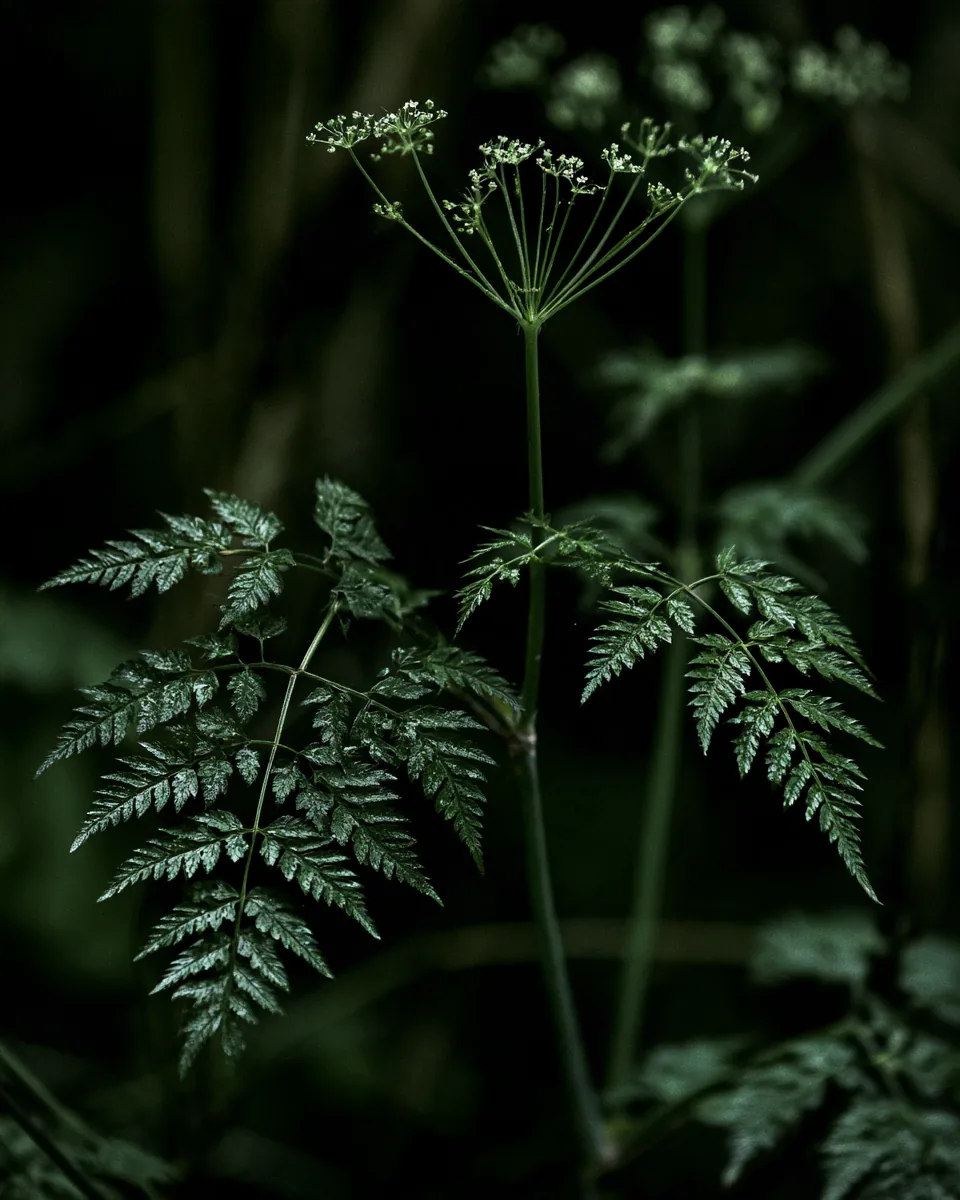
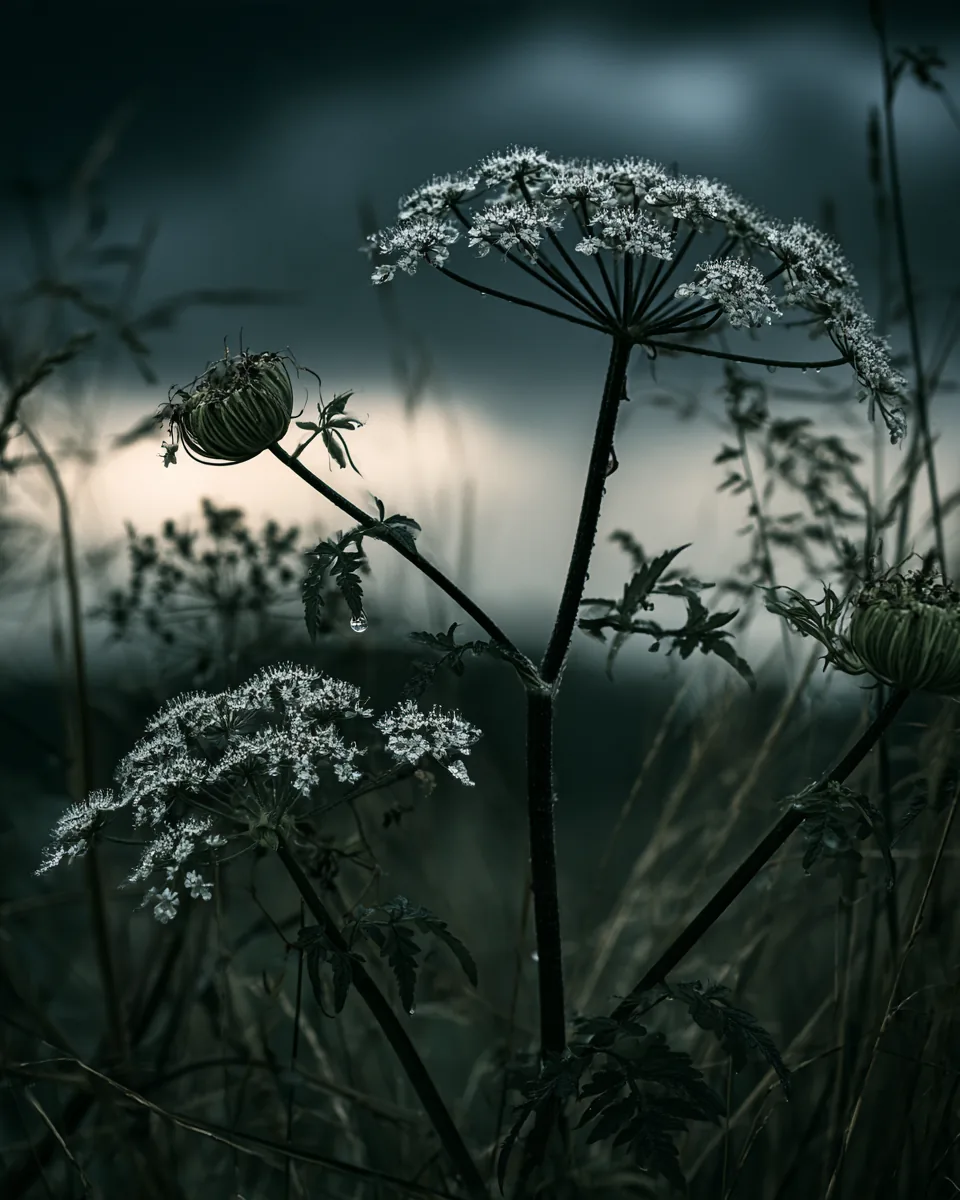
Poison hemlock is a biennial. In its first year it grows as a low, leafy rosette that can look very much like a carrot plant. In its second year it sends up tall, branching stems, often 6 to 10 feet high, topped in late spring with small white flowers in flat, umbrella-shaped clusters, typical of the carrot family.
The leaves are large, glossy, finely divided and fern-like. The most reliable sign is the stem: smooth, hairless and hollow, marked with purple or reddish blotches and streaks. That spotting gives the plant its Latin name, maculatum, meaning spotted.
When the leaves are crushed, the plant gives off an unpleasant smell often compared to mouse urine. Young first-year plants have few of these signs, and that is where most mistakes begin.
The Poison: What It Does
Hemlock’s main poison, coniine, is closely related in structure and action to nicotine. Together with several related alkaloids, it disrupts the signals between nerves and muscles.
According to the World Health Organization’s poison information monograph, poisoning typically begins with irritation of the mouth, salivation, nausea and vomiting. In severe cases it can progress to:
- Changes in heart rate and blood pressure
- Seizures
- Ascending muscle paralysis, moving upward through the body
- Respiratory failure
Treatment is supportive, above all keeping the patient breathing until the poison clears. Hemlock poisoning is a medical emergency, and even the large dead stems can stay toxic for up to three years.
RELATED POSTS:
History and Folklore
The Death of Socrates
Socrates was tried in Athens in 399 BCE and sentenced to death. His friend and student Plato described his final hours in the dialogue Phaedo. In Benjamin Jowett’s translation, the man who gave him the poison “pressed his foot hard, and asked him if he could feel; and he said, No; and then his leg, and so upwards and upwards, and showed us that he was cold and stiff.” Socrates himself remarked, “When the poison reaches the heart, that will be the end.”
Plato never names the plant in that passage, but the poison used for executions in Athens has long been identified as Conium maculatum. Scholars have debated whether Plato’s calm, dignified account is medically accurate or softened for philosophical effect. A careful 2001 study by Enid Bloch argued that it is broadly consistent with hemlock poisoning. The debate itself is a reminder that the most famous poisoning in Western history is also a work of literature.
A Roadside Danger
Hemlock’s danger did not end in Athens. Because it belongs to the carrot family, its roots have been mistaken for wild parsnips and its leaves for parsley, and people have died from eating it. Extension services in North America warn foragers and farmers about it every spring: after arriving with European settlers in the 1800s, it escaped gardens and now lines roadsides, creeks and irrigation ditches. There are even stories of children harmed after making whistles from the hollow stems.
Hemlock in Literature
Since Socrates, hemlock has stood in literature for poison and for the nearness of death. In 1819, John Keats opened his “Ode to a Nightingale” with it: “My heart aches, and a drowsy numbness pains / My sense, as though of hemlock I had drunk.” Two thousand years after Athens, a single word was enough to summon the cup.

In the Poison Garden
Hemlock occupies a particular place in the poison garden: it is the plant of ordinary danger. It is not especially striking to look at, and it grows where it could easily be mistaken for something harmless. Its place in the collection is a reminder that dangerous plants are not confined to locked gardens. They are everywhere. The poison garden simply names them.
In a dark cottagecore setting, hemlock carries the weight of the most famous death in Western philosophy and the quiet, ongoing presence of a plant that still causes poisonings through mistaken identity. That pairing of the momentous and the everyday gives it a different kind of gravity from belladonna or monkshood. It does not need to be beautiful to matter.
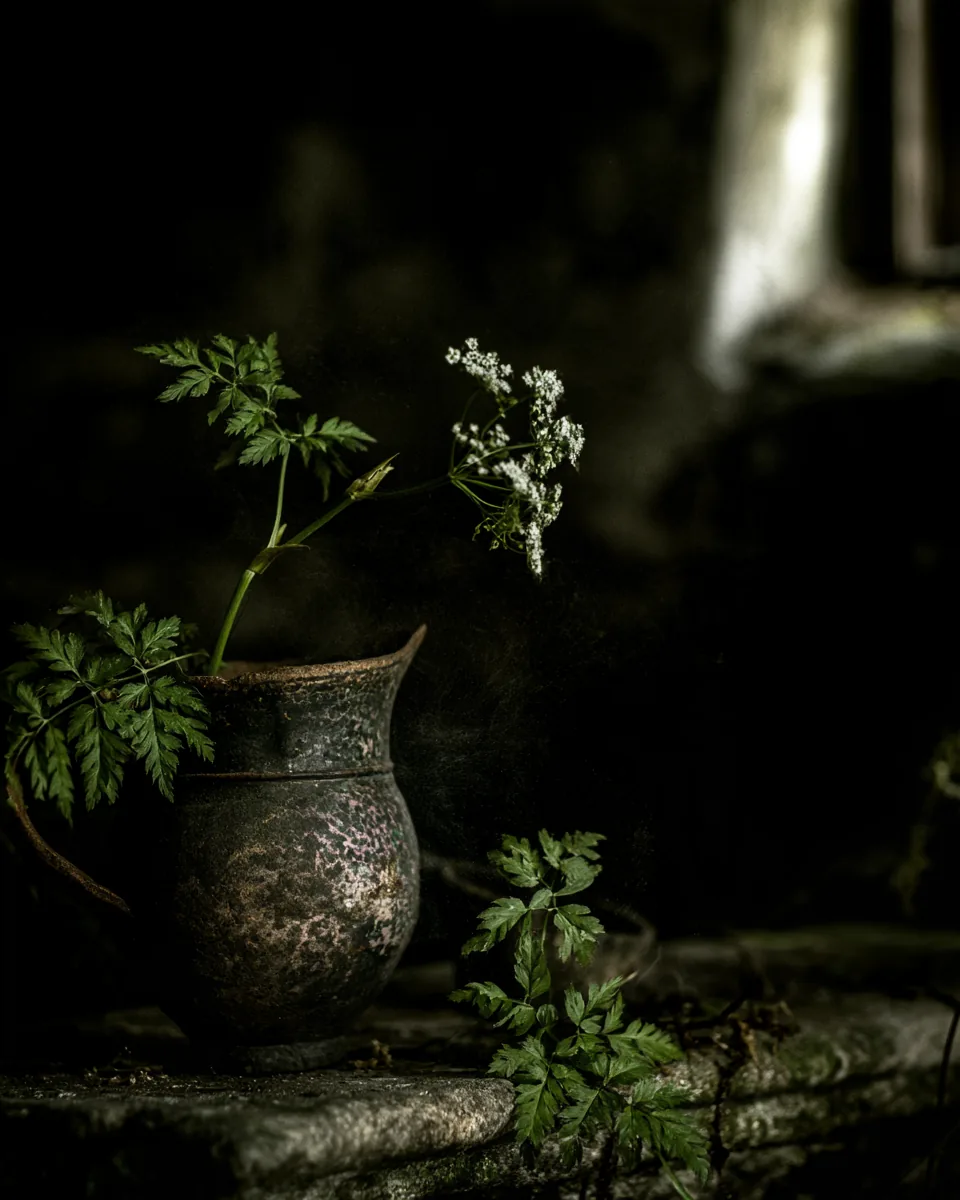
With its spotted stems and lacy white flower heads, hemlock looks almost gentle, until you know what you are looking at.
RELATED POSTS:
A Note on Safety
All parts of Conium maculatum are poisonous. Never forage any plant in the carrot family unless you can identify it with complete certainty, and never taste a plant to test it. Wear gloves if you need to remove hemlock, keep children and pets away from it, and do not make anything from its hollow stems. If hemlock poisoning is suspected, call emergency services or a poison control center immediately.
Frequently Asked Questions
How can you tell poison hemlock from Queen Anne's lace?
Both have white, umbrella-shaped flower clusters and fern-like leaves. Poison hemlock’s stems are smooth, hairless and covered in purple blotches, and the crushed leaves smell unpleasant, like mouse urine. Wild carrot, or Queen Anne’s lace, lacks the purple-spotted, hairless stems. Identification is difficult with young plants, so treat any doubt as a reason to leave the plant alone.
Where does poison hemlock grow?
Poison hemlock is native to Europe and is now widespread across North America. It favors disturbed, damp ground: roadsides, creek banks, ditches, field edges and waste ground.
Did Socrates really die from hemlock?
Ancient sources say Socrates was executed by poison in 399 BCE, and the poison used for executions in Athens is traditionally identified as Conium maculatum. Scholars have debated how closely Plato’s account matches real hemlock poisoning, but many conclude it is broadly consistent.
Part of the Poison Garden Plant List
Conium maculatum is one of the plants profiled in the Atropa Studio Poison Garden Plant List. Explore the full collection of toxic and bewitching botanicals, and save this post for the next time you see white umbrellas of flowers along a roadside.