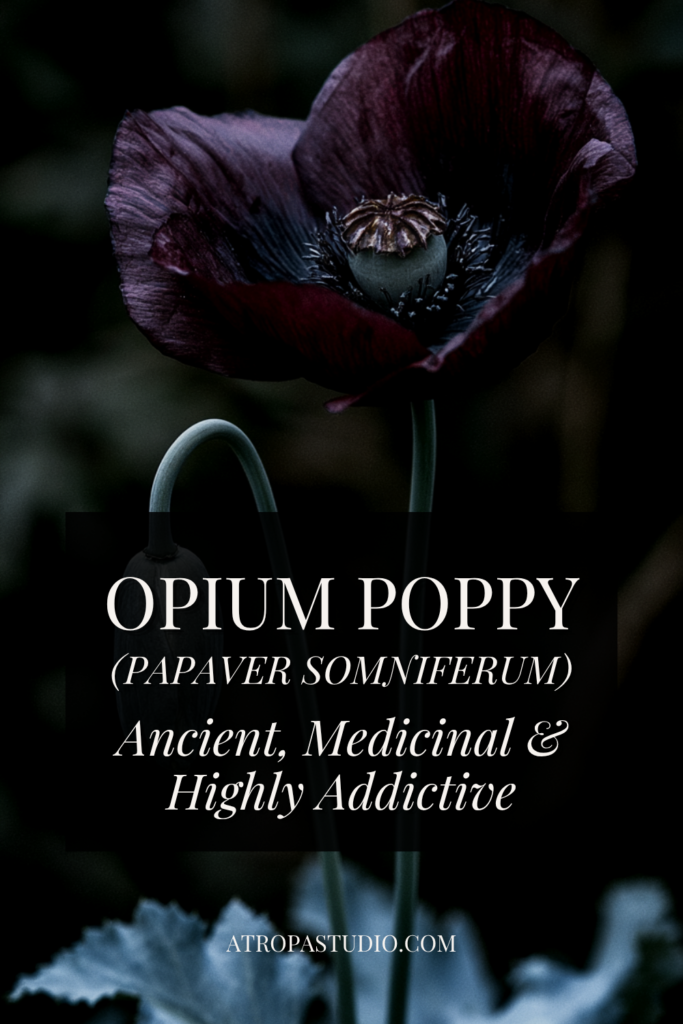
Papaver somniferum, the opium poppy, is one of the oldest cultivated plants in the world. It appears in a Sumerian clay tablet from around 3400 BCE, where it is described as the plant of joy.
Since then it has been used as medicine, as a source of pain relief, as a trade commodity, and as the origin point of some of the most significant public health crises in modern history.
It is also, on its own terms, one of the more striking plants in a temperate garden: a papery, short-lived flower followed by a seed pod with real architectural presence.
This profile covers what the plant looks like, how its toxins work, its long documented history, and where it fits within a poison garden collection.
RELATED: The Poison Garden Plant List: A Complete Guide to Toxic and Bewitching Botanicals
At a Glance
- Scientific name: Papaver somniferum
- Common names: Opium poppy, breadseed poppy
- Family: Papaveraceae
- Native range: Eastern Mediterranean and Western Asia; now cultivated worldwide
- Toxic parts: Unripe seed pods, the source of opium latex; all green parts contain alkaloids
- Primary toxins: Morphine, codeine, thebaine, papaverine, and other opium alkaloids
- Toxicity level: High. Morphine overdose is a leading cause of drug-related death worldwide
RELATED:
What It Looks Like
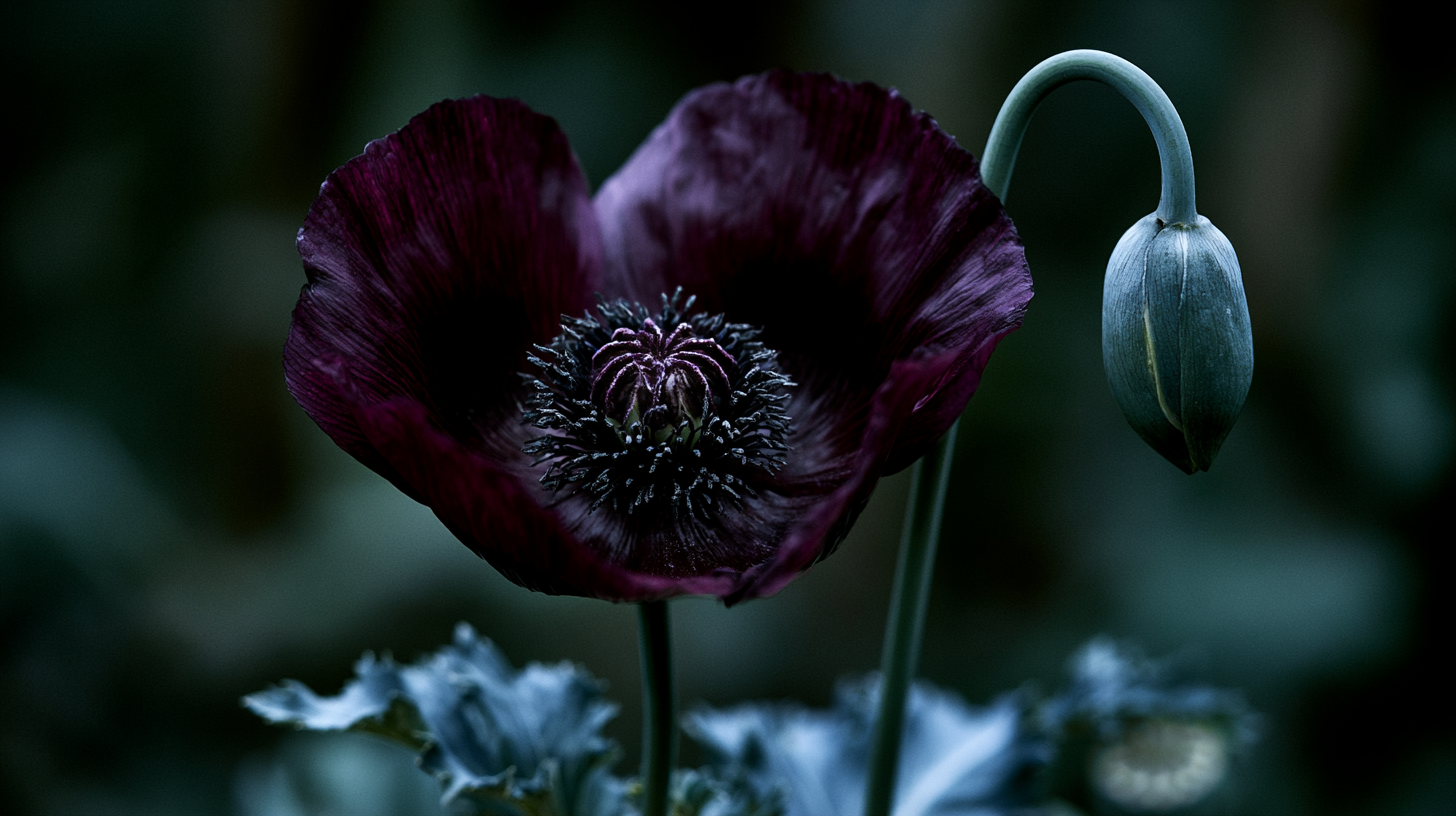
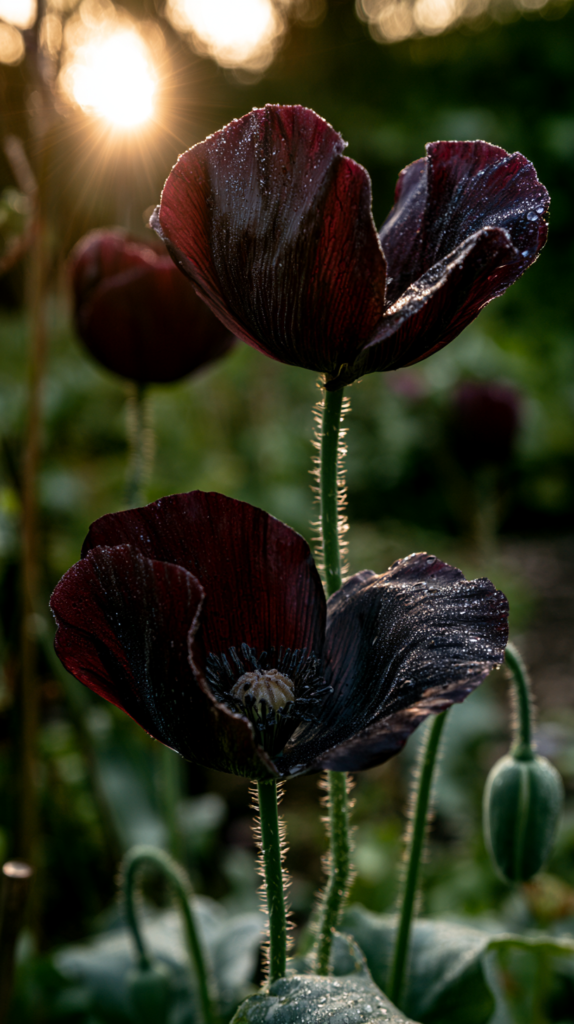
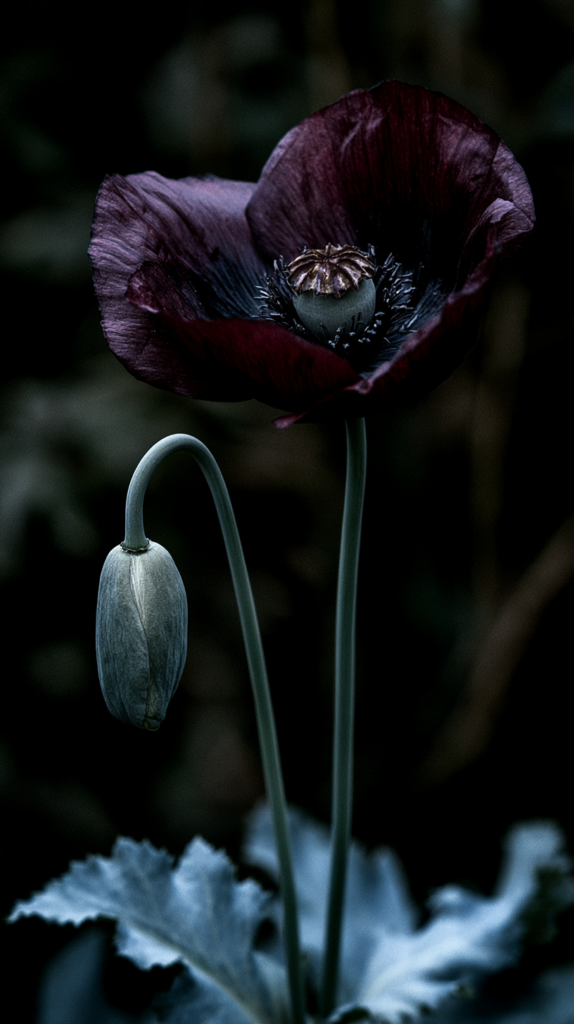
Papaver somniferum is an annual growing to about one metre tall, with a blue-green bloom on its stems and leaves that gives the plant a soft, silvery look. The leaves are large and lobed, clasping the stem; lower leaves are stalked, while the upper leaves wrap directly around the stem, which is a useful identifying feature.
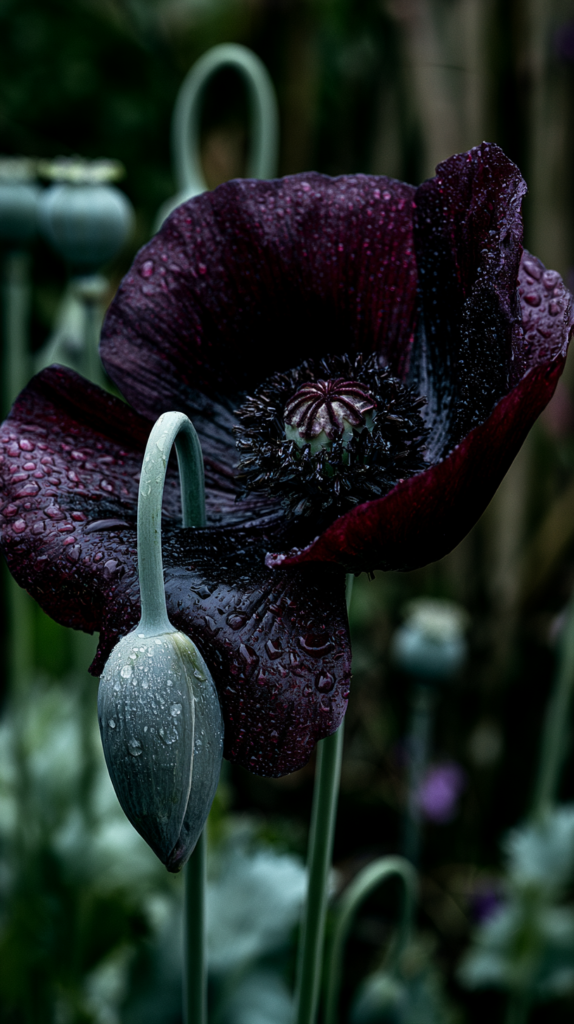
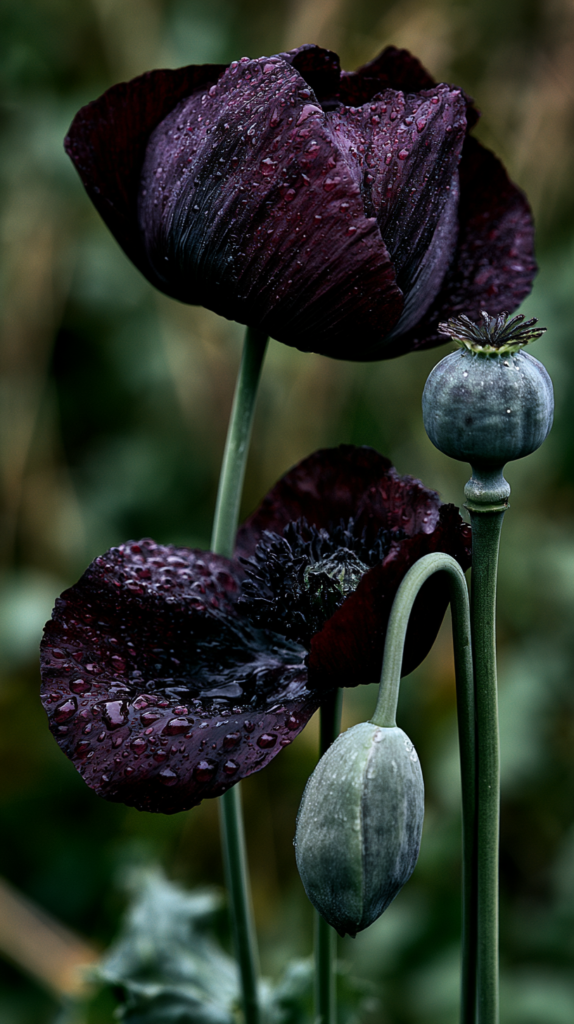
The flowers are large and held on long stems above the foliage, opening from nodding, hairy buds that straighten as they bloom. The petals are thin and papery, often with a darker blotch at the base, and range in colour from white through pale lilac, pink, red, deep burgundy, and near-black in some cultivars. Double-flowered forms with ruffled, peony-like blooms exist alongside the single-flowered type. Each flower lasts only one to two days before the petals drop.
What remains after the petals fall is one of the more distinctive seed pods in the plant kingdom: a rounded, grey-green capsule topped with a flat, star-shaped stigmatic disc, held upright on a strong stem. The pods dry well and hold their shape for months, which is why they turn up so often in dried botanical arrangements and craft supply stores, generally without any note of what plant they come from.
The seeds themselves are small, kidney-shaped, and slate-blue. These are the poppy seeds used in baking, in the cuisines of Central and Eastern Europe, the Middle East, and South Asia. They do not contain significant levels of morphine, though eating them in quantity can produce a positive result on some drug tests.
The Poison: How It Works
The opium alkaloids are concentrated in the latex that bleeds from scored, unripe seed pods. This milky sap, once dried and processed, is opium. Morphine was first isolated from it in 1804, the first alkaloid ever extracted from a plant. Codeine, thebaine, papaverine, and other alkaloids were identified afterward.
Morphine and its derivatives work by binding to opioid receptors in the central nervous system and gastrointestinal tract. At therapeutic doses, the effects are pain relief, euphoria, and sedation.
At higher doses, effects can include:
- Severe drowsiness and confusion
- Slowed breathing
- Constricted pupils
- Nausea and vomiting
- Loss of consciousness
- Respiratory depression: breathing slows to the point where the body can no longer maintain adequate oxygen levels
- Death by respiratory failure
Opioid overdose is one of the leading causes of drug-related death worldwide. The same mechanism that makes morphine effective for pain relief is what makes it dangerous past a certain dose. Naloxone, which blocks opioid receptors and reverses overdose, is the standard antidote, and its wider availability has reduced deaths in regions with high rates of opioid misuse.
The green parts of the plant, including leaves and stems, also contain alkaloids at lower concentrations and should not be consumed.
History and Folklore
The opium poppy’s relationship with human civilization spans roughly five thousand years, from ancient Mesopotamia through classical antiquity, the medieval Islamic world, European colonialism, two Opium Wars, and into the modern pharmaceutical industry.
Ancient and classical use: The earliest written reference to the opium poppy is the Sumerian clay tablet from around 3400 BCE. The Egyptians cultivated it and documented its use as a sedative in the Ebers Papyrus, one of the oldest surviving medical texts. The Greeks used it widely; Hypnos, the god of sleep, and his son Morpheus, the god of dreams, are both associated with the poppy in Greek mythology. Homer’s Odyssey references a drug called nepenthe, given to ease grief, which scholars have generally identified as an opium preparation. Dioscorides documented the plant in De Materia Medica as a treatment for pain, cough, and sleeplessness.
Medieval Islamic medicine: Scholars in the Islamic world preserved and built on classical knowledge of the plant. Avicenna’s Canon of Medicine, written in the eleventh century and used as a medical reference in Europe until the seventeenth, describes opium in detail. Arab traders carried it east into China and south into Africa, establishing routes that later became the infrastructure of the opium trade.
The Opium Wars: In the nineteenth century, the British East India Company grew opium in Bengal and exported it to China in exchange for tea, silk, and porcelain, contributing to widespread addiction among Chinese consumers and generating significant profits for British trading interests. When China moved to suppress the trade, Britain fought two wars, in 1839 and 1856, to keep the trade open. The Opium Wars are among the clearer historical examples of a state using a plant’s addictive properties as a tool of colonial policy, with consequences that shaped Chinese history for more than a century.
Victorian laudanum: Through the nineteenth century, laudanum, opium dissolved in alcohol, was a routine household medicine across Europe and North America. It was sold without prescription, marketed to women for menstrual pain and “hysteria,” given to infants as a teething remedy, and used regularly by writers and artists of the period. Coleridge is said to have written Kubla Khan under its influence. De Quincey wrote Confessions of an English Opium-Eater. Its use among the Pre-Raphaelites and the Romantic poets, and the gradual recognition of its addictive properties, is a well-documented chapter in the social history of medicine.
Modern medicine and the opioid crisis: Morphine remains on the World Health Organization’s list of essential medicines and is still one of the most effective treatments available for severe pain, including in cancer and surgical care. Codeine is among the most widely used mild analgesics and cough suppressants. Synthetic opioids derived from thebaine, including oxycodone, hydrocodone, and fentanyl, have driven the largest drug overdose crisis in American history, with opioid-related deaths exceeding 80,000 in a single year in the United States. The plant itself is thousands of years old; the crisis connected to its derivatives is current and ongoing.
In the Poison Garden
The opium poppy occupies an unusual position in a poison garden collection, because its history is not mainly a history of poison. It is a history of medicine, trade, addiction, war, and the long human effort to manage pain and alter consciousness. The toxicity is real, but it sits inside a much larger story.
Within the dark cottagecore and dark academia aesthetic, the poppy carries particular weight as a Victorian-era plant: the laudanum era, its recurring presence in Pre-Raphaelite painting, and its association with the Romantic poets all connect it to the same visual and historical world that dark academia draws from.
The dried seed pods are one of the most commonly used botanical elements in dark home decor, appearing in dried arrangements, still life photography, and botanical illustration. The flat, starred top of the capsule and its smooth grey-green surface make it a satisfying subject to grow and to illustrate.
As a specimen print subject, the contrast between the short-lived, papery flower and the durable, architectural seed pod gives two distinct illustration options within the same plant. The near-black and deep burgundy cultivars sit naturally within the Atropa Studio palette.
A Note on Safety
The green parts of Papaver somniferum, including leaves, stems, and unripe seed pods, contain opium alkaloids and should not be consumed. The dried seed pods and seeds sold for cooking and dried flower arrangements are safe for normal handling and culinary use. Growing opium poppies as ornamentals is legal in most countries; processing the latex from the seed pods is not, in most jurisdictions.
If opioid poisoning is suspected, seek emergency medical attention immediately. Naloxone (Narcan) reverses opioid overdose and is available without a prescription in many countries.