
Monkshood has one of the longest and darkest reputations of any plant grown in European gardens. Ancient soldiers used it to poison enemy water supplies. It fills cottage garden borders across the continent today, prized for its violet-blue spikes. And its common names read like a list of warnings: monkshood, wolfsbane, devil’s helmet, blue rocket. Each one points to something the plant has been feared for at different points in history.
Aconitum napellus is widely considered the most toxic plant in temperate Europe. It acts quickly, clears the body quickly, and for most of human history left little trace that could be identified through post-mortem examination. Poisoners understood this. So did the storytellers who built centuries of myth and folklore around it.
RELATED: The Poison Garden Plant List: A Complete Guide to Toxic and Bewitching Botanicals
At a Glance
- Scientific name: Aconitum napellus
- Common names: Monkshood, wolfsbane, aconite, devil’s helmet, blue rocket, queen of poisons
- Family: Ranunculaceae
- Native range: Western and central Europe, mountainous regions
- Toxic parts: All parts. Root is most concentrated, but leaves, flowers, and seeds are also toxic
- Primary toxins: Aconitine and related diterpenoid alkaloids
- Toxicity level: Extremely high. Among the most toxic plants in the temperate world
RELATED:
What It Looks Like
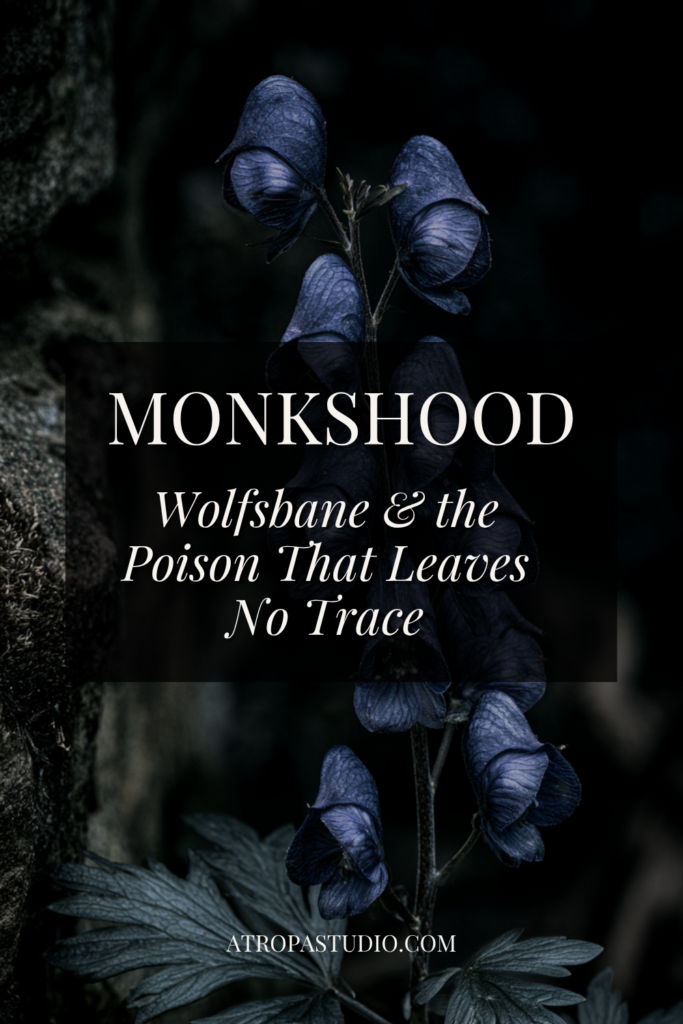
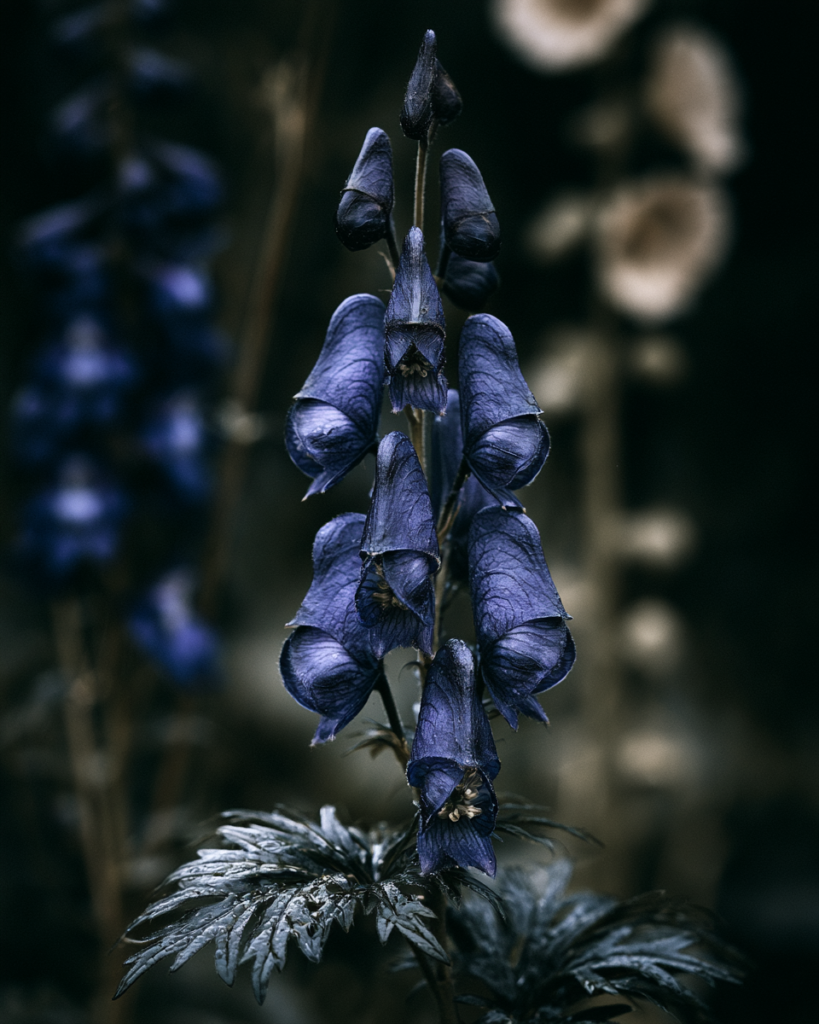
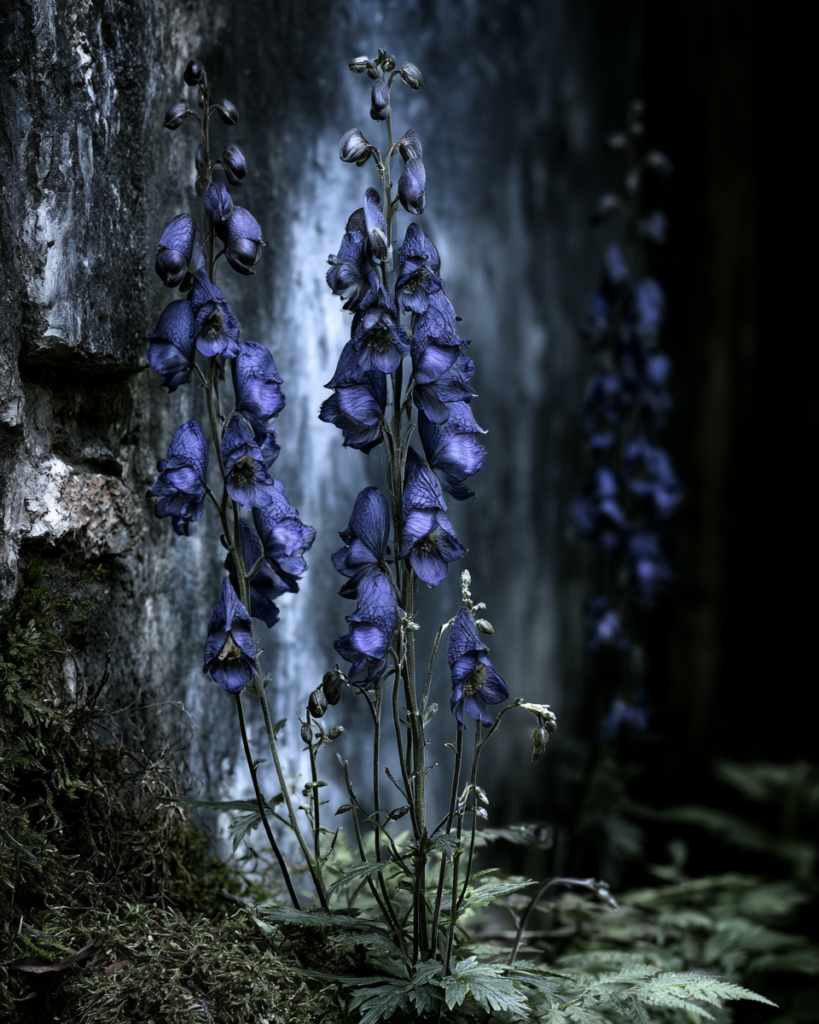
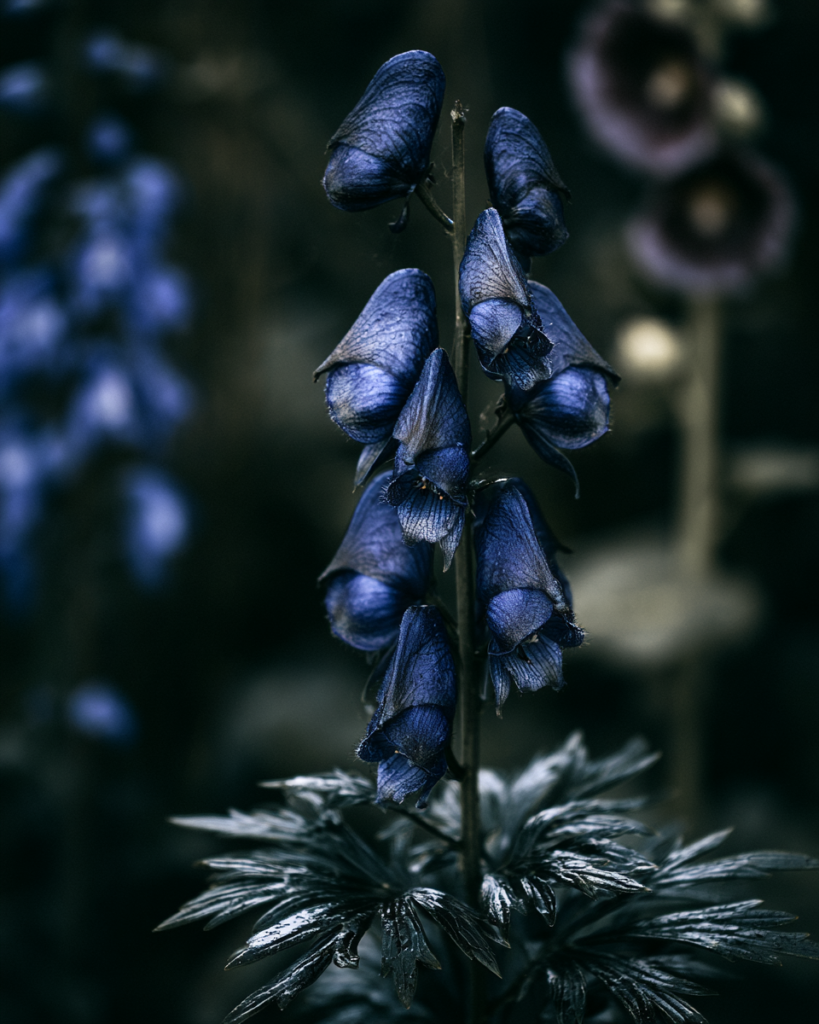
Aconitum napellus is a tall herbaceous perennial reaching up to 1.5 metres, with deeply divided, dark green leaves that have a glossy quality in good light. The flowers are its most distinctive feature: helmet-shaped, hooded blooms in deep violet-blue, arranged in dense upright spikes that appear in midsummer. The hood is formed by a modified sepal that curves over the flower like a monk’s cowl, which is where its most common name comes from.
The plant is genuinely attractive, which is part of why its danger is easy to underestimate. It sits comfortably in a traditional cottage garden alongside delphiniums and hollyhocks, and it has been grown as an ornamental for centuries. That long ornamental history is itself part of the plant’s record of accidental poisonings.
The roots are fleshy and tuberous, resembling small turnips or, in younger plants, the roots of edible herbs. This resemblance matters: root confusion with edible plants has caused deaths among foragers and cooks across multiple centuries.
The Poison: What It Does
Aconitine, the primary alkaloid in Aconitum napellus, is one of the most potent plant-derived poisons known. It binds to sodium channels in nerve and muscle cells and holds them open, disrupting the normal electrical signaling that lets nerves fire and muscles contract. The heart is particularly affected.
Symptoms typically begin within minutes of ingestion or significant skin contact:
- Burning or tingling sensation in the mouth and throat
- Numbness spreading from the mouth to the face and limbs
- Nausea, vomiting, and abdominal pain
- Extreme weakness and difficulty moving
- Bradycardia (dangerously slow heart rate) or irregular heartbeat
- Respiratory muscle paralysis
- Cardiac arrest
Aconitine can be absorbed through intact skin. Handling the plant, especially the roots or bruised leaves, without gloves can cause tingling and numbness in the hands. A number of documented poisonings have occurred through skin absorption during gardening or foraging rather than through ingestion.
There is no specific antidote. Treatment is supportive and focused on managing the cardiac effects. The poison clears the body relatively quickly, which historically made it hard to detect in post-mortem examination. That property is part of why it was used deliberately for centuries.
History and Folklore
Aconitum has one of the longest documented histories of any plant in the poison garden. Its toxicity was understood in antiquity, it was used as a weapon in classical warfare, and its mythological associations run deep enough that several cultures independently arrived at similar explanations for where it came from.
Mythological origins: In Greek mythology, aconitum is said to have sprung from the foaming saliva of Cerberus, the three-headed dog who guarded the entrance to the underworld, when Heracles dragged the beast into the world of the living. The plant was associated with Hecate, goddess of witchcraft and poisonous plants, and with the boundary between the living and the dead. This origin story placed aconitum in a specific mythological category: things that belonged to darkness and had no ordinary place in human life.
Ancient warfare: Roman sources document the use of aconitine to poison water supplies and arrow tips in military contexts. The plant was known as the stepmother’s poison in some classical writing, a name that points to both its domestic availability and the domestic crimes it enabled. It appeared in enough poisoning cases in ancient Rome that the Emperor Trajan eventually banned its cultivation within the city limits, an indication of how seriously the threat was taken.
Medieval and Renaissance poisoning: Aconitum’s reputation as an undetectable poison made it useful to those who wanted to remove someone quietly. Before the development of alkaloid testing in the 19th century, its rapid action and relatively clean post-mortem presentation made it difficult to distinguish from natural cardiac death in many cases. It appears throughout European poisoning accounts and is reportedly connected to several high-profile cases that remain disputed.
Witchcraft and flying ointment: Aconitum appears alongside belladonna, henbane, and datura in historical accounts of witches’ flying ointment, a preparation believed to have produced sensations of flight through hallucinatory and dissociative effects. The combination of alkaloids from these plants, absorbed through the skin, would have caused powerful and likely frightening effects. The association with witchcraft is old and consistent across multiple European traditions.
Werewolf lore: The name wolfsbane reflects a widespread folk belief that aconitum could kill or repel wolves, and by extension werewolves. This belief appears across northern and central European folklore, where the plant was planted at village boundaries and used in preparations meant to protect against supernatural predators. There is a practical basis for part of the belief: the plant is toxic to many animals, so a wolf or other predator that ate it could die. The extension to werewolf protection follows the logic of a pre-scientific worldview.
In the Poison Garden
Aconitum holds a place near the front of the poison garden for both its appearance and its historical weight. Few plants carry as much accumulated folklore, and few require as much care in handling.
In a dark cottagecore planting scheme, the violet-blue spikes of monkshood read well against stone, against dark-painted walls, and alongside the deep greens and shadows of an atmospheric garden. It blooms in midsummer, when many other dark garden plants are past their peak, giving it a useful structural role in the mid-season border. It is a reliable perennial that spreads once established and needs little ongoing care.
Aconitum carries more cultural weight than most garden plants. It has documented use as a murder weapon, a presence in mythological traditions across multiple cultures, and a role in witchcraft preparations that shaped how entire communities understood the relationship between plants and power. Growing it means growing something with a long and specific history, and it’s worth knowing that history well.
A Note on Safety
Aconitum napellus is among the most dangerous plants in the temperate garden and should be handled with serious caution. Always wear gloves when handling any part of the plant, particularly the roots, and wash hands thoroughly afterward.
Never ingest any part of the plant. Keep it away from children and animals. If skin tingling or numbness occurs after contact, wash the affected area immediately and seek medical attention if symptoms persist or spread. If ingestion is suspected, seek emergency medical attention immediately, as serious symptoms can develop quickly.