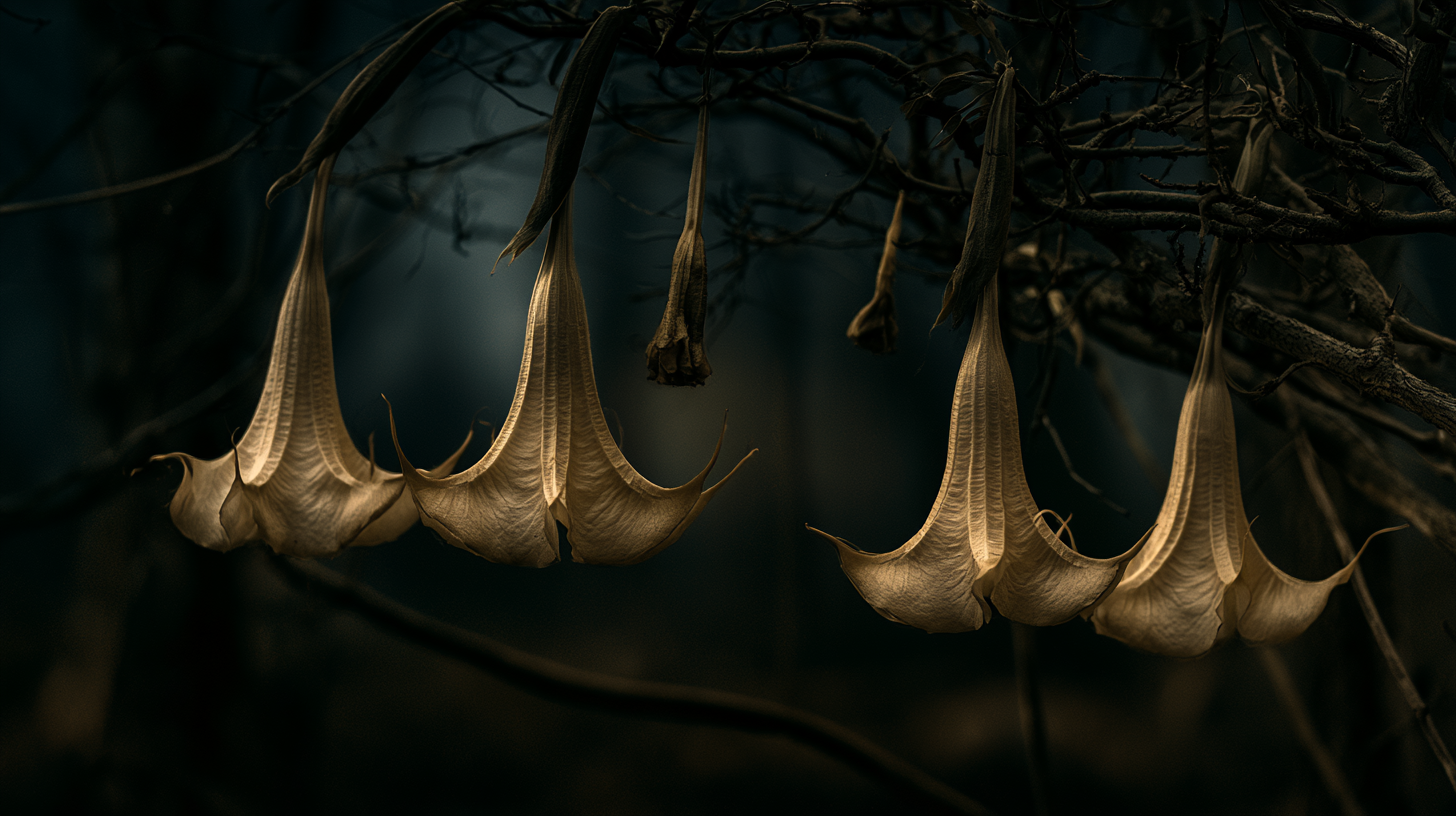
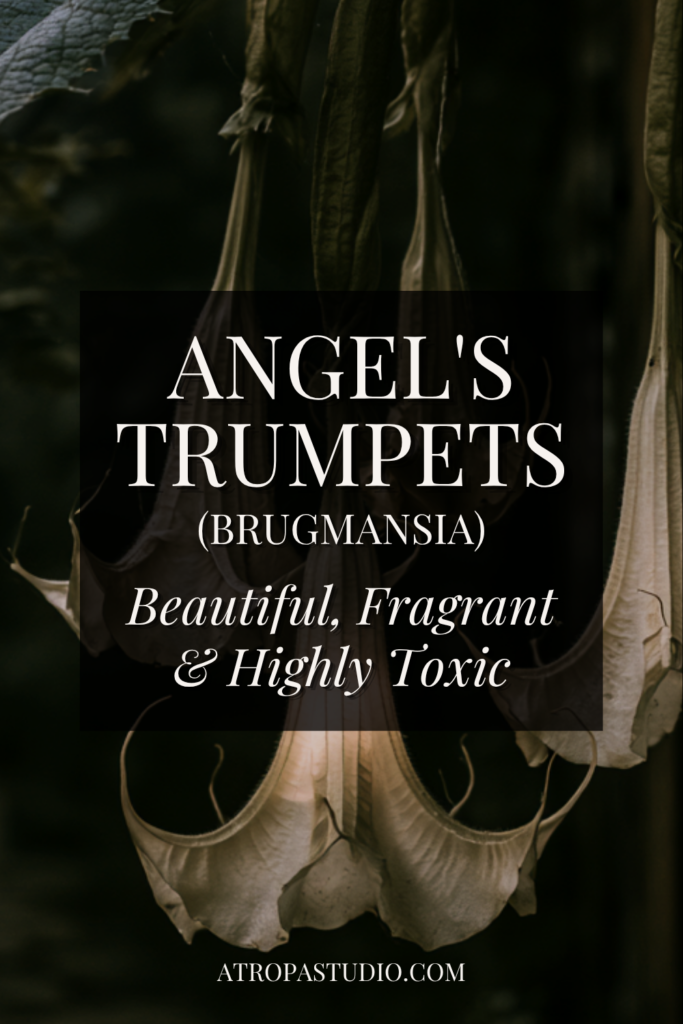
Brugmansia produces some of the largest, most fragrant flowers of any garden plant, pendulous trumpets that can reach 30 centimetres in length, releasing their strongest scent after dark. The common name, angel’s trumpets, reflects that beauty. The plant’s chemistry tells a different story.
Brugmansia belongs to the nightshade family and contains the same class of tropane alkaloids found in datura, henbane, and belladonna.
In parts of South America, where the genus originates, it carries a far less angelic name: borrachero, meaning “the one that makes you drunk.”
That name comes from centuries of documented use, both ceremonial and harmful, and it points to a plant that has always occupied a complicated place between medicine, ritual, and danger.
RELATED: The Poison Garden Plant List: A Complete Guide to Toxic and Bewitching Botanicals
At a Glance
- Scientific name: Brugmansia (several species and hybrids, including B. suaveolens, B. arborea, B. sanguinea)
- Common names: Angel’s trumpet, borrachero, trumpet flower
- Family: Solanaceae
- Native range: Subtropical and tropical South America, primarily the Andean regions of Colombia, Ecuador, Peru, and Brazil
- Toxic parts: All parts, seeds and leaves most concentrated
- Primary toxins: Scopolamine, atropine, and hyoscyamine (tropane alkaloids)
- Toxicity level: High. All species are considered dangerously toxic if ingested
What It Looks Like
Brugmansia is a woody shrub or small tree, often reaching two to five metres in height in warm climates, though it is commonly grown as a container plant and overwintered indoors in cooler regions. The leaves are large, soft, and slightly downy, often with an unpleasant odor when bruised or crushed.
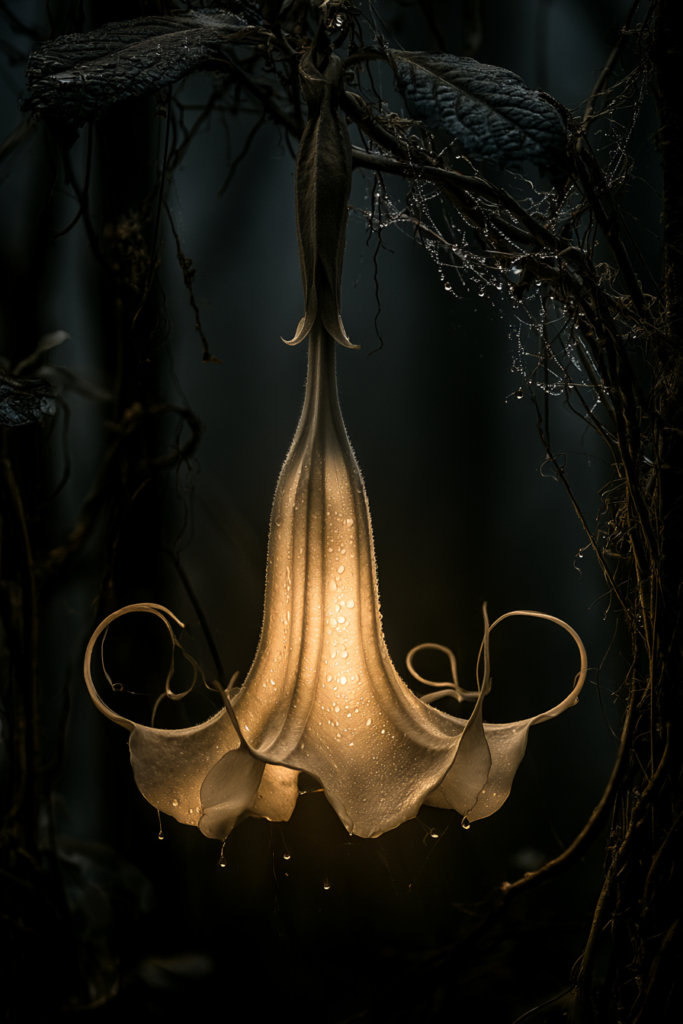
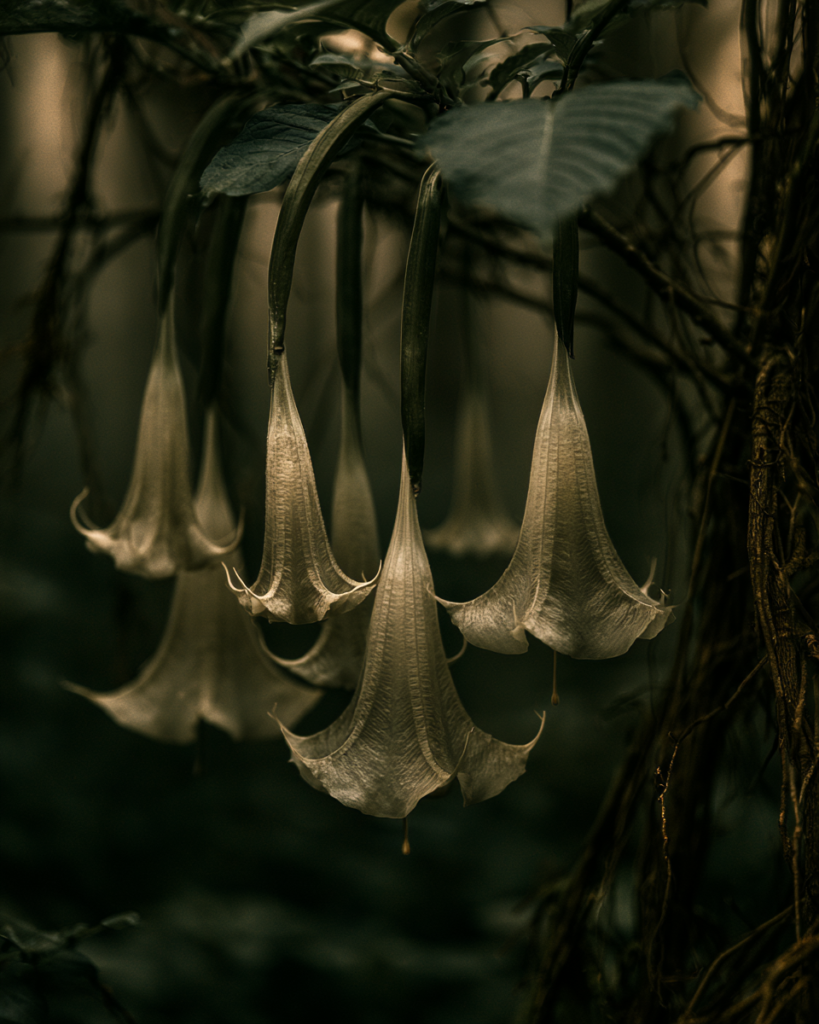
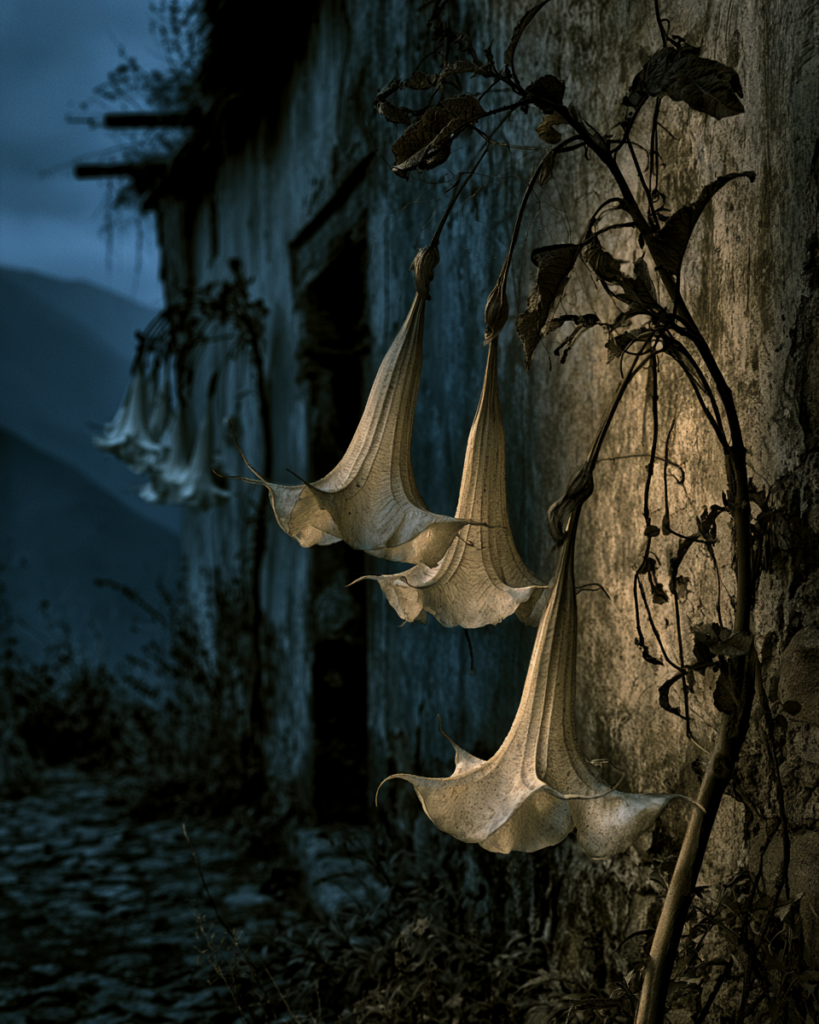
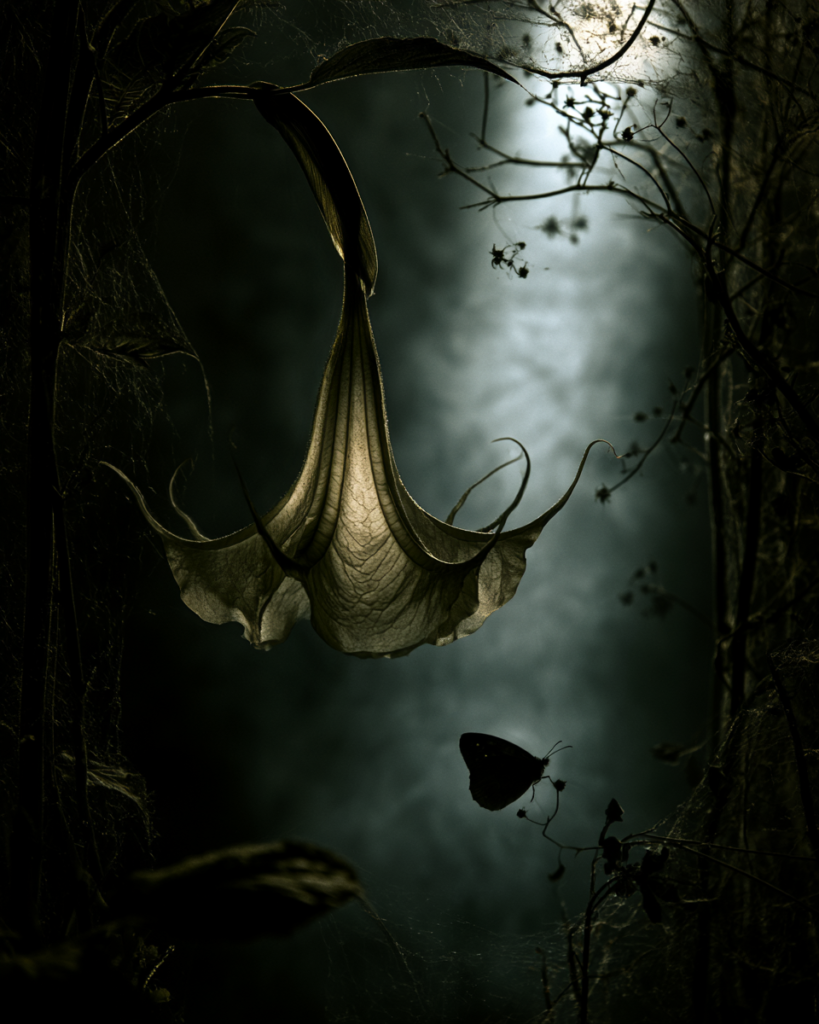
The flowers are the plant’s defining feature. Each bloom hangs downward in a long, trumpet-shaped form, in shades ranging from white and pale yellow to apricot, pink, and deep red depending on the species and cultivar. They open in the evening and release a heavy, sweet fragrance that intensifies after dark, a trait tied to the plant’s pollination by night-flying moths.
This nocturnal blooming habit is part of what makes Brugmansia so well suited to a dark cottagecore or coastal gothic planting scheme. The flowers are most visible and most fragrant precisely when the rest of the garden has gone quiet, and the sight of pale trumpets glowing in low light has an atmosphere that few other plants can produce.
The Poison: What It Does
Brugmansia’s toxicity comes from tropane alkaloids, primarily scopolamine, along with atropine and hyoscyamine. These compounds interfere with the nervous system by blocking a specific type of receptor involved in muscle control, secretion, and cognitive function. The effects are similar to those caused by datura and belladonna, both close relatives in the nightshade family.
Symptoms of poisoning can include:
- Dilated pupils and blurred vision
- Dry mouth and difficulty swallowing
- Rapid heart rate
- Confusion, disorientation, and memory disruption
- Hallucinations, often described as vivid and disturbing rather than pleasant
- Agitation or, conversely, extreme drowsiness
- In severe cases, seizures, coma, or death
Every part of the plant contains these alkaloids, but concentration varies significantly between individual plants, growing conditions, and even between flowers on the same plant, which makes any exposure unpredictable. This unpredictability is one of the more dangerous aspects of Brugmansia toxicity. Two people consuming what appears to be a similar amount of plant material can experience very different reactions.
There is no specific antidote. Treatment is supportive, focused on managing symptoms and monitoring cardiac and neurological function until the alkaloids clear the body, a process that can take considerably longer than with some other toxic plants.
History and Folklore
Brugmansia has a long documented history of use across South America, reaching back well before European contact, and it occupies a distinct place in the region’s ethnobotanical record compared to most other plants in the poison garden.
Ceremonial and shamanic use: In parts of the Andes and Amazon basin, indigenous communities historically used Brugmansia preparations in ritual and healing contexts, valued for its ability to induce profound altered states. These practices required precise knowledge passed down through generations, since the line between a therapeutic dose and a fatal one is narrow. The plant was treated with considerable caution and respect within these traditions, understood as powerful rather than casual.
The name borrachero: The Spanish colonial period brought the name borrachero into common use, reflecting observed effects of disorientation and altered consciousness. Historical accounts describe its use in both medicinal and coercive contexts, including documented instances of the plant being used without a person’s knowledge to render them compliant or unconscious, a practice that has continued into more recent history and remains a genuine public safety concern in parts of South America today.
European introduction: Brugmansia was brought to Europe in the eighteenth century as an ornamental curiosity, prized in botanical gardens and conservatories for its dramatic flowers and tropical origin. It became a fixture of Victorian glasshouse collections, where its toxicity was known but generally treated as a matter of horticultural caution rather than active fear, unlike the more folklorically loaded plants of the European poison garden tradition such as monkshood or belladonna.
A plant without European myth: Unlike aconite or foxglove, Brugmansia carries little of the layered European folklore built up over centuries. Its story is instead rooted in South American ethnobotany and in a documented, ongoing history of both healing and harm, a different kind of weight than the werewolf and witchcraft associations attached to Old World poisons.
In the Poison Garden
Brugmansia holds a distinct place in the poison garden as the plant whose danger is least visible from its appearance. It offers none of the obvious warning signals of a spiky seed pod or an unsettling name. It simply looks, and smells, extraordinary.
In a dark cottagecore or coastal gothic garden, Brugmansia works best as a specimen plant rather than a border filler, given its size and container needs in cooler climates. Positioned near a seating area or path where its evening fragrance can be appreciated, it becomes a genuine sensory centerpiece after dusk.
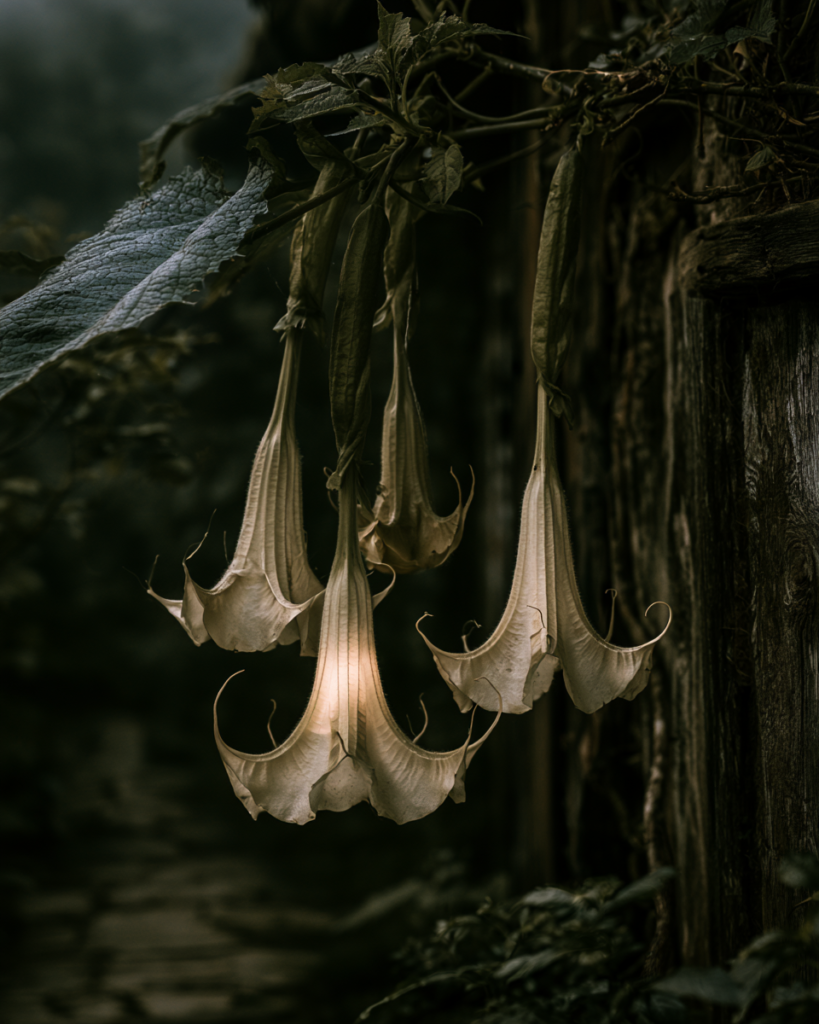
Its pale, pendulous blooms photograph beautifully against dark stone, weathered wood, or deep foliage, and the trumpet form offers a very different silhouette from the spiked spires of monkshood or the open bells of foxglove, useful for visual variety across a themed planting.
A Note on Safety
Brugmansia is toxic in all its parts and should be planted and handled with serious caution.
Wear gloves when pruning or handling the plant, and wash hands thoroughly afterward. Never ingest any part of the plant, and be particularly cautious in households with children, pets, or curious visitors, since the flowers and seed pods can be visually tempting.
If exposure is suspected, including from prolonged skin contact with sap, seek medical attention promptly. If ingestion is suspected, treat it as a medical emergency and seek immediate care, as symptoms can escalate quickly and unpredictably.