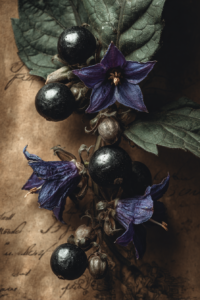
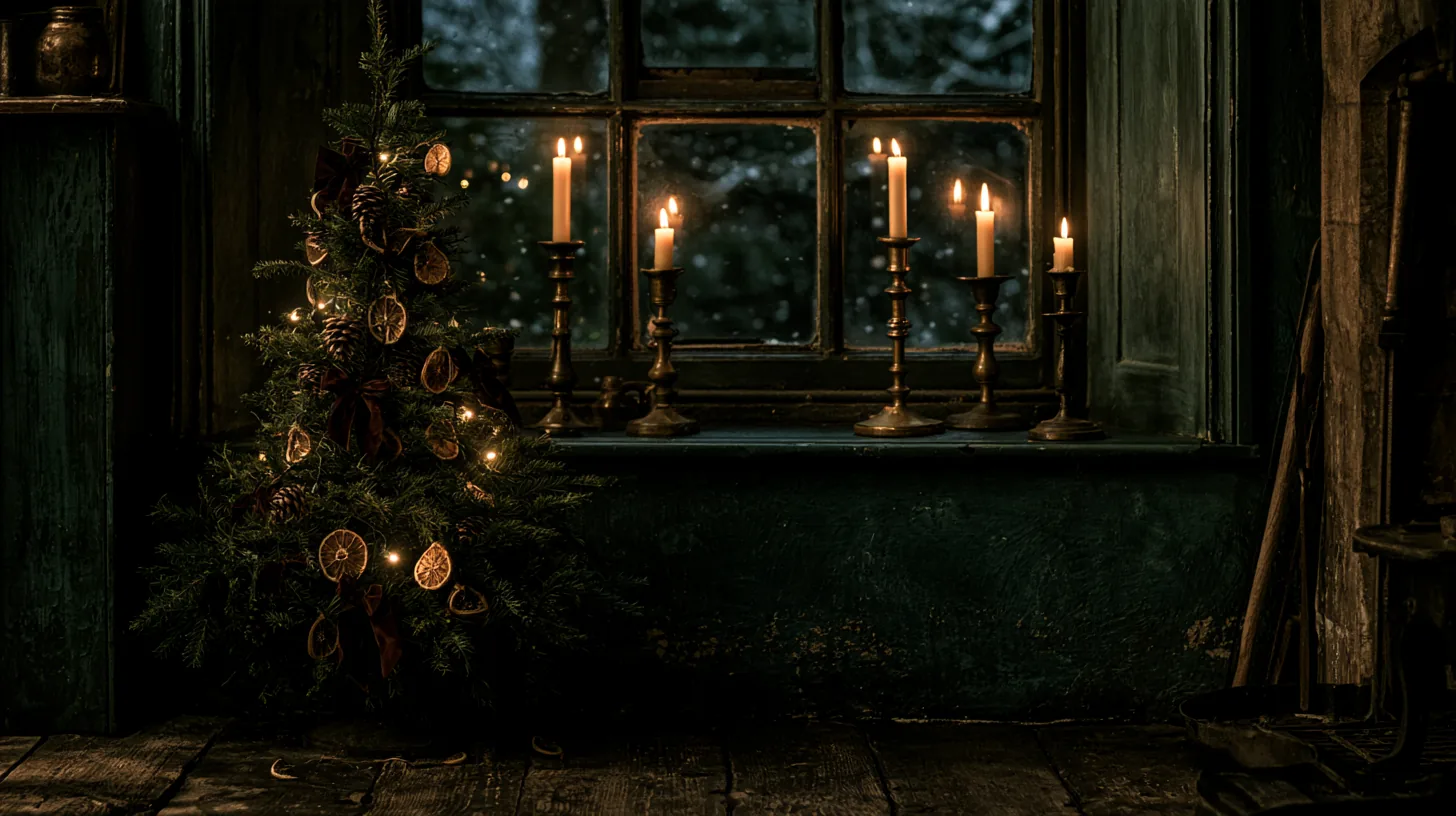
A dark cottagecore Christmas trades bright tinsel for candlelight, evergreen and deep, earthy color. The tree is dressed in things that look gathered from a garden or a hedgerow, the table is set for a long evening, and the whole house feels like a cottage at the edge of a winter wood.
It is not a gloomy look. It is warm in the way a room lit only by candles is warm: soft at the edges, rich in the middle, and full of shadow where shadow belongs.
RELATED POSTS:
What Makes a Christmas Dark Cottagecore
The aesthetic takes the slow, handmade spirit of cottagecore and turns the lights down. At Christmas, a few principles do most of the work:
- A deep, natural palette: forest green, oxblood, walnut brown, aged brass and candle gold, rather than primary red and silver.
- Natural materials: wood, wool, linen, velvet, beeswax, dried fruit and real greenery.
- Collected, not coordinated: old ornaments, mismatched candlesticks and things that look found rather than bought as a set.
- Low, warm light: candles and warm white lights instead of cool LEDs and overhead lamps.
If the aesthetic itself is new to you, this guide to dark cottagecore covers its roots and visual language.
The Victorian Roots of a Moody Christmas
Much of what makes this look feel old is, in fact, old. In England, carols in praise of holly and ivy date from before the 15th century, and before the Christmas tree became common in the 1840s, many households hung a kissing bush: a frame of two crossed hoops dressed in holly, ivy and other evergreens, hung with red apples, oranges and candles, with mistletoe at the bottom.
The decorated tree arrived in British homes through a single image. In 1848, the Illustrated London News published an engraving of Queen Victoria, Prince Albert and their family around a decorated tree at Windsor, and its wide circulation helped popularize the German custom in Britain and beyond. A dark cottagecore Christmas borrows freely from both traditions: the greenery and fruit of the older customs, and the candlelit tree of the Victorian one.
1. Start With a Deep, Warm Palette
Before buying a single ornament, choose a palette and keep to it. Three or four deep tones with one warm metal is enough: moss green, oxblood or plum, a warm brown, and brass or old gold.
Color does more to set the mood than any single decoration. For a ready-made combination, the Winter Poison Garden color palette translates directly into ribbon, linen and ornament choices.
2. Dress a Dark Cottagecore Christmas Tree
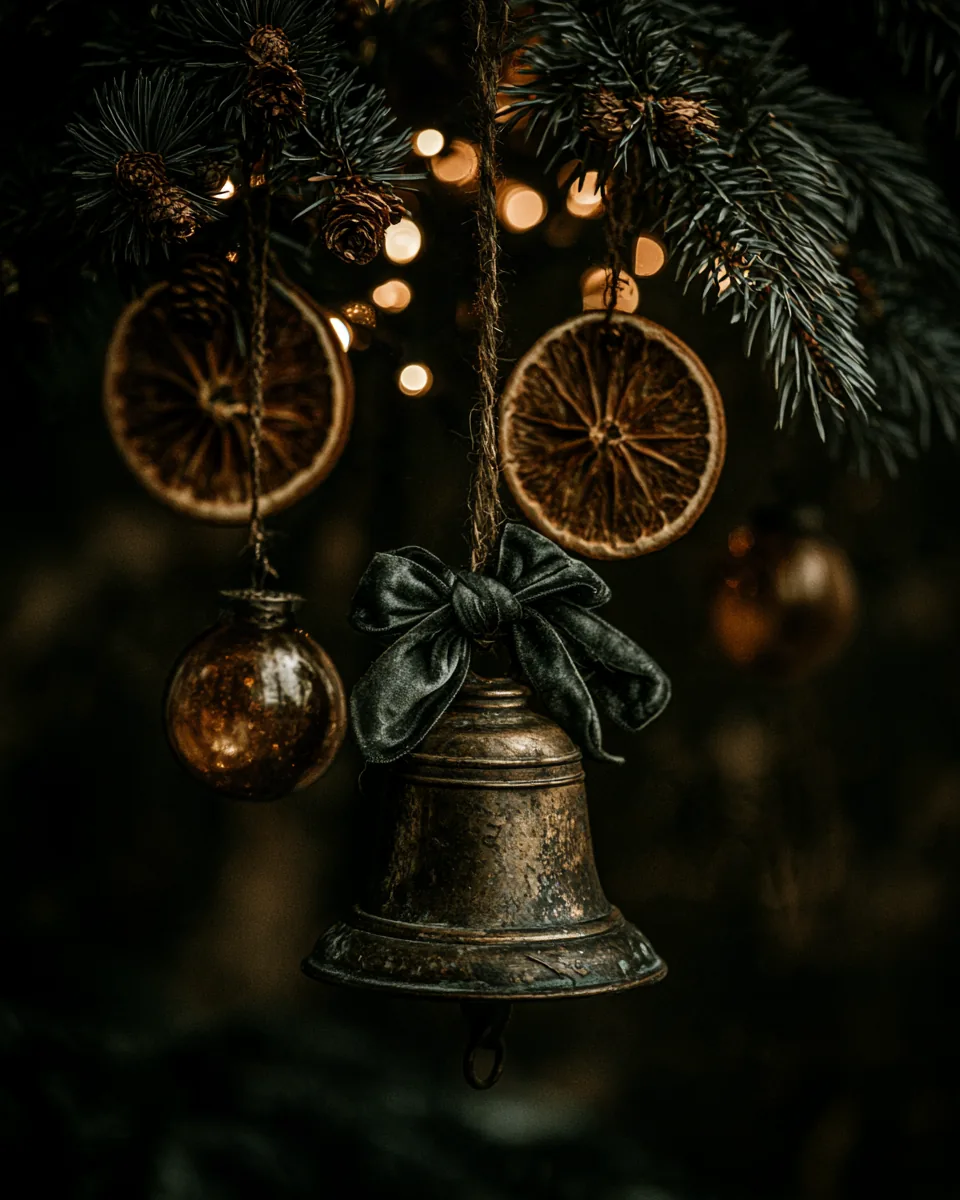
The dark cottagecore Christmas tree looks as if it was decorated from the garden and the pantry. Good choices include:
- Dried orange slices and dried apple rings, which glow amber when lights sit behind them
- Pinecones, seed heads and small bundles of dried herbs tied with twine
- Velvet ribbon in oxblood or moss, tied in simple bows rather than looped garlands
- Brass bells, glass ornaments in smoky or amber tones, and a few old, slightly worn baubles
- Paper or felt stars in cream and brown
Light the tree with warm white string lights rather than real candles. Clip-on candles look beautiful in old photographs, but an open flame among dry needles is a serious fire risk.
3. Hang a Kissing Bough
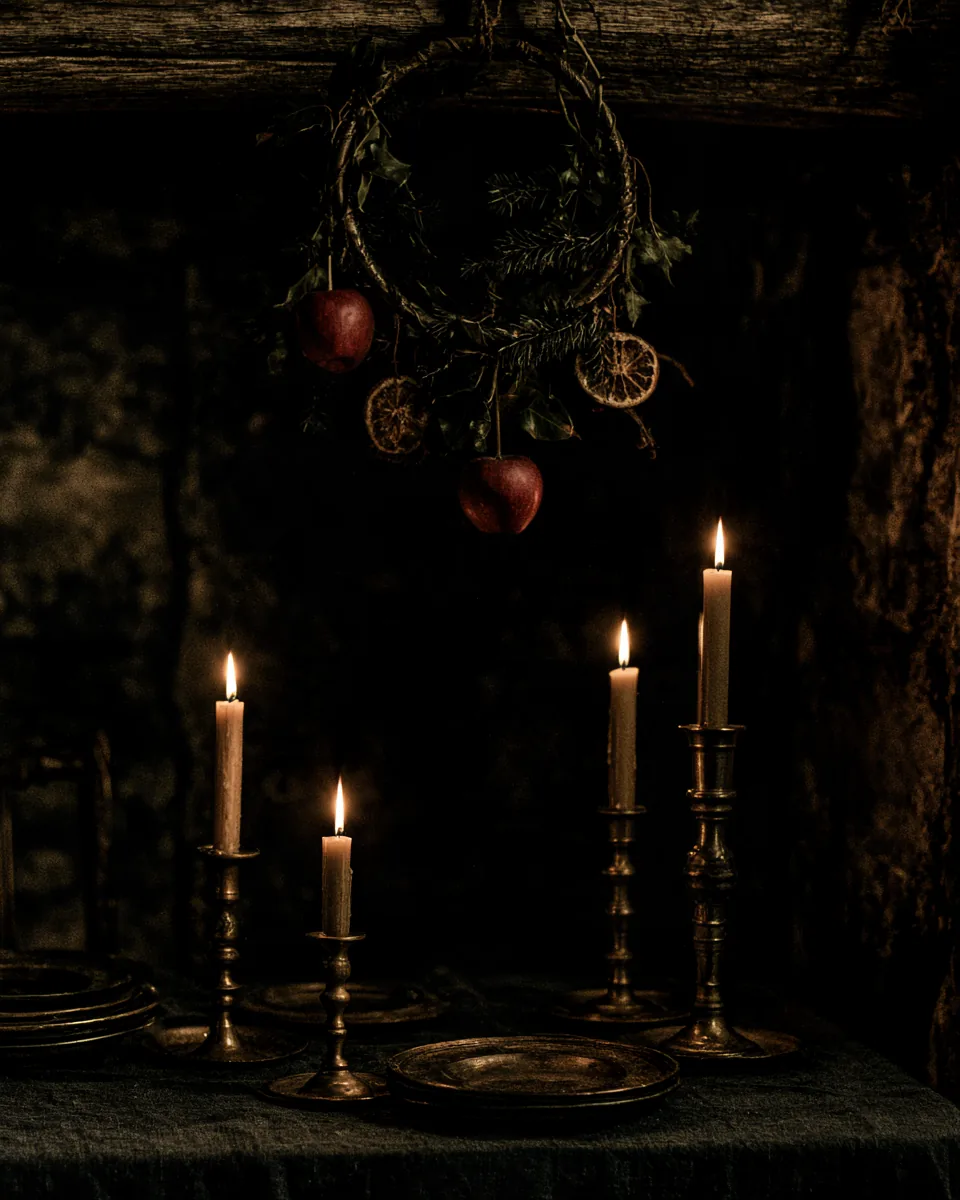
A kissing bough is one of the most striking ways to bring the older tradition into a modern room. Bind two wooden or metal hoops into a sphere, wrap them in evergreens, hang a few red apples and dried oranges inside, and tie a sprig of mistletoe to the bottom.
Hung from a ceiling hook above a table or in a doorway, it becomes the room’s centerpiece. In a home with pets, use faux mistletoe and keep real greenery well out of reach (see the note on plants and pets below).
4. Let Candlelight Lead
A cluster of candles in a dark room is the single most effective dark cottagecore decoration. Group beeswax tapers of different heights in mismatched brass or iron candlesticks, line a windowsill with small votives, or set a hurricane lantern on a crowded side table.
Keep lit candles at least 12 inches from anything that can burn, as the U.S. Fire Administration advises, including garlands, dried oranges and greenery. Never leave a flame unattended. On mantels and shelves dressed with dry botanicals, good flameless candles give the same glow without the risk.
RELATED POSTS:
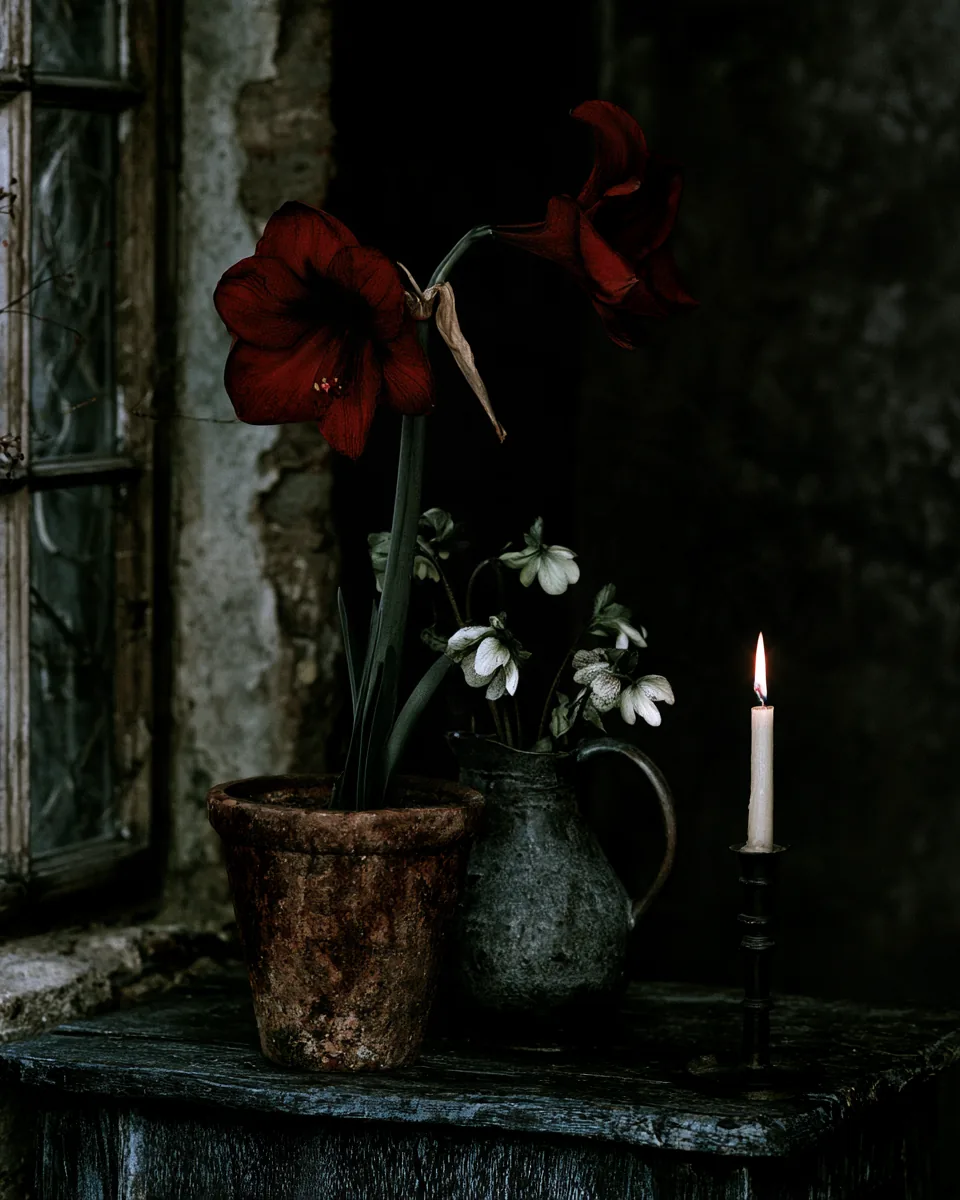
5. Choose Moody Winter Flowers and Plants
Winter flowers in deep tones suit the look perfectly:
- Dark red amaryllis (botanically Hippeastrum), potted in an old terracotta or stoneware pot
- Paperwhites, forced in a shallow bowl of stones
- The Christmas rose, Helleborus niger, a winter flower with a long and complicated history
- Christmas cactus, an easy houseplant that blooms in the dark months
A note for homes with pets: according to the ASPCA, amaryllis, paperwhites (narcissus), the Christmas rose, holly, English ivy and mistletoe are all toxic to dogs and cats, and the bulbs of amaryllis and paperwhites are the most poisonous parts. Poinsettia is mildly toxic, though the ASPCA notes its danger is generally overrated. Christmas cactus is listed as non-toxic. Keep toxic plants out of reach or choose faux stems, and if a pet may have eaten any of them, contact your veterinarian or a pet poison line right away.
6. Set a Moody Christmas Table
The table is where a dark cottagecore Christmas comes together. Start with a dark linen tablecloth, run fresh or faux evergreens down the center, and add as many candles as the table can safely hold.
Mix old plates with plain stoneware, use cloth napkins tied with twine and a sprig of rosemary, and fill wooden bowls with pears, walnuts in their shells and pomegranates. For more objects that make a kitchen or dining room feel collected over time, see this list of dark cottagecore kitchen decor.

7. Wrap Gifts Simply
Brown kraft paper, cotton string and a tucked-in sprig of dried lavender, eucalyptus or pine look more at home under a dark cottagecore tree than glossy paper. Add a handwritten tag on cream card and the gifts become part of the decoration.
8. Make a Reading Corner for the Long Nights
December evenings are long, and a dark cottagecore Christmas is made for staying in. Pull a chair close to the tree, add a wool throw, a stack of old books and a lamp with a warm bulb. The ideas in this dark cottagecore reading nook guide work especially well in winter.
9. Hang Winter Botanicals on the Walls
Botanical prints of holly, ivy, mistletoe and hellebore carry the season onto the walls without anything that looks like a holiday decoration. Frame them in dark wood or tarnished brass and they can stay up well into February.
For a room that feels moody all year, a deep botanical wallpaper does the same work on a larger scale; this dark cottagecore wallpaper guide has ideas for every budget, including renter-friendly options.
RELATED POSTS:
Frequently Asked Questions
What colors work for a dark cottagecore Christmas?
Deep, natural tones work best: forest or moss green, oxblood or plum, warm walnut brown and cream, with brass or old gold as the one metal. Three or four of these, repeated across ribbon, linen and ornaments, are enough to make a room feel cohesive.
Which Christmas plants are safe around pets?
The ASPCA lists Christmas cactus as non-toxic to dogs and cats. Poinsettia is mildly toxic, and the ASPCA notes its danger is generally overrated. Amaryllis, paperwhites, Christmas rose, holly, English ivy and mistletoe are all toxic, so keep them out of reach or choose faux stems, and call your veterinarian or a pet poison line if a pet may have eaten any.
When did Christmas trees become popular?
In Britain, the decorated tree spread widely after 1848, when the Illustrated London News published an engraving of Queen Victoria and Prince Albert’s family around a tree at Windsor. Before that, many English homes decorated with evergreens and a hanging kissing bush instead.
A Christmas That Feels Found
A dark cottagecore Christmas does not need much: a deep palette, real greenery, a cluster of flame and a few old things that look as if they have always been there. Start with the candles and the evergreens. The rest comes.
Save this post to your Christmas board now, while there is still time to gather pinecones, dry oranges and hunt for old candlesticks before December.