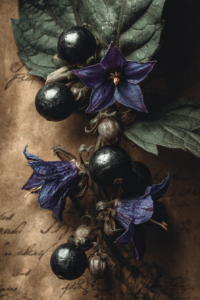

There is a plant that has been saving lives for over two hundred years using the same mechanism it uses to end them.
The dose is everything. Too little and nothing happens. The right amount steadies a failing heart. Too much and the heart stops entirely.
Digitalis purpurea is one of the most recognizable plants in the temperate garden and one of the most medically significant plants ever studied. It is tall, architectural, and covered in flowers that seem designed to be looked at. It is also, in every part, poisonous.
RELATED: The Poison Garden Plant List: A Complete Guide to Toxic and Bewitching Botanicals
At a Glance
- Scientific name: Digitalis purpurea
- Common names: Foxglove, common foxglove, purple foxglove, witch’s gloves, dead men’s bells, fairy thimbles
- Family: Plantaginaceae
- Toxic parts: All parts, including leaves, flowers, seeds, and roots
- Native range: Western and central Europe, northwest Africa
- Primary toxins: Digoxin, digitoxin, and other cardiac glycosides
- Toxicity level: High
What It Looks Like
Digitalis purpurea is a biennial, spending its first year as a low rosette of large, soft, grey-green leaves with a woolly texture.
In its second year it sends up a tall flower spike, often reaching 1.5 metres or more, that becomes one of the most striking vertical elements in any garden or hedgerow it inhabits.
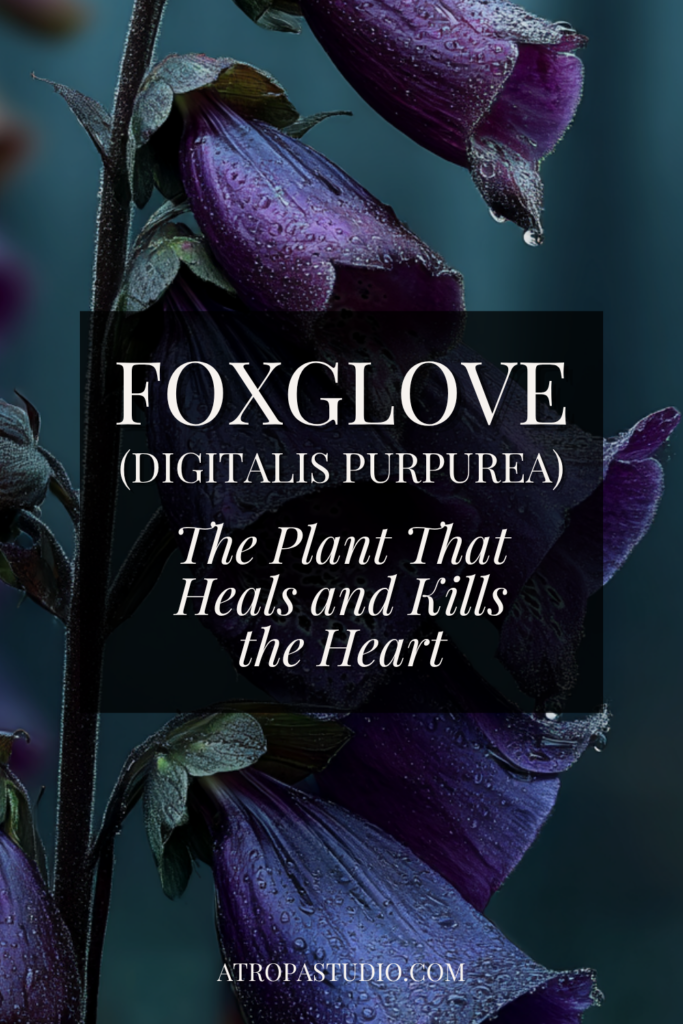
The flowers are tubular bells arranged along one side of the spike, nodding slightly downward, in shades ranging from deep purple and magenta to pale pink and occasionally white. The interior of each bell is marked with dark spots ringed in white, which serve as nectar guides for bumblebees. The plant and the bee have a long and specific relationship: the tubular flower is sized almost precisely for a bumblebee to enter, and foxglove depends heavily on them for pollination.
After flowering the spike sets seed and the plant dies, but not before scattering enough seed to ensure the next generation. Foxglove spreads readily and colonizes disturbed ground, woodland edges, and roadsides with ease. Once it is in a garden it tends to stay.
RELATED:
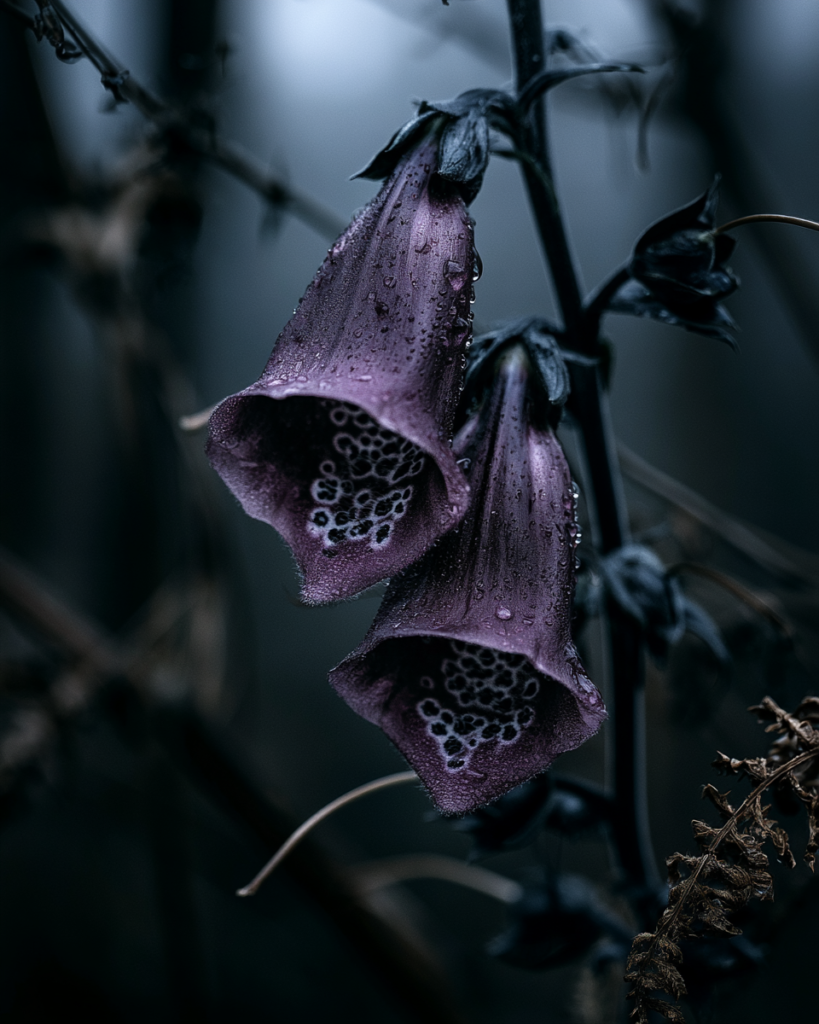
The Poison: What It Does
Foxglove contains cardiac glycosides, the most significant of which are digoxin and digitoxin. These compounds work by interfering with the sodium-potassium pump in heart muscle cells, which alters the electrical signaling that controls the heartbeat. At therapeutic doses this effect is useful: it slows and strengthens the heartbeat in cases of heart failure or certain arrhythmias. At toxic doses the effect becomes dangerous and then fatal.
Symptoms of foxglove poisoning follow a recognizable sequence:
- Nausea, vomiting, and abdominal pain
- Diarrhoea
- Visual disturbances, most distinctively a yellow-green tint to vision and the appearance of halos around light sources
- Slow or irregular heartbeat
- Confusion and drowsiness
- Cardiac arrhythmia and, at high doses, cardiac arrest
The yellow-green visual disturbance is one of the most historically documented symptoms of digitalis toxicity. It has been proposed as a possible explanation for the distinctive yellow-green palette in some of Vincent van Gogh’s later paintings, as he is known to have been treated with digitalis for epilepsy during the period in which he was working most prolifically. This remains speculative, but the connection has been discussed seriously in medical literature.
All parts of the plant are toxic, including dried material and water in which cut flowers have been placed. The leaves are the most concentrated source of glycosides, and the second-year leaves are more potent than the first. Accidental poisoning has occurred from people mistaking the first-year leaf rosette for comfrey or borage.

History and Folklore
The common names of Digitalis purpurea tell you a great deal about how people have understood it across centuries. Witch’s gloves, dead men’s bells, fairy thimbles, bloody fingers: names that acknowledge the plant’s power while reaching for the supernatural to explain it. Folk wisdom knew this plant was dangerous long before chemistry confirmed why.
The folk medicine tradition: Foxglove has been used in European folk medicine for centuries, primarily as a treatment for dropsy, the historical term for the fluid retention that accompanies heart failure. Welsh herbalists were using it in the 18th century, and it was this tradition that led directly to its formal medical discovery. The plant knew what it was doing with the heart before anyone had the language to describe it.
William Withering and the formal discovery: In 1775, the English physician William Withering encountered an old woman in Shropshire whose herbal remedy for dropsy was reportedly effective where conventional medicine had failed. The remedy contained foxglove among other ingredients. Withering spent the next ten years systematically studying the plant’s effects on patients, documenting his findings with a rigour unusual for the era, and published An Account of the Foxglove in 1785. It remains one of the foundational texts in the history of pharmacology. Withering had identified the first effective treatment for heart failure, derived from a plant that country herbalists had been using quietly for generations.
Fairy folklore: The name foxglove itself is thought by some etymologists to be a corruption of folk’s glove, where folk referred to the fairy folk rather than foxes. Across British and Irish folklore the plant was associated with fairies, and its spotted interior markings were said to be fairy fingerprints. To bring foxglove inside the house was considered unlucky in some traditions, as it was believed to attract fairy attention. The plant occupied the uneasy space in folklore that many poisonous plants do: powerful, unpredictable, belonging to a world adjacent to the human one.
Witchcraft associations: Beyond the fairy connection, foxglove appears in records of herbalism and witchcraft in the same breath as belladonna and henbane. Its common name witch’s gloves reflects a widespread belief in its use by those who worked with dangerous plants. Whether those associations were literal or simply a way of marking the plant as outside ordinary domestic life, they persist in the cultural memory of the plant.
In the Poison Garden
Foxglove earns its place in the poison garden not through drama but through its embodiment of the collection’s central argument. This is a plant that heals and kills with the same compound, that has been used by country herbalists for centuries and by cardiologists for decades, that is present in cardiac emergency kits and in hedgerows with equal indifference. It does not distinguish between the patient and the accidental victim.
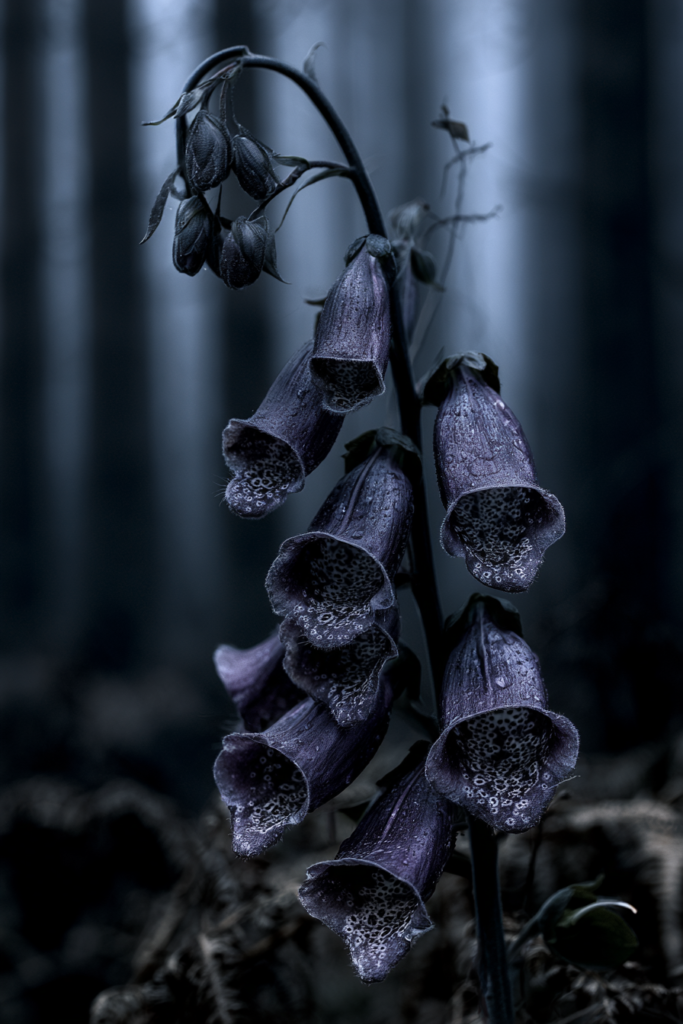
Visually, foxglove is one of the most important plants in the dark garden. Its vertical form, its architectural flower spike, and its range of colour from deep purple-magenta to pale blush make it a structural plant as well as a beautiful one.
In a dark cottagecore planting scheme it works against stone walls, in the shade of larger shrubs, or at the back of a border where the spikes catch light from above. It naturalizes readily and returns year after year once established.
As a subject for botanical illustration, foxglove is extraordinarily rich. The spotted interior of the bell, the gradation from deep colour at the base of the spike to paler tones at the tip, the downward nod of each flower: these are details that reward close attention and reproduce beautifully in fine-line Victorian engraving style or in the deep navy and aged parchment palette of a specimen print.
It is also, in the context of this garden, a plant that represents the long tradition of women’s knowledge: the old woman in Shropshire whose remedy Withering encountered, the generations of herbalists before her who had observed and recorded and passed on what the foxglove could do. That knowledge was not valued until a physician wrote it down. The plant has not forgotten.
A Note on Safety
All parts of Digitalis purpurea are toxic and should never be ingested.
The leaf rosette of the first-year plant has been mistaken for comfrey or borage with serious consequences. If you grow foxglove, gloves are recommended when handling it, and it should be kept away from children and animals.
If poisoning is suspected, seek emergency medical attention immediately. There is an antidote for digoxin toxicity (digoxin-specific antibody fragments) but it requires prompt medical administration.