
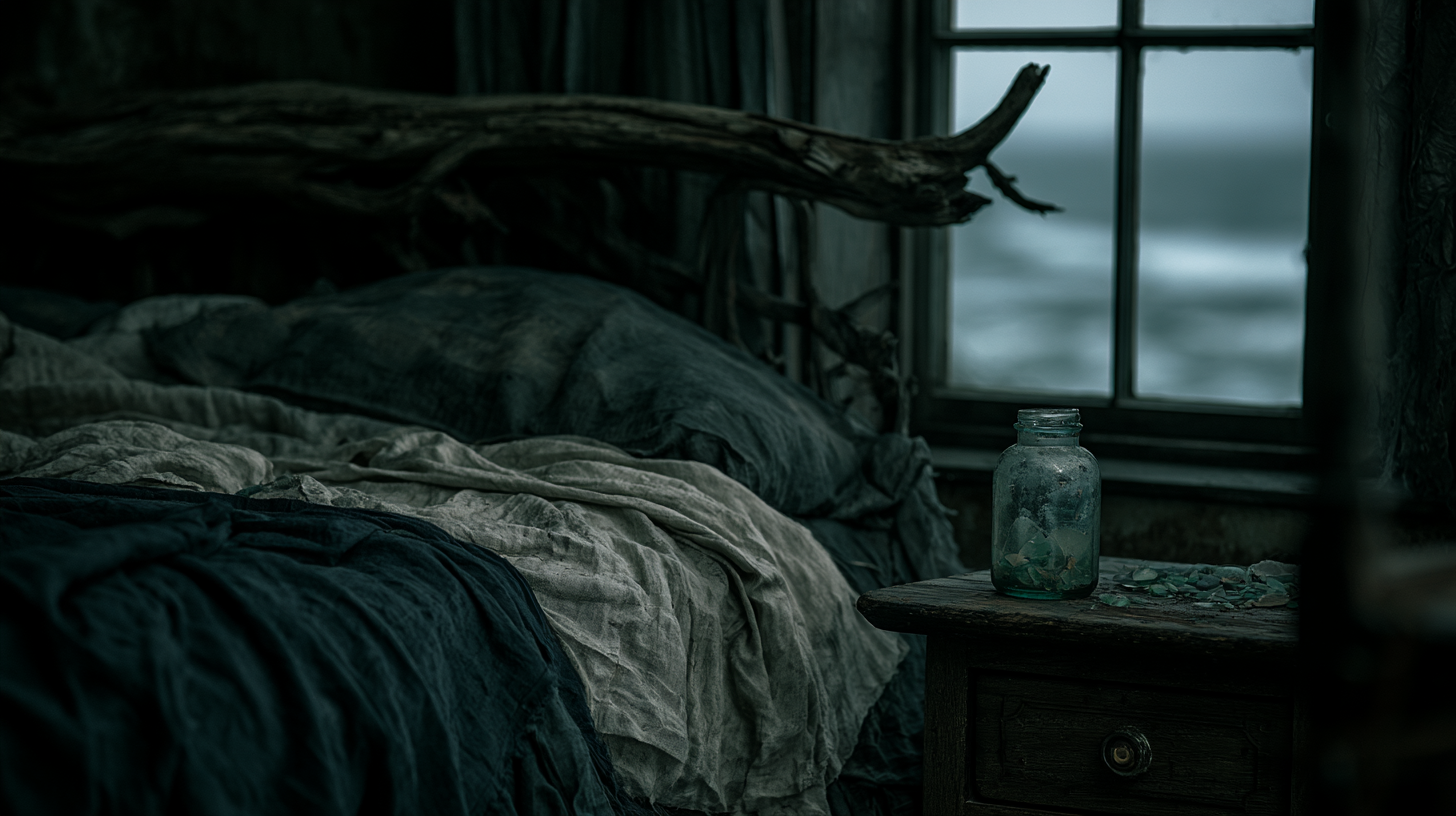
A coastal gothic bedroom takes its cues from the shoreline at low tide rather than the postcard version of the coast. Instead of bright whites and breezy stripes, the room leans into what the sea leaves behind: bleached wood, cloudy glass, salt stained fabric, and the kind of quiet that settles in a room facing water in the off season.
If dark cottagecore draws from the forest floor, coastal gothic draws from the shoreline. The two share a palette of restraint and a preference for objects that look like they have survived something, but coastal gothic trades moss and candlelight for salt air and driftwood.

RELATED:
What Defines the Coastal Gothic Bedroom
The style works because it treats the ocean as something to be respected rather than decorated with. Every material choice should look like it could plausibly have washed up, been carried in from a beach walk, or worn down by years near open water.
Nothing in the room should look new.

Color Palette
A coastal gothic bedroom stays close to the tones of wet sand, fog, and deep water:
- Weathered grey and driftwood beige for walls and large furniture
- Deep navy or blackened teal for bedding, curtains, or an accent wall
- Sea glass green and blue in small doses, glass and textiles only
- Aged parchment and bone white for linens and trim
- Charcoal or near black for hardware, frames, and lighting fixtures
Keep the palette narrow. A single deep navy or teal element against a room of muted neutrals reads as intentional.
Too many saturated colors and the room starts to feel like a beach house rather than a coastal gothic one.
RELATED: Coastal Gothic Color Palettes: Hex Codes and Decor Ideas
Driftwood
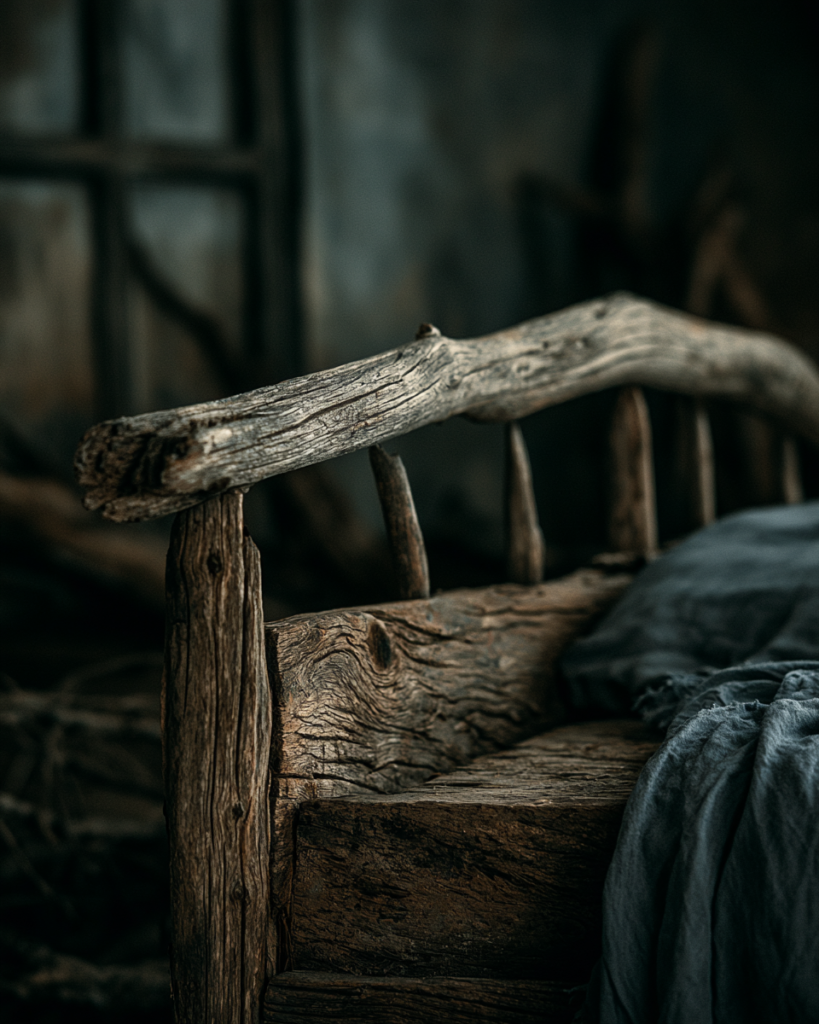
Driftwood is the backbone material of this aesthetic. Look for a driftwood or driftwood style bed frame, a headboard built from reclaimed or weathered wood, or a single large piece used as a wall mount above the bed in place of art.
Smaller driftwood pieces work as bedside decor, propped against the wall rather than arranged too neatly.
If sourcing true driftwood is not practical, reclaimed barnwood furniture or a raw edge wood nightstand gives a similar worn, salt bleached look without the search.

Sea Glass
Sea glass brings in the room’s only real color, and it works best in small, deliberate amounts.
A cluster of sea glass in a glass jar or apothecary bottle on a nightstand, a few pieces displayed on a windowsill, or a single sea glass pendant light are enough.
The goal is a hint of ocean color caught in glass, not a beach souvenir shelf.

Weathered Linens
Bedding should look like it has been through many washes and many winters near the coast.
Linen or heavy cotton in bone white, fog grey, or deep navy works best, ideally with visible texture or a slightly rumpled, lived in quality rather than a crisp hotel finish.
Layer a knit or wool throw in a deeper tone at the foot of the bed to add weight and warmth against the cooler palette.

Lighting
Lighting should feel like it is holding back fog rather than lighting a room fully.
Warm, low wattage bulbs in aged brass or blackened metal fixtures work well. A single lamp with a linen or parchment shade on the nightstand, paired with a dimmer on any overhead light, keeps the room in the kind of half light that suits the aesthetic.

Textures to Layer
- Rope, in a wall hanging, a mirror frame, or a bundled decorative knot
- Aged brass or oxidized metal hardware
- Linen, wool, and heavy cotton, nothing glossy or synthetic
- Cracked or weathered paint finishes on wood furniture
- Glass with visible imperfection, bubbles, frosting, or age

Bringing It Together
A coastal gothic bedroom does not need many pieces to work.
One strong driftwood element, one deep navy or teal textile, a small collection of sea glass, and linens with real texture will carry the room.
Resist the urge to add more. The style depends on restraint, the same quiet that makes an empty beach in November feel more powerful than a crowded one in July.