In the depths of winter, when the garden has given up and the ground is hard, something blooms.
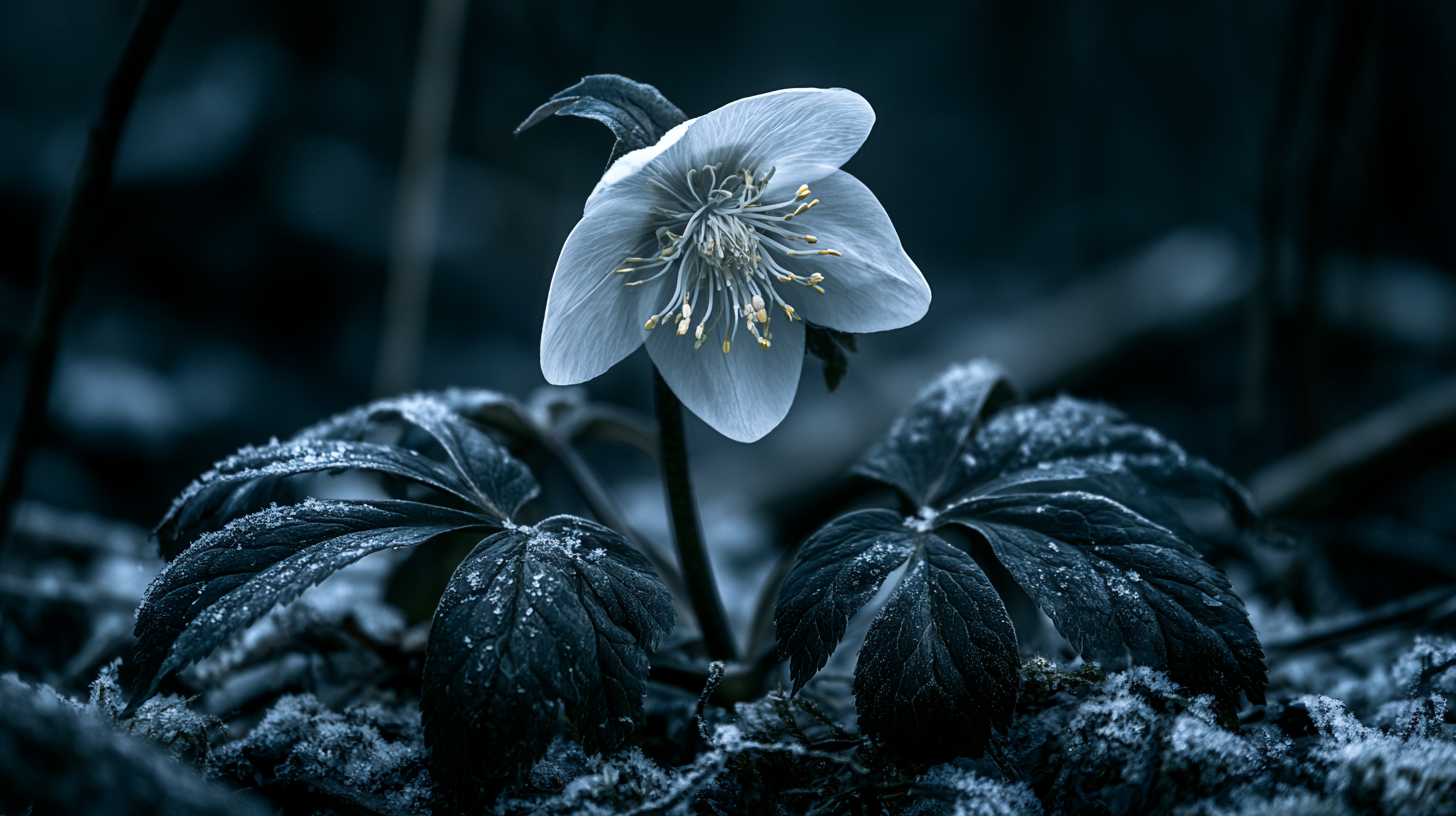
White or pale pink, nodding slightly on its stem, pushing up through frost and sometimes snow. It does not look like a plant that belongs to the poison garden. It looks like a plant that belongs on a Christmas card.
Helleborus niger has been associated with dark magic, madness, and death since ancient Greece, and with hope, resilience, and the miracle of midwinter bloom for just as long. These are not contradictory histories.
They are the natural result of a plant that does something no other plant in the temperate garden does: it flowers in the coldest, darkest part of the year, and it is poisonous while doing it.
The winter bloom is the hook. The poison is the truth underneath it.
RELATED: The Poison Garden Plant List: A Complete Guide to Toxic and Bewitching Botanicals
At a Glance
Scientific name: Helleborus niger
Common names: Christmas rose, black hellebore
Family: Ranunculaceae
Native range: Central and southern Europe, particularly alpine regions
Toxic parts: All parts — roots most concentrated, but leaves, stems, and flowers also toxic
Primary toxins: Hellebrin, helleborin, protoanemonin, and other cardiac glycosides
Toxicity level: Moderate to high
What It Looks Like
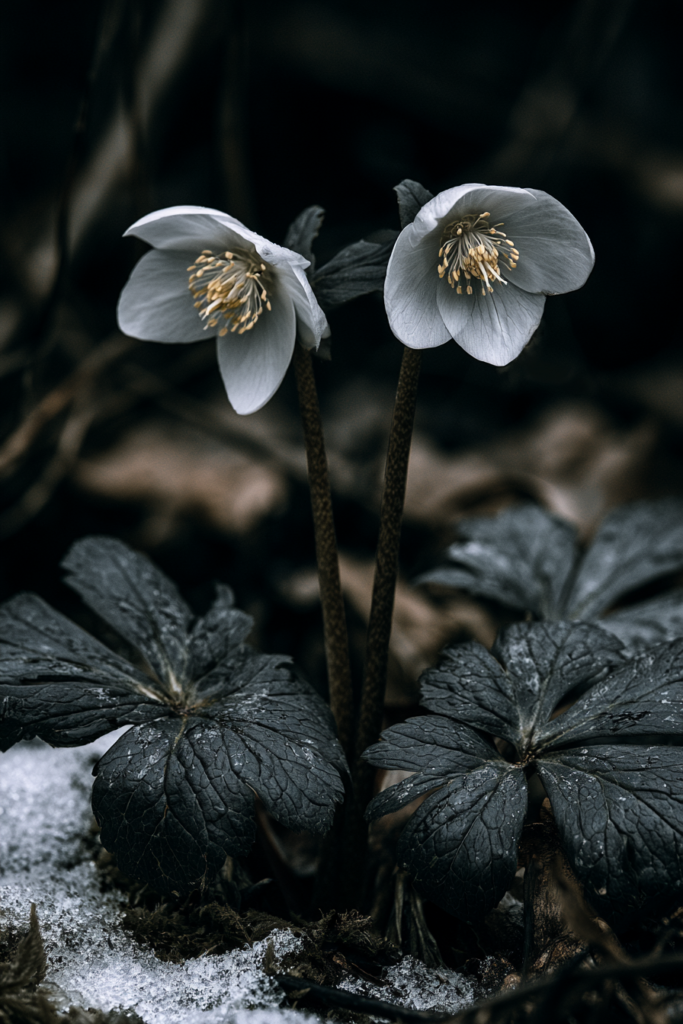
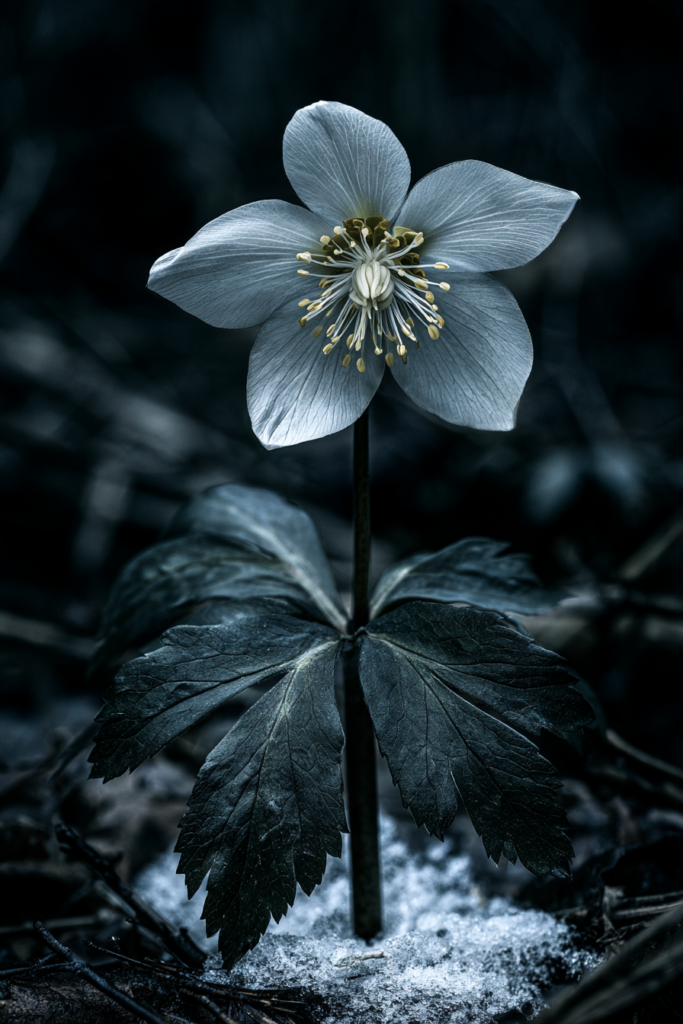
Helleborus niger is a low-growing evergreen perennial, rarely exceeding 30 centimetres in height, with dark, leathery, deeply divided leaves that persist through winter in good conditions.
The leaves are tough and glossy, palmate in form, and sit close to the ground in a way that gives the plant a compact, dense presence rather than the dramatic height of some poison garden specimens.
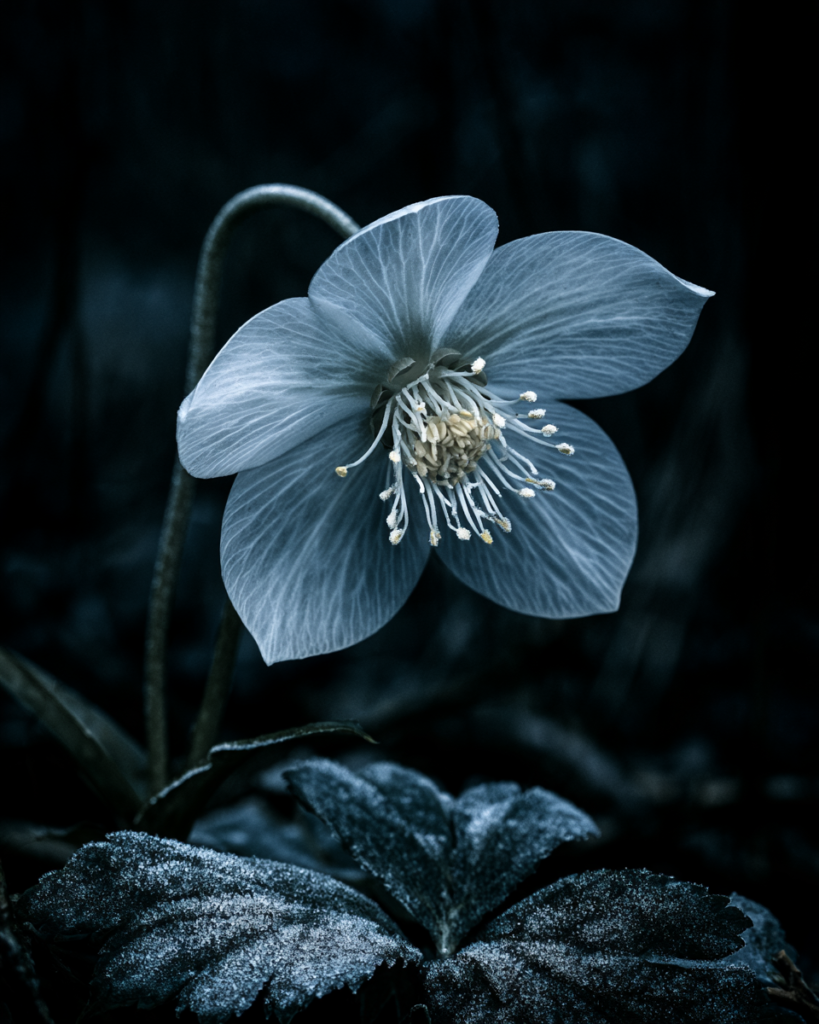
The flowers emerge on stout stems from late autumn through winter and into early spring, depending on conditions. They are nodding, cup-shaped, and large relative to the size of the plant, typically white to pale pink, sometimes flushing rosy or greenish as they age.
The centre of each flower is filled with a ring of small, tubular nectaries and prominent yellow stamens, giving the open flower a quality of unexpected warmth against the white petals.
The common name Christmas rose reflects the plant’s potential to bloom around Christmas in mild winters, though in colder conditions it flowers in January or February. The species name niger, meaning black, refers not to the flowers but to the roots, which are dark brown to black.
Helleborus niger is widely grown as a garden plant and is one of the most commercially available hellebores. It sits in borders, in containers, and beneath deciduous trees where it receives summer shade, and it is sold in garden centres across Europe and North America in late autumn and winter, its white flowers already open. Most people who buy it do not know it is poisonous.
RELATED:
The Poison: What It Does
The toxic compounds in Helleborus niger include cardiac glycosides, notably hellebrin and helleborin, as well as protoanemonin, a compound found across the Ranunculaceae family that causes irritation and inflammation on contact with mucous membranes and skin.
The toxic profile is somewhat different from the cleanly cardiac action of foxglove or yew.
Hellebore poisoning produces a range of effects:
- Burning and irritation of the mouth and throat on ingestion
- Nausea, vomiting, and severe abdominal cramps
- Excessive salivation
- Diarrhoea
- Dizziness and collapse
- Cardiac arrhythmia and depression of heart rate at higher doses
- Convulsions in serious cases
The roots are the most concentrated part and are the most likely source of serious poisoning. The sap from cut stems and leaves can cause skin irritation and should be washed off promptly.
Hellebore has been responsible for livestock deaths, particularly cattle and sheep, and all parts should be treated with caution.
History and Folklore
Helleborus niger has one of the oldest and most elaborate medicinal histories of any plant in the poison garden, centred almost entirely on its use as a treatment for madness.
This claim runs through ancient Greek medicine, Roman practice, medieval herbalism, and early modern pharmacology in a thread so consistent that it is impossible to dismiss as mere superstition, even as the underlying pharmacological mechanism remains incompletely understood.
The madness cure. The ancient Greeks used black hellebore as the primary treatment for melancholy and madness, a category that encompassed what we would now recognize as depression, psychosis, epilepsy, and various other conditions. The physician Melampus is credited in mythology with curing the daughters of the King of Argos of madness using hellebore, a story that may preserve a genuine folk medicine tradition in mythological form. Hippocrates recommended it. Theophrastus described its use in detail. The site of Anticyra in ancient Greece, where hellebore grew abundantly, became so associated with the treatment of madness that the phrase sailing to Anticyra was used as a colloquialism meaning you need your head examined.
The mechanism by which hellebore was believed to treat madness was purgation: a violent and unpleasant process in which the patient was dosed to the point of severe gastrointestinal distress, on the theory that the madness was a substance that could be expelled from the body. The treatment was dangerous, sometimes fatal, and lasted for centuries as standard medical practice. Whether it ever actually treated mental illness in a meaningful sense is debatable. That it was genuinely believed to do so by serious physicians across many centuries is not.
Alexander the Great. The death of Alexander the Great in 323 BCE remains one of the most debated events in ancient history. Among the theories proposed for his sudden illness and death at the age of 32, poisoning by hellebore has been seriously discussed by historians and medical scholars. The symptoms described in ancient accounts, including progressive weakness, fever, and abdominal pain over a period of days, are consistent with hellebore poisoning, though they are also consistent with several other causes. The theory remains unproven and contested.
Medieval and Renaissance use. Black hellebore was one of the standard drugs of the medieval European pharmacopoeia, prescribed for melancholy, epilepsy, and paralysis. It appears in virtually every herbalism text of the period, from the works of Hildegard of Bingen to the later printed herbals of the 16th century. It was also associated in folk medicine with the power to ward off evil spirits, to purify a house, and to protect against witchcraft: a plant that was used both to cure madness and to prevent the supernatural causes that were believed to produce it.
Christmas folklore. The Christmas rose has its own body of legend separate from its medical history. One of the most widely repeated stories tells of a young girl who had no gift to bring to the Christ child and who wept in the snow until an angel touched the ground where her tears fell, causing white flowers to bloom. This legend, which exists in various forms across European Christianity, gave the plant an association with purity, miracle, and the divine that coexisted with its older association with madness and dark magic. The two histories have been growing beside each other for a very long time.
In the Poison Garden
The Christmas rose occupies a particular position in the poison garden as the plant that most completely defies the visual expectations of the collection. The poison garden is supposed to look a certain way: dark, dramatic, slightly threatening.
Helleborus niger looks like a gift. Its white winter flowers are the definition of quiet beauty, and they arrive precisely when the garden is at its most austere.
This is exactly why it belongs here. The poison garden’s argument is not that dangerous things look dangerous. It is that beauty and danger are not mutually exclusive, and that the most important thing is to know what you are looking at.
The Christmas rose makes this argument better than almost any other plant in the collection, because it arrives as a symbol of hope and innocence in the middle of winter and it is, in every part, poisonous.
In the dark cottagecore context, hellebore has become one of the most used plants in the aesthetic: in flat lays, in pressed botanical arrangements, in winter garden photography, and in the imagery of the cold, interior, candlelit season that dark cottagecore inhabits most naturally. The flowers photograph exceptionally well in low winter light. They hold their form well when cut. They dry with a papery quality that suits botanical arrangement.
A Note on Safety
All parts of Helleborus niger are toxic and should not be ingested.
The sap can cause skin irritation in sensitive individuals; gloves are recommended when handling cut stems or working with the roots. Keep the plant away from children and animals.
If hellebore poisoning is suspected, seek emergency medical attention. Symptoms of serious poisoning include severe vomiting, diarrhea, and cardiac irregularity.